Chiuso-Minicucci Fernanda, Ishikawa Larissa Lumi Watanabe, Mimura Luiza Ayumi Nishiyama, Fraga-Silva Thais Fernanda de Campos, França Thais Graziela Donegá, Zorzella-Pezavento Sofia Fernanda Gonçalves, Marques Camila, Ikoma Maura Rosane Valerio, Sartori Alexandrina
Department of Microbiology and Immunology, Biosciences Institute, Universidade Estadual Paulista (UNESP), Botucatu, São Paulo, Brazil.
Laboratório de Citometria de Fluxo-Fundação Dr. Amaral Carvalho, Jaú, São Paulo, Brazil.
PLoS One. 2015 May 12;10(5):e0125836. doi: 10.1371/journal.pone.0125836. eCollection 2015.
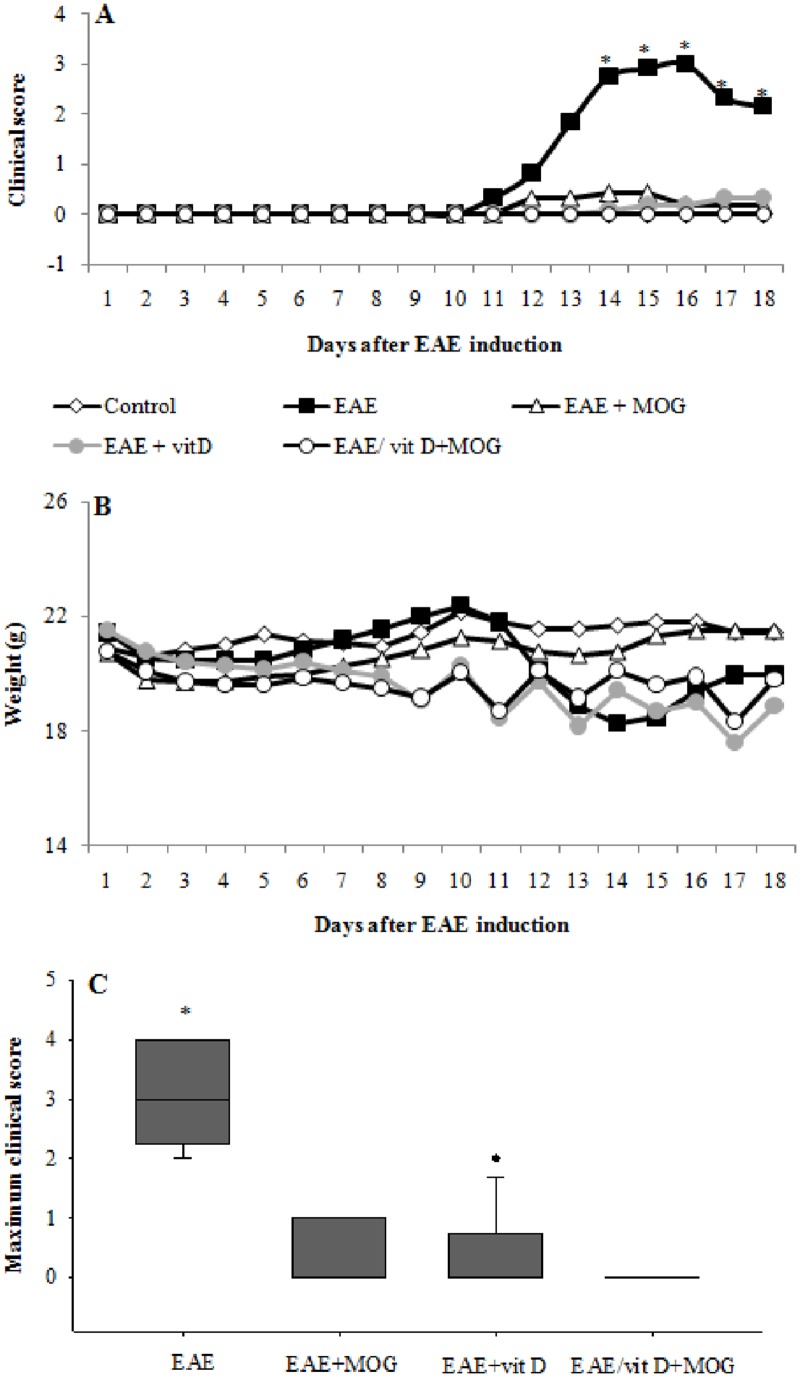
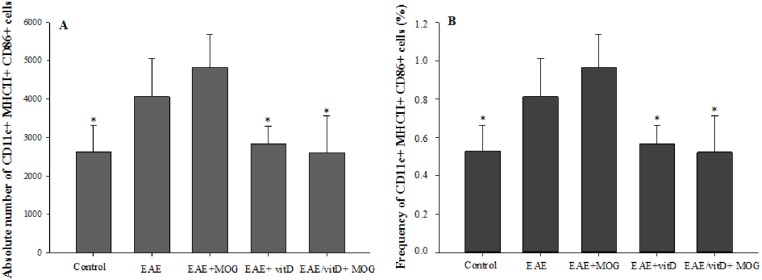
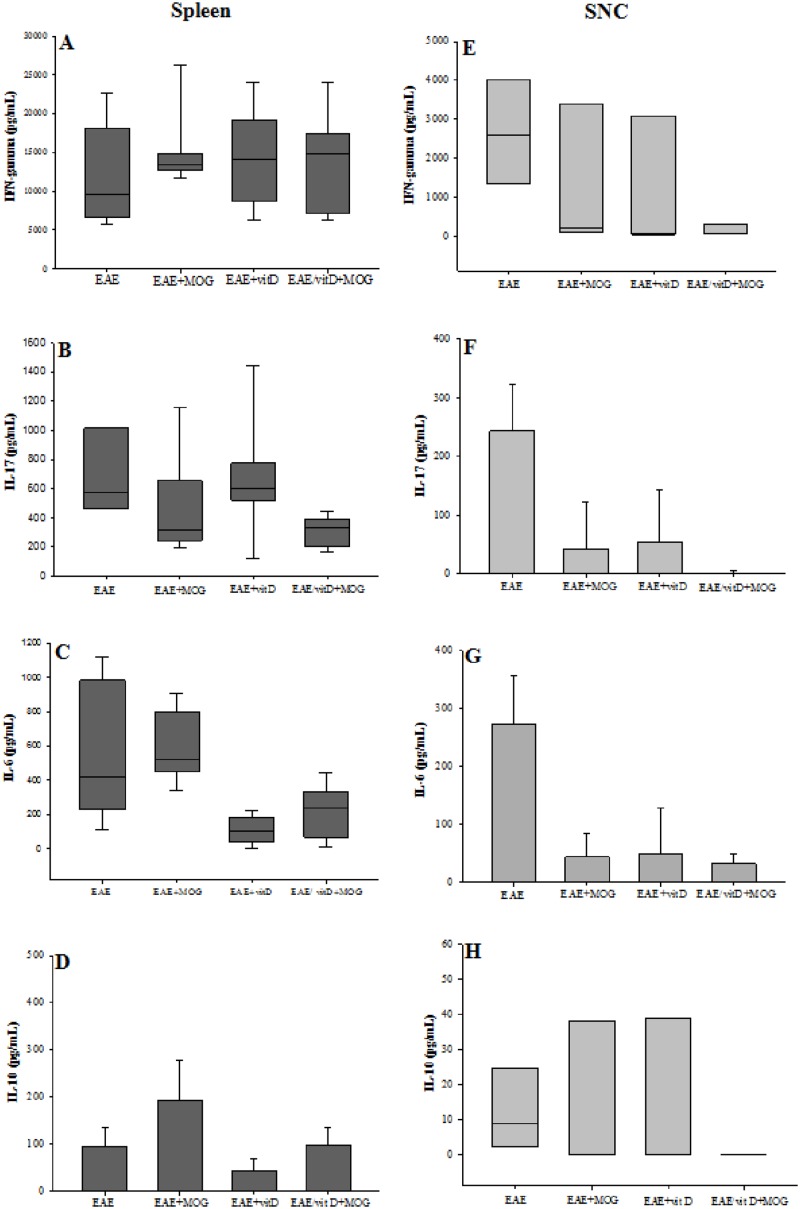
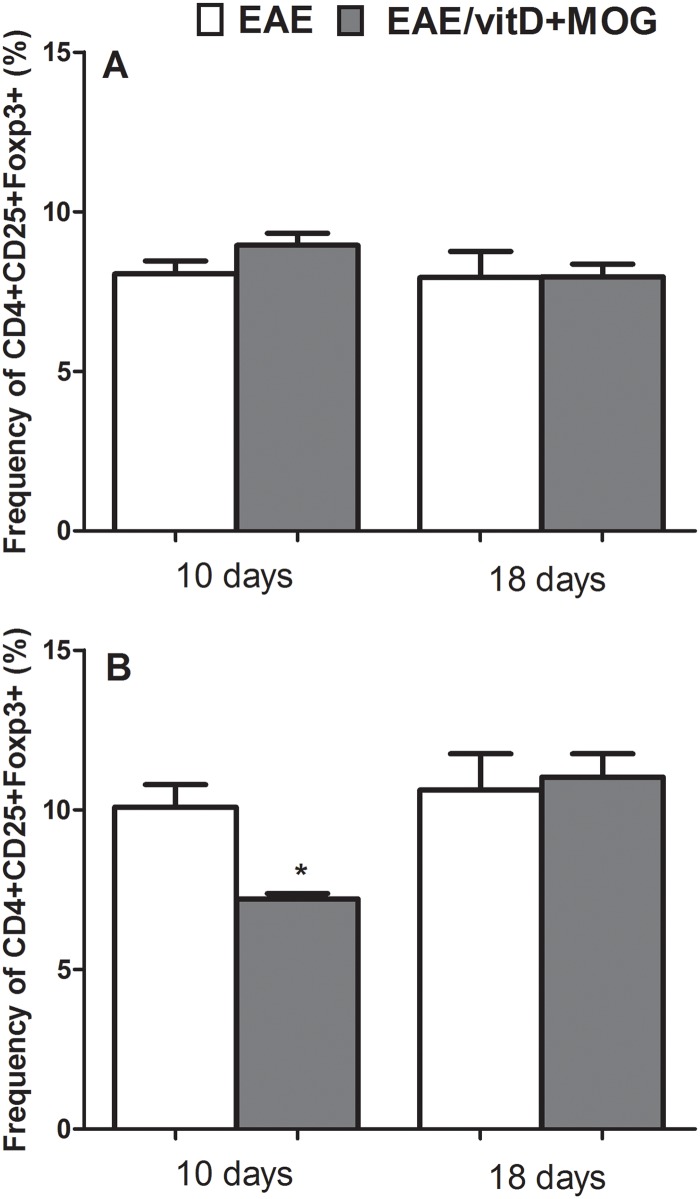
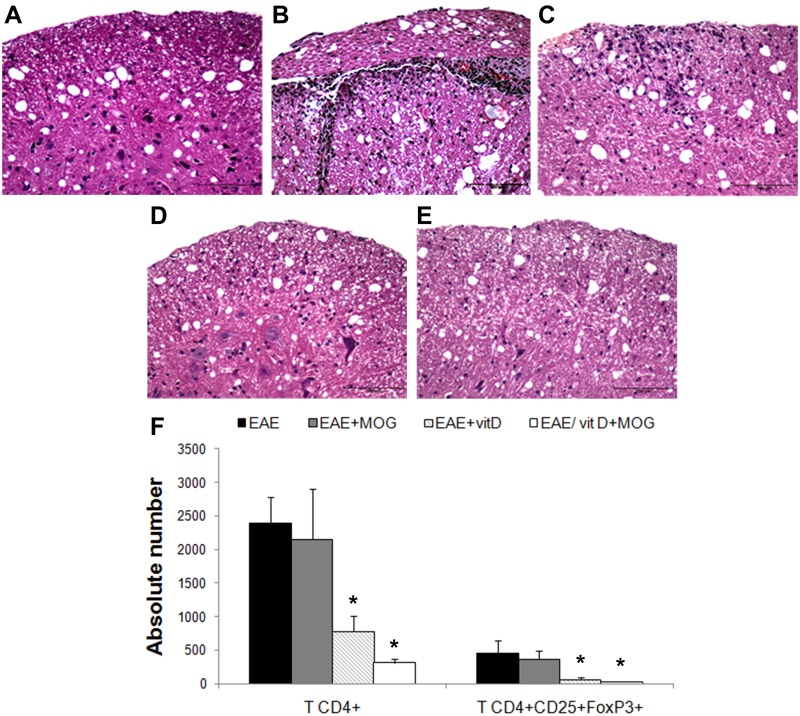
Experimental autoimmune encephalomyelitis (EAE) is an animal model to study multiple sclerosis (MS). Considering the tolerogenic effects of active vitamin D, we evaluated the therapeutic effect of myelin oligodendrocyte glycoprotein (MOG) associated with active vitamin D in EAE development. EAE was induced in female C57BL/6 mice by immunization with MOG emulsified with Complete Freund's Adjuvant plus Mycobacterium tuberculosis. Animals also received two intraperitoneal doses of Bordetella pertussis toxin. One day after immunization, mice were treated with 0,1 μg of 1α,25-dihydroxyvitamin D3 (1,25(OH)2D3) every other day during 15 days (on days 1, 3, 5, 7, 9, 11, 13 and 15). MOG (150 μg) was co-administered on days 3 and 11. The administration of 1,25(OH)2D3 or MOG determined significant reduction in EAE incidence and in clinical scores. When MOG was associated with 1,25(OH)2D3 the animals did not develop EAE. Spleen and central nervous system (CNS) cell cultures from this group produced less IL-6 and IL-17 upon stimulation with MOG in comparison to the EAE control group. In addition, this treatment inhibited dendritic cells maturation in the spleen and reduced inflammatory infiltration in the CNS. The association of MOG with 1,25(OH)2D3 was able to control EAE development.
实验性自身免疫性脑脊髓炎(EAE)是一种用于研究多发性硬化症(MS)的动物模型。考虑到活性维生素D的致耐受性作用,我们评估了与活性维生素D相关的髓鞘少突胶质细胞糖蛋白(MOG)在EAE发病过程中的治疗效果。通过用完全弗氏佐剂加结核分枝杆菌乳化的MOG免疫雌性C57BL/6小鼠来诱导EAE。动物还接受两剂腹腔注射的百日咳博德特氏菌毒素。免疫后一天,小鼠在15天内每隔一天接受0.1μg的1α,25-二羟基维生素D3(1,25(OH)2D3)治疗(在第1、3、5、7、9、11、13和15天)。在第3天和第11天联合给予MOG(150μg)。给予1,25(OH)2D3或MOG可显著降低EAE发病率和临床评分。当MOG与1,25(OH)2D3联合使用时,动物未发生EAE。与EAE对照组相比,该组的脾脏和中枢神经系统(CNS)细胞培养物在用MOG刺激后产生的IL-6和IL-17较少。此外,这种治疗抑制了脾脏中树突状细胞的成熟,并减少了CNS中的炎症浸润。MOG与1,25(OH)2D3联合使用能够控制EAE的发展。