Saini Priyanka, Li Yizhu, Dobbelstein Matthias
Institute of Molecular Oncology, Göttingen Centre of Molecular Biosciences (GZMB), Faculty of Medicine, University of Göttingen, Göttingen, Germany.
Oncotarget. 2015 May 30;6(15):13072-87. doi: 10.18632/oncotarget.3865.
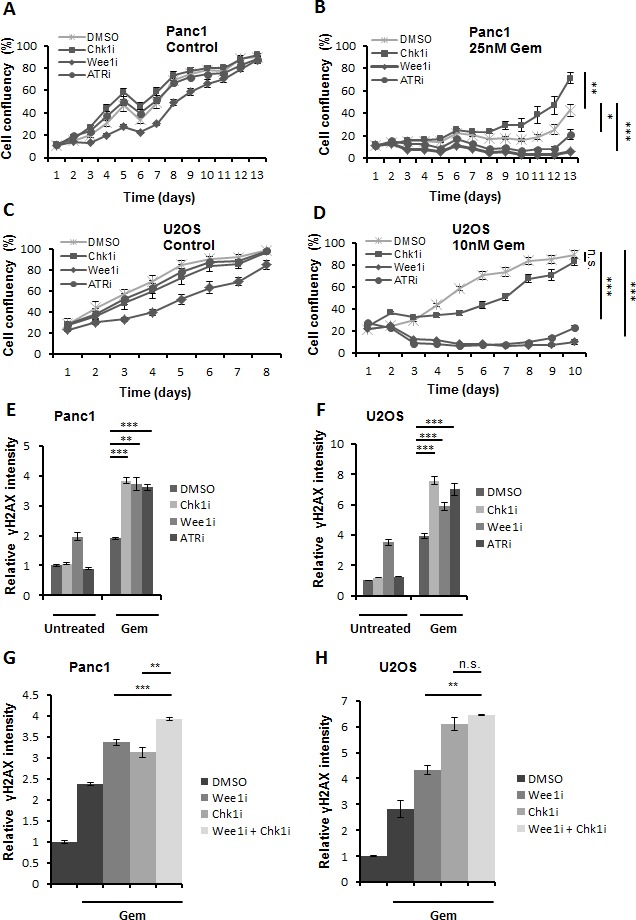
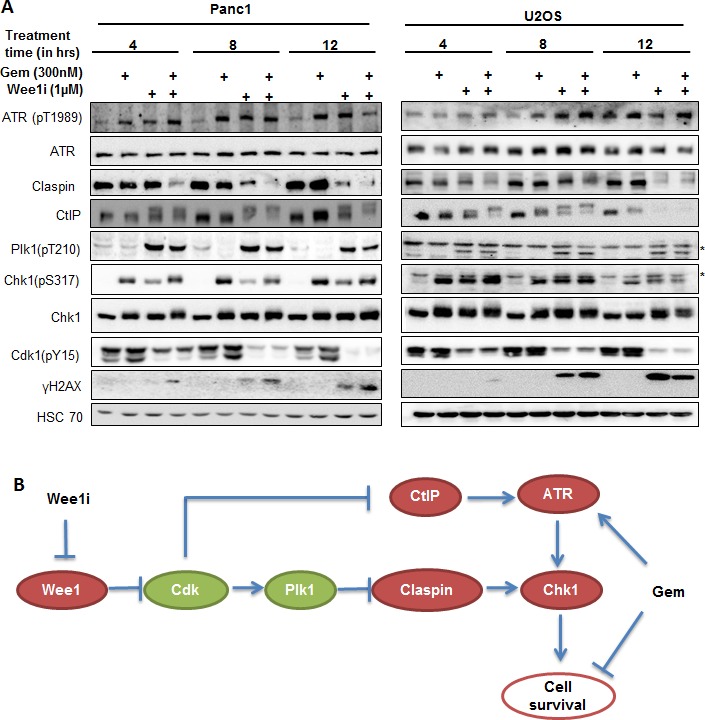
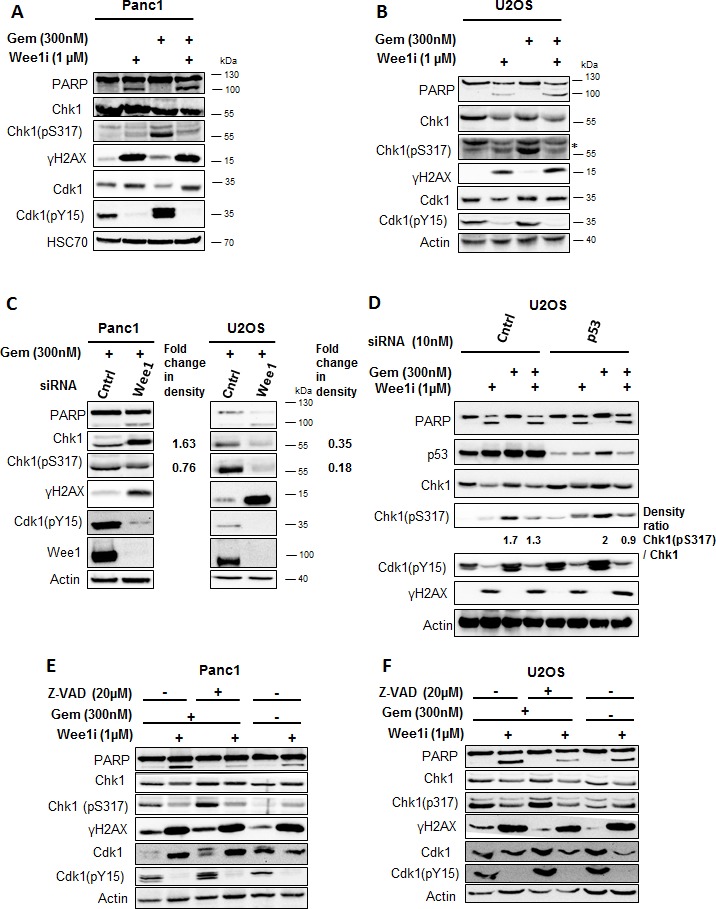
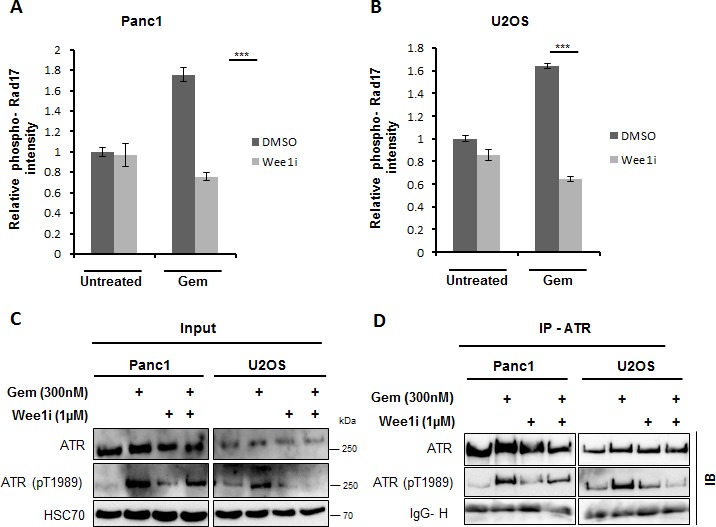
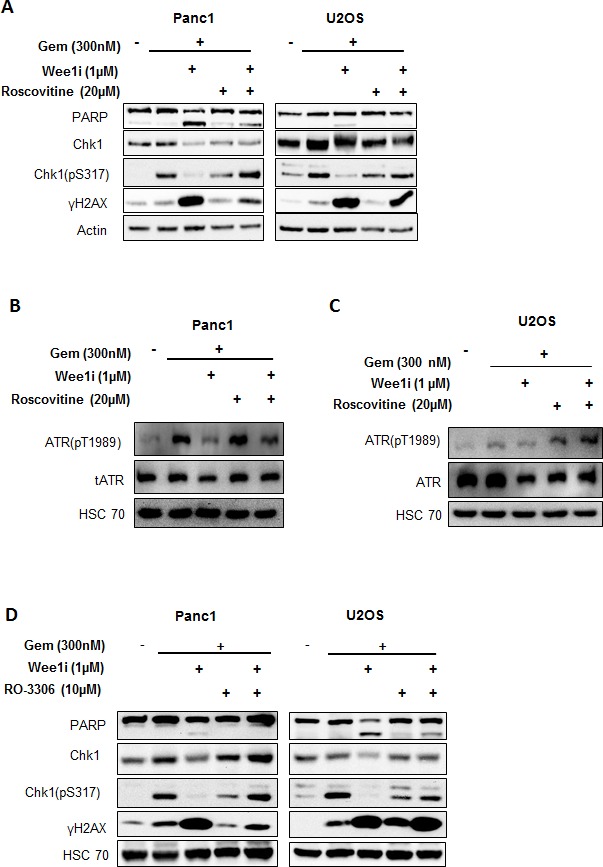
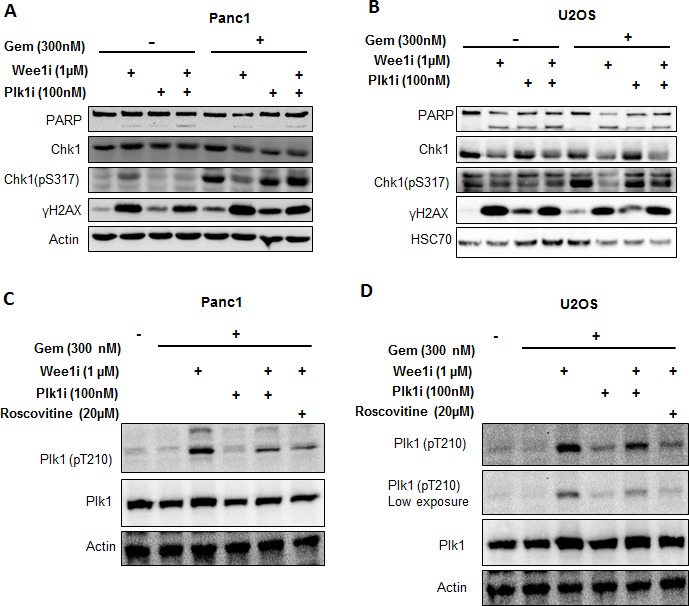
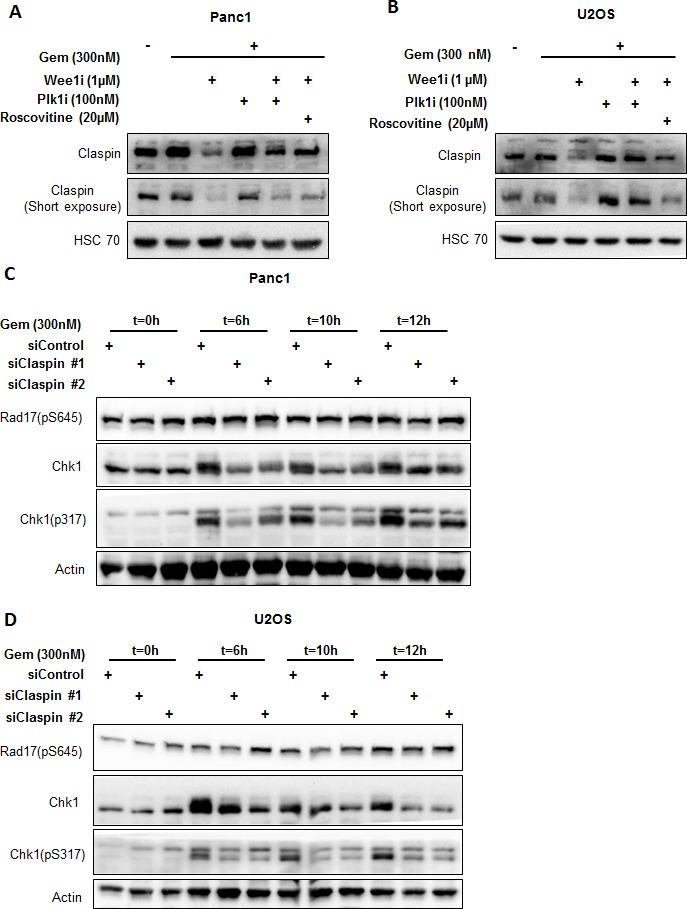
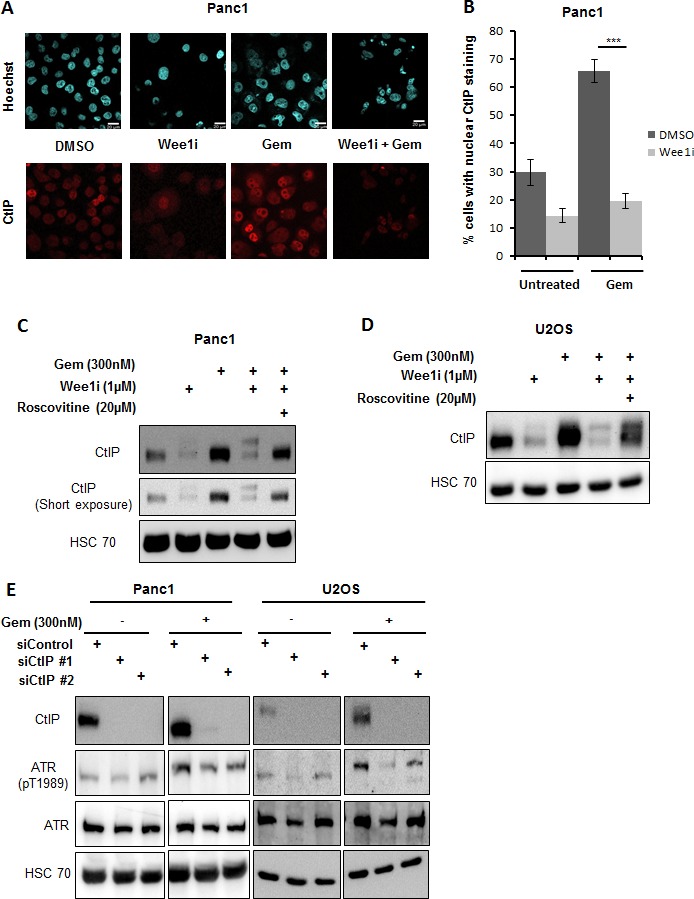
The therapeutic efficacy of nucleoside analogues, e.g. gemcitabine, against cancer cells can be augmented by inhibitors of checkpoint kinases, including Wee1, ATR, and Chk1. We have compared the chemosensitizing effect of these inhibitors in cells derived from pancreatic cancer, a tumor entity where gemcitabine is part of the first-line therapeutic regimens, and in osteosarcoma-derived cells. As expected, all three inhibitors rendered cancer cells more sensitive to gemcitabine, but Wee1 inhibition proved to be particularly efficient in this context. Investigating the reasons for this potent sensitizing effect, we found that Wee1 inhibition or knockdown not only blocked Wee1 activity, but also reduced the activation of ATR/Chk1 in gemcitabine-treated cells. Combination of several inhibitors revealed that Wee1 inhibition requires Cyclin-dependent kinases 1 and 2 (Cdk1/2) and Polo-like kinase 1 (Plk1) to reduce ATR/Chk1 activity. Through activation of Cdks and Plk1, Wee1 inhibition reduces Claspin and CtIP levels, explaining the impairment in ATR/Chk1 activity. Taken together, these results confer a consistent signaling pathway reaching from Wee1 inhibition to impaired Chk1 activity, mechanistically dissecting how Wee1 inhibitors not only dysregulate cell cycle progression, but also enhance replicative stress and chemosensitivity towards nucleoside analogues.
核苷类似物(如吉西他滨)对癌细胞的治疗效果可通过包括Wee1、ATR和Chk1在内的检查点激酶抑制剂增强。我们比较了这些抑制剂在胰腺癌(吉西他滨是一线治疗方案的一部分的肿瘤实体)来源的细胞和骨肉瘤来源的细胞中的化学增敏作用。正如预期的那样,所有三种抑制剂都使癌细胞对吉西他滨更敏感,但在这种情况下,抑制Wee1被证明特别有效。在研究这种强效增敏作用的原因时,我们发现抑制或敲低Wee1不仅会阻断Wee1活性,还会降低吉西他滨处理的细胞中ATR/Chk1的激活。几种抑制剂的联合使用表明,抑制Wee1需要细胞周期蛋白依赖性激酶1和2(Cdk1/2)以及Polo样激酶1(Plk1)来降低ATR/Chk1活性。通过激活Cdk和Plk1,抑制Wee1会降低Claspin和CtIP水平,这解释了ATR/Chk1活性的受损。综上所述,这些结果揭示了一条从抑制Wee1到受损的Chk1活性的一致信号通路,从机制上剖析了Wee1抑制剂如何不仅失调细胞周期进程,还增强复制应激和对核苷类似物的化学敏感性。