Martinez Laisel, Gomez Camilo, Vazquez-Padron Roberto I
Department of Surgery and Vascular Biology Institute, University of Miami Miller School of Medicine, Miami, FL, USA.
Oncotarget. 2015 Jul 10;6(19):17054-64. doi: 10.18632/oncotarget.3881.
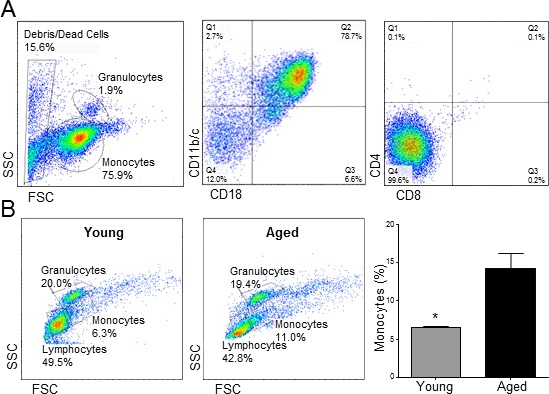
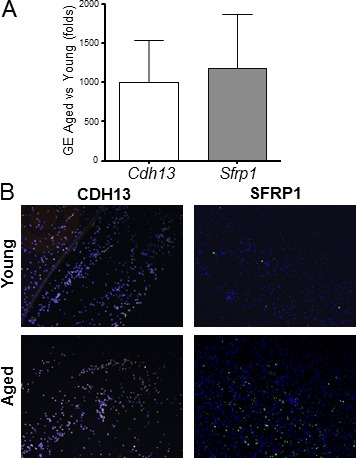
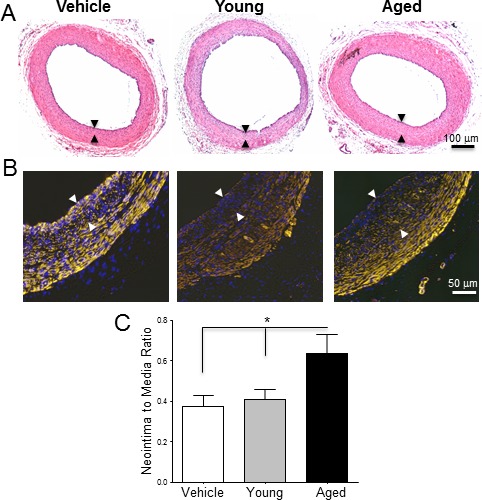
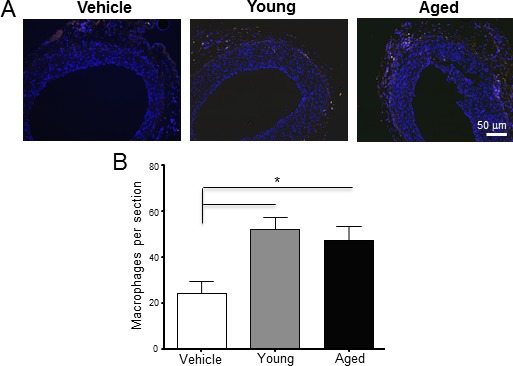
Neointimal hyperplasia is the leading cause of restenosis after endovascular interventions. It is characterized by the accumulation of myofibroblast-like cells and extracellular matrix in the innermost layer of the wall and is exacerbated by inflammation. Monocytes from either young or aged rats were applied perivascularly to injured vascular walls of young recipient animals. Monocytes from aged rats, but not young donors, increased neointima thickness. Accordingly, the gene expression profiles of CD11b+ monocytes from aged rats showed significant up-regulation of genes involved in cellular adhesion, lipid degradation, cytotoxicity, differentiation, and inflammation. These included cadherin 13 (Cdh13), colony stimulating factor 1 (Csf1), chemokine C-X-C motif ligand 1 (Cxcl1), endothelial cell-selective adhesion molecule (Esam), and interferon gamma (Ifng). In conclusion, our results suggest that the increased inflammatory and adhesive profile of monocytes contributes to pathological wall remodeling in aged-related vascular diseases.
新生内膜增生是血管内介入治疗后再狭窄的主要原因。其特征是肌成纤维细胞样细胞和细胞外基质在血管壁最内层积聚,且炎症会加剧这种情况。将来自年轻或老年大鼠的单核细胞经血管周围注射到年轻受体动物的受损血管壁上。来自老年大鼠而非年轻供体的单核细胞会增加新生内膜厚度。相应地,老年大鼠CD11b +单核细胞的基因表达谱显示,参与细胞黏附、脂质降解、细胞毒性、分化和炎症的基因显著上调。这些基因包括钙黏蛋白13(Cdh13)、集落刺激因子1(Csf1)、趋化因子C-X-C基序配体1(Cxcl1)、内皮细胞选择性黏附分子(Esam)和干扰素γ(Ifng)。总之,我们的结果表明,单核细胞炎症和黏附特性的增加有助于老年相关血管疾病中病理性血管壁重塑。