Jost Marco, Simpson Jeffrey H, Drennan Catherine L
†Department of Chemistry and ‡Department of Biology and Howard Hughes Medical Institute, Massachusetts Institute of Technology, 77 Massachusetts Avenue, Cambridge, Massachusetts 02139, United States.
Biochemistry. 2015 Jun 2;54(21):3231-4. doi: 10.1021/acs.biochem.5b00416. Epub 2015 May 19.
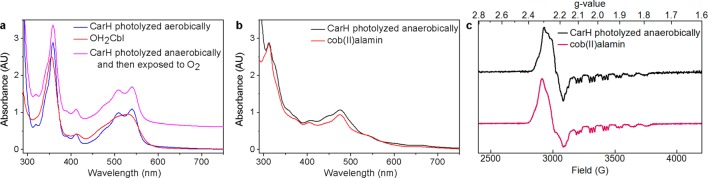
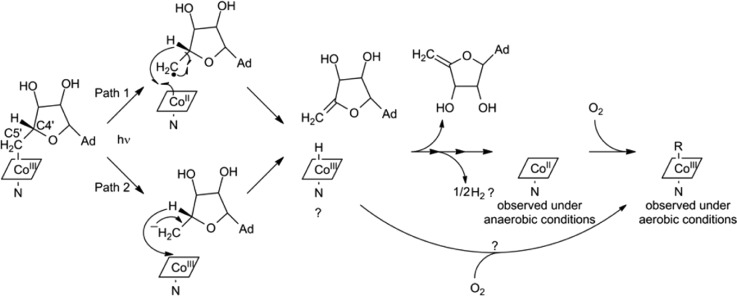
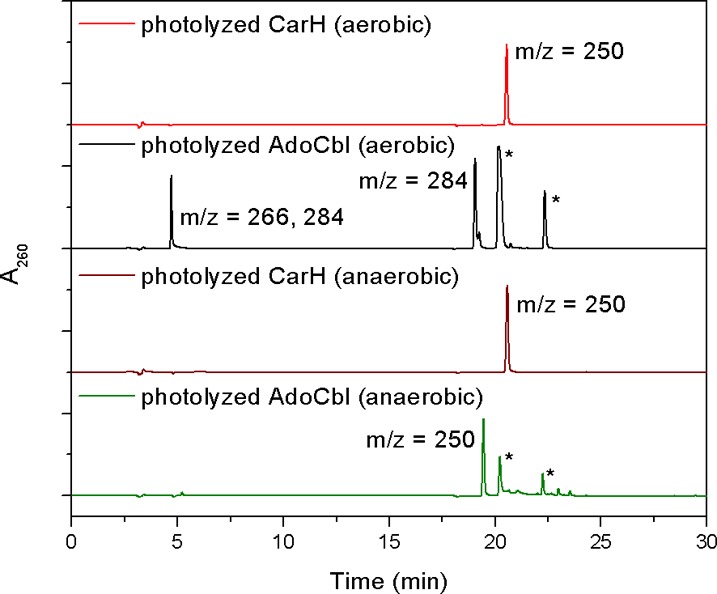
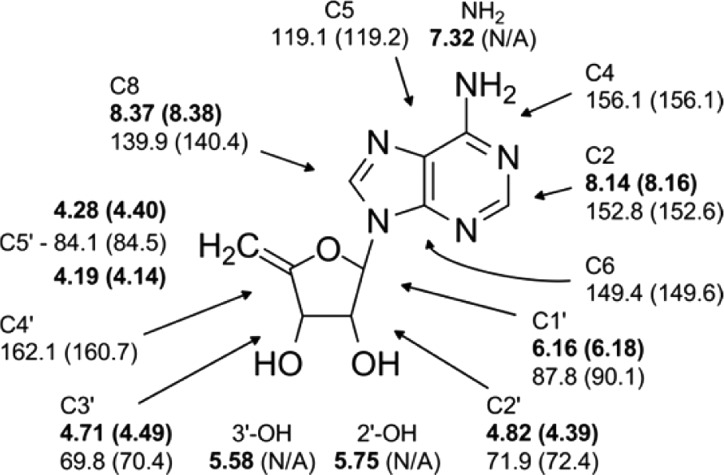
The newly discovered light-dependent transcription factor CarH uses adenosylcobalamin as a light sensor to regulate expression of protective genes in bacteria upon exposure to sunlight. This use of adenosylcobalamin is a clever adaptation of a classic enzyme cofactor, taking advantage of its photolabile Co-C bond. However, it is also puzzling in that photolysis of adenosylcobalamin generates the 5'-deoxyadenosyl radical that could damage DNA. Here, using liquid chromatography and spectroscopic techniques, we demonstrate that CarH suppresses release of the 5'-deoxyadenosyl radical and instead effects conversion to a nonreactive 4',5'-anhydroadenosine. In this manner, CarH safeguards use of adenosylcobalamin in light-dependent gene regulation.
新发现的光依赖性转录因子CarH利用腺苷钴胺作为光传感器,在细菌暴露于阳光时调节保护性基因的表达。腺苷钴胺的这种用途是对经典酶辅因子的巧妙改造,利用了其对光不稳定的碳钴键。然而,这也令人困惑,因为腺苷钴胺的光解会产生可能损害DNA的5'-脱氧腺苷自由基。在这里,我们使用液相色谱和光谱技术证明,CarH抑制5'-脱氧腺苷自由基的释放,而是促使其转化为无反应性的4',5'-脱水腺苷。通过这种方式,CarH保障了腺苷钴胺在光依赖性基因调控中的使用。