Gustin Kortney M, Belser Jessica A, Veguilla Vic, Zeng Hui, Katz Jacqueline M, Tumpey Terrence M, Maines Taronna R
Influenza Division, National Center for Immunization and Respiratory Disease, Centers for Disease Control and Prevention, Atlanta, Georgia, United States of America.
PLoS One. 2015 May 13;10(5):e0125874. doi: 10.1371/journal.pone.0125874. eCollection 2015.
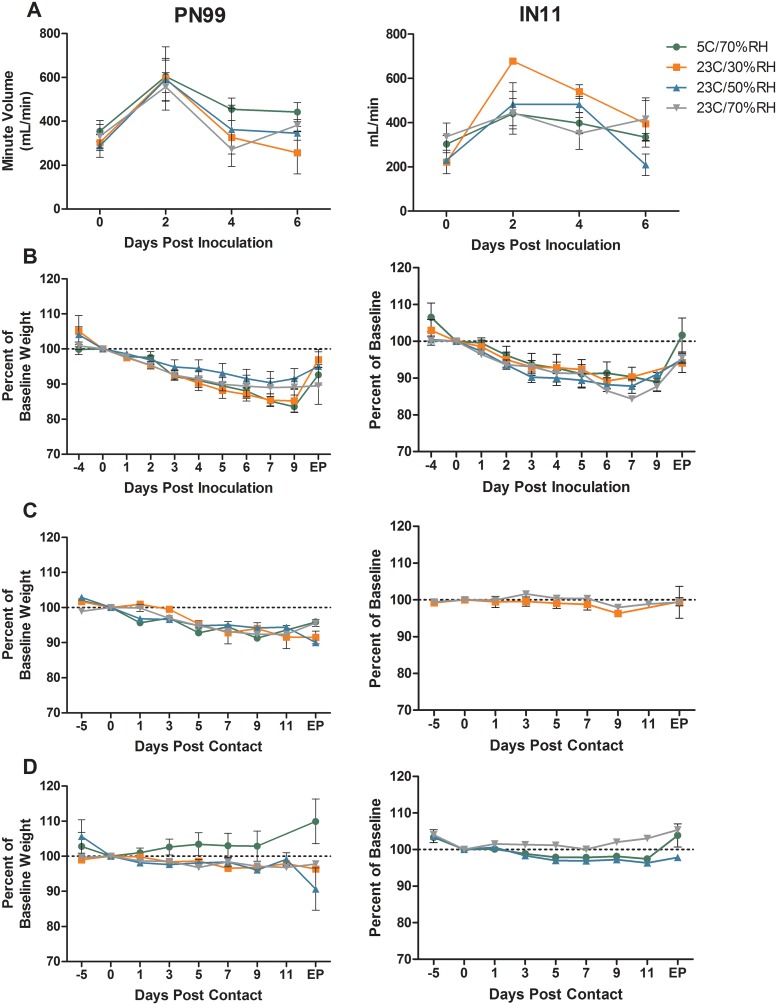
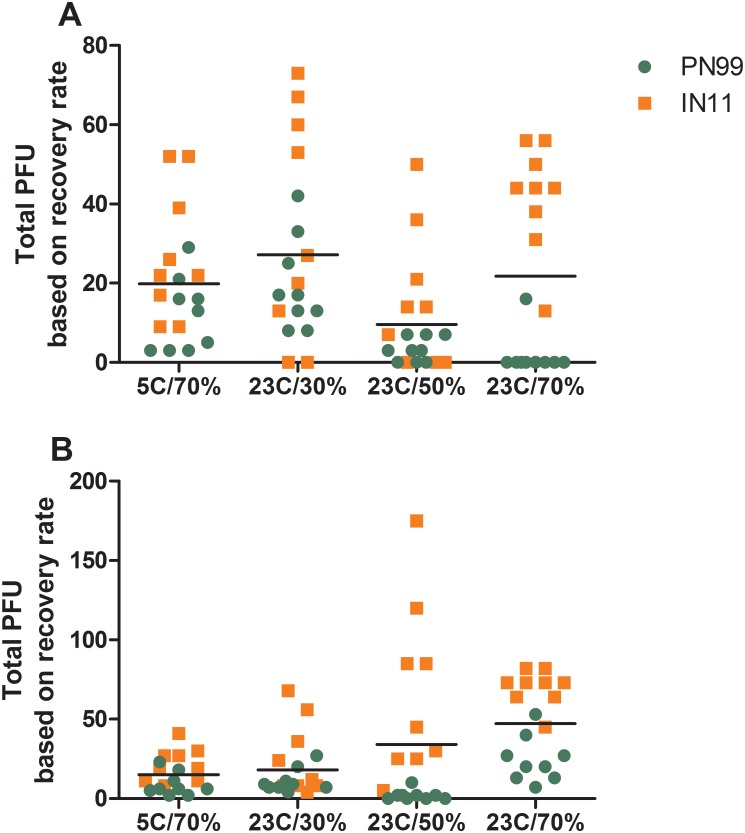
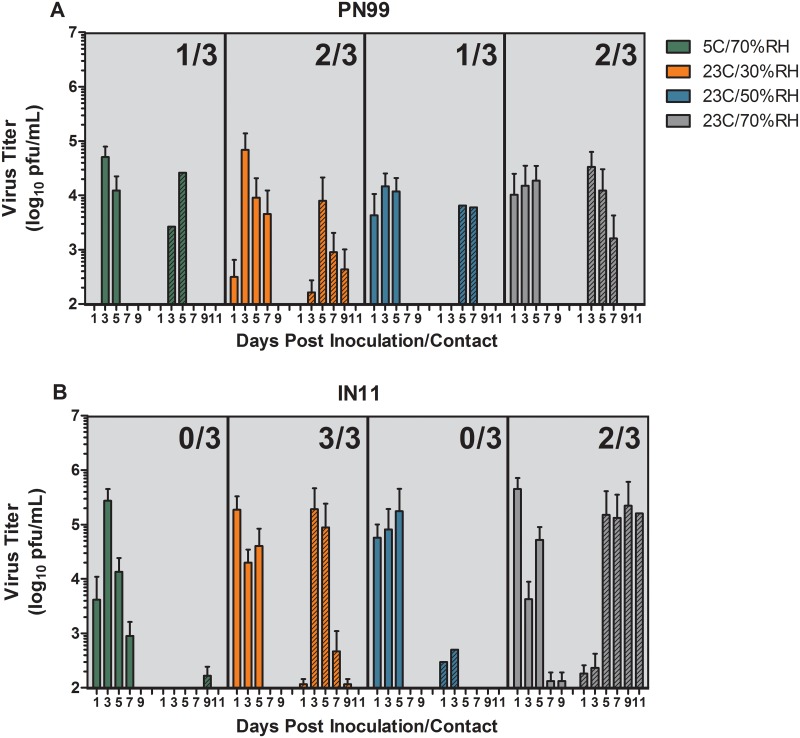
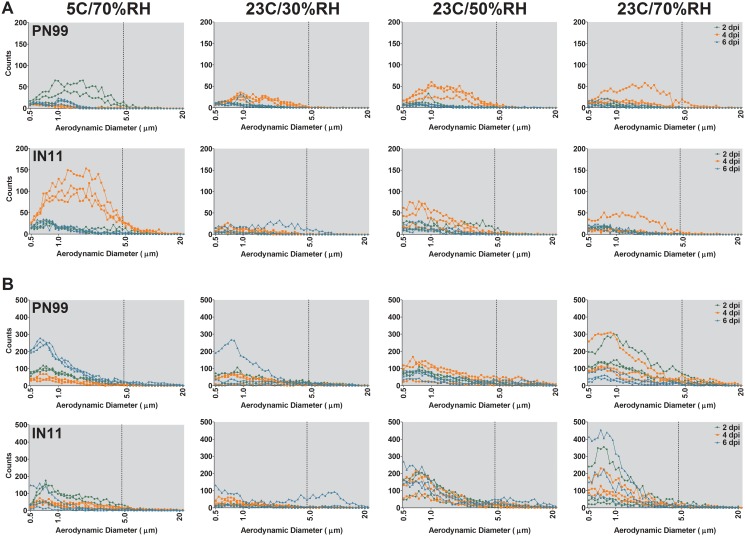
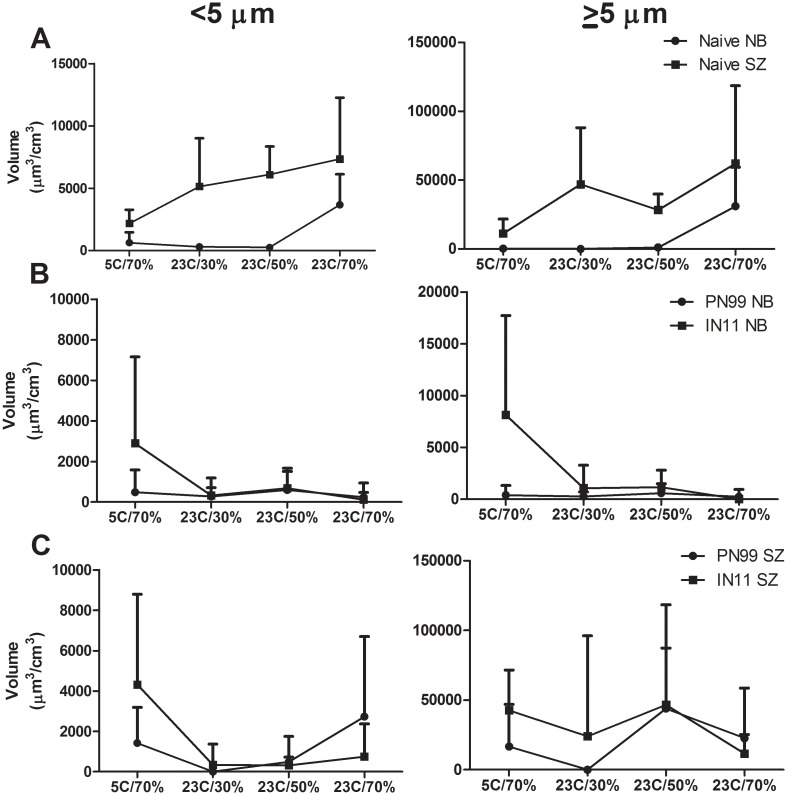
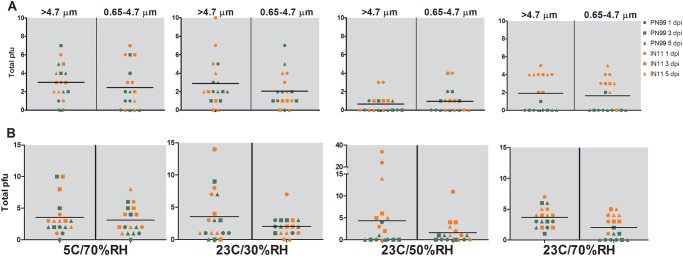
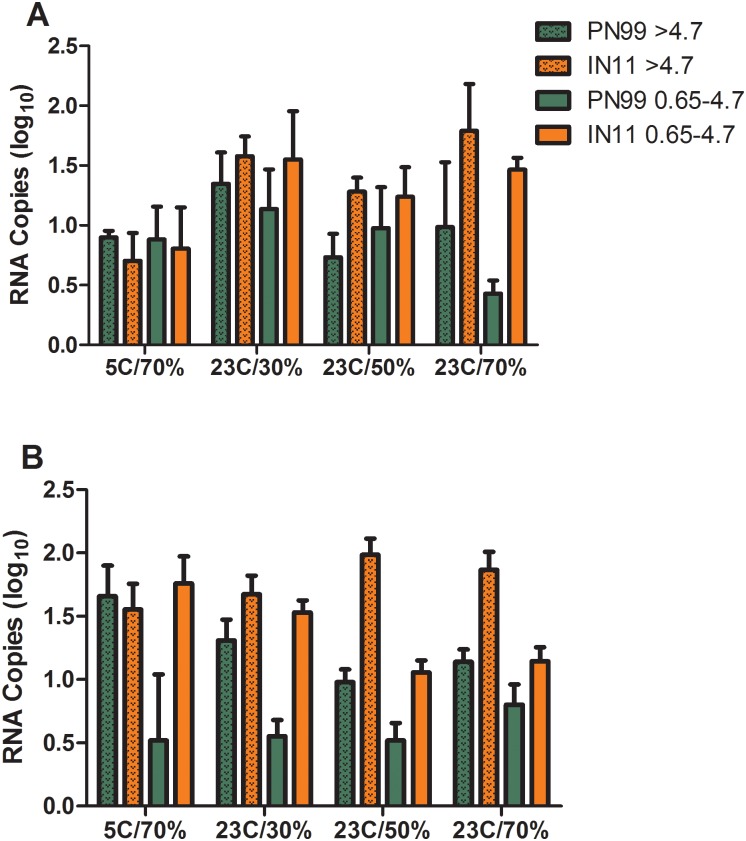
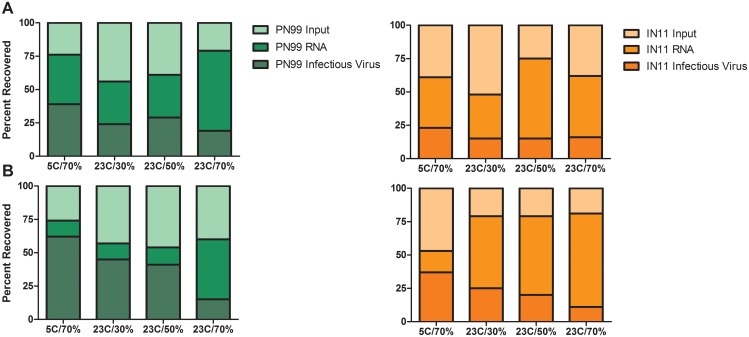
The seasonality of influenza virus infections in temperate climates and the role of environmental conditions like temperature and humidity in the transmission of influenza virus through the air are not well understood. Using ferrets housed at four different environmental conditions, we evaluated the respiratory droplet transmission of two influenza viruses (a seasonal H3N2 virus and an H3N2 variant virus, the etiologic virus of a swine to human summertime infection) and concurrently characterized the aerosol shedding profiles of infected animals. Comparisons were made among the different temperature and humidity conditions and between the two viruses to determine if the H3N2 variant virus exhibited enhanced capabilities that may have contributed to the infections occurring in the summer. We report here that although increased levels of H3N2 variant virus were found in ferret nasal wash and exhaled aerosol samples compared to the seasonal H3N2 virus, enhanced respiratory droplet transmission was not observed under any of the environmental settings. However, overall environmental conditions were shown to modulate the frequency of influenza virus transmission through the air. Transmission occurred most frequently at 23°C/30%RH, while the levels of infectious virus in aerosols exhaled by infected ferrets agree with these results. Improving our understanding of how environmental conditions affect influenza virus infectivity and transmission may reveal ways to better protect the public against influenza virus infections.
在温带气候中,流感病毒感染的季节性以及温度和湿度等环境条件在流感病毒空气传播中的作用尚未得到充分了解。我们使用饲养在四种不同环境条件下的雪貂,评估了两种流感病毒(一种季节性H3N2病毒和一种H3N2变异病毒,即猪到人夏季感染的病原病毒)的呼吸道飞沫传播情况,并同时对感染动物的气溶胶排放情况进行了表征。对不同温度和湿度条件以及两种病毒之间进行了比较,以确定H3N2变异病毒是否表现出可能导致夏季感染发生的增强能力。我们在此报告,尽管与季节性H3N2病毒相比,在雪貂鼻腔冲洗液和呼出的气溶胶样本中发现H3N2变异病毒的水平有所增加,但在任何环境设置下均未观察到增强的呼吸道飞沫传播。然而,总体环境条件显示出可调节流感病毒通过空气传播的频率。传播最常发生在23°C/30%相对湿度时,而感染雪貂呼出的气溶胶中传染性病毒的水平与这些结果一致。增进我们对环境条件如何影响流感病毒感染性和传播的理解,可能会揭示出更好地保护公众免受流感病毒感染的方法。