Huang Ruijie, Zhang Junjie, Yang X Frank, Gregory Richard L
Department of Pediatric Dentistry, West China Hospital of Stomatology, Sichuan University, Chengdu, Sichuan, China; Department of Oral Biology, School of Dentistry, Indiana University, Indianapolis, Indiana, United States of America; State Key Laboratory of Oral Diseases, West China Hospital of Stomatology, Sichuan University, Chengdu, Sichuan, China.
Department of Microbiology and Immunology, School of Medicine, Indiana University, Indianapolis, Indiana, United States of America.
PLoS One. 2015 May 13;10(5):e0126628. doi: 10.1371/journal.pone.0126628. eCollection 2015.
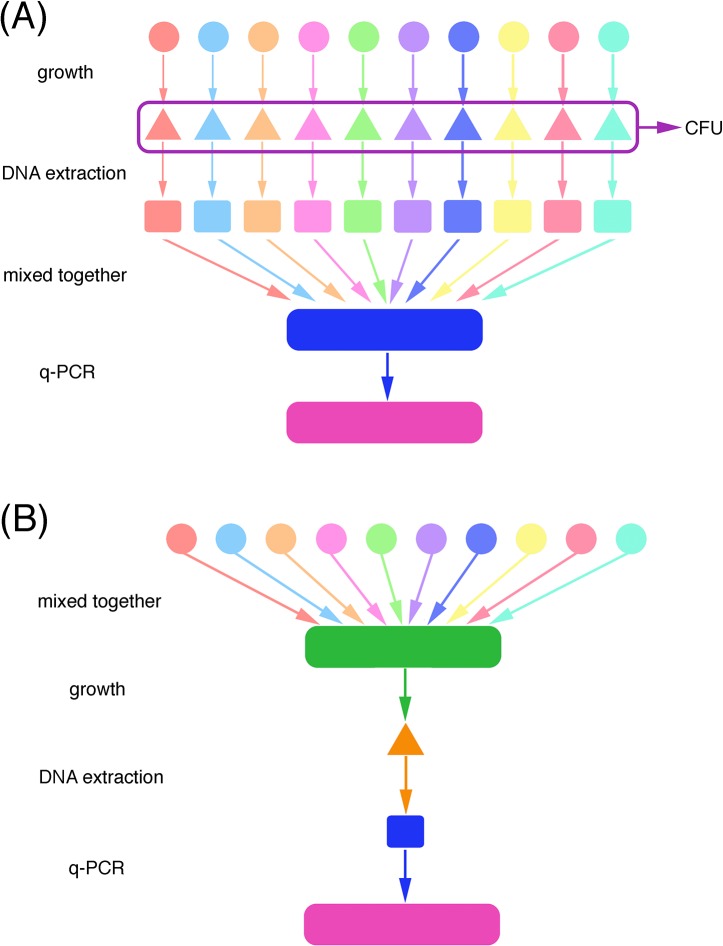
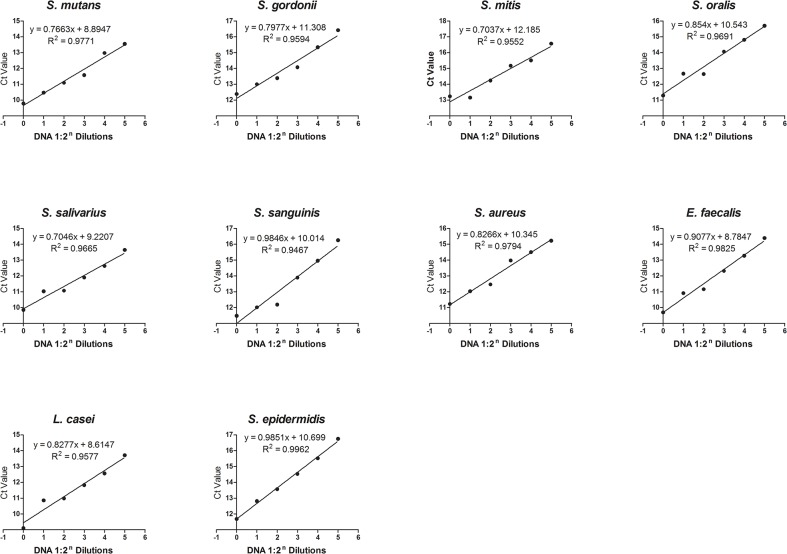
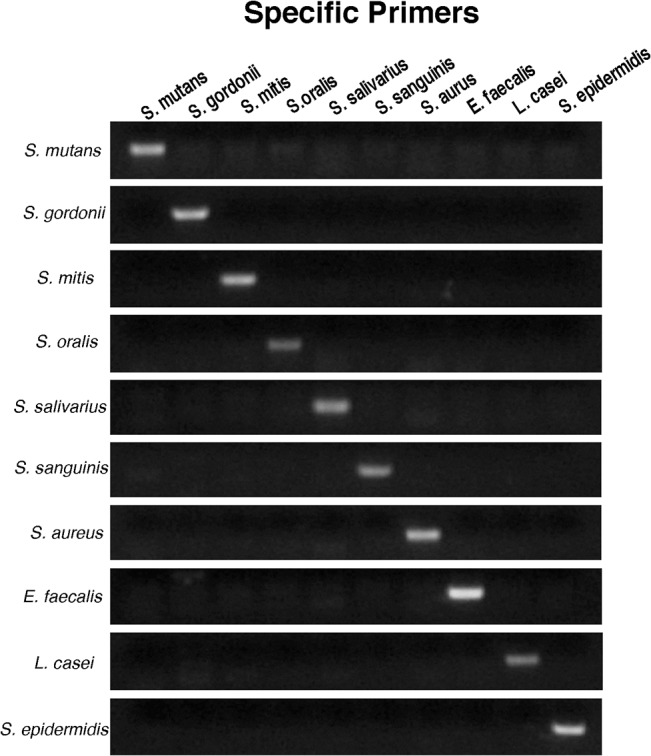
Changes of bacterial profiles in microbial communities are strongly associated with human health. There is an increasing need for multiple species research in vitro. To avoid high cost or measurement of a limited number of species, PCR-based multiple species cell counting (PCR-MSCC) has been conceived. Species-specific sequence is defined as a unique sequence of one species in a multiple species mixed culture. This sequence is identified by comparing a random 1000 bp genomic sequence of one species with the whole genome sequences of the other species in the same artificial mixed culture. If absent in the other genomes, it is the species-specific sequence. Species-specific primers were designed based on the species-specific sequences. In the present study, ten different oral bacterial species were mixed and grown in Brain Heart Infusion Yeast Extract with 1% sucrose for 24 hours. Biofilm was harvested and processed for DNA extraction and q-PCR amplification with the species-specific primers. By comparing the q-PCR data of each species in the unknown culture with reference cultures, in which the cell number of each species was determined by colony forming units on agar plate, the cell number of that strain in the unknown mixed culture was calculated. This technique is reliable to count microorganism numbers that are less than 100,000 fold different from other species within the same culture. Theoretically, it can be used in detecting a species in a mixed culture of over 200 species. Currently PCR-MSCC is one of the most economic methods for quantifying single species cell numbers, especially for the low abundant species, in a multiple artificial mixed culture in vitro.
微生物群落中细菌谱的变化与人类健康密切相关。体外对多种物种进行研究的需求日益增加。为避免高成本或只能检测有限数量的物种,人们构思了基于聚合酶链反应(PCR)的多物种细胞计数法(PCR-MSCC)。物种特异性序列被定义为多物种混合培养物中某一物种的独特序列。通过将某一物种随机的1000bp基因组序列与同一人工混合培养物中其他物种的全基因组序列进行比较来识别该序列。如果在其他基因组中不存在,则它就是物种特异性序列。基于物种特异性序列设计物种特异性引物。在本研究中,将十种不同的口腔细菌物种混合,在含有1%蔗糖的脑心浸液酵母提取物中培养24小时。收集生物膜并进行处理以提取DNA,然后用物种特异性引物进行定量聚合酶链反应(q-PCR)扩增。通过将未知培养物中每个物种的q-PCR数据与参考培养物进行比较(在参考培养物中,每个物种的细胞数通过琼脂平板上的菌落形成单位来确定),计算未知混合培养物中该菌株的细胞数。该技术对于计算同一培养物中与其他物种细胞数差异小于100,000倍的微生物数量是可靠的。理论上,它可用于检测超过200种物种的混合培养物中的某一物种。目前,PCR-MSCC是体外多物种人工混合培养物中定量单一物种细胞数,特别是低丰度物种细胞数的最经济方法之一。