Kuprewicz Erin K
Department of Biology, University of Miami, Coral Gables, Florida, United States of America.
PLoS One. 2015 May 13;10(5):e0124932. doi: 10.1371/journal.pone.0124932. eCollection 2015.
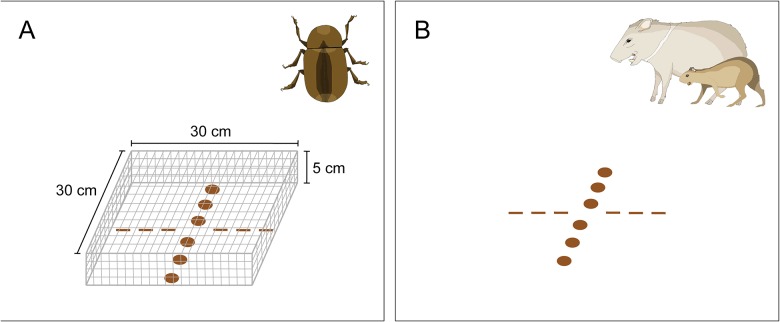
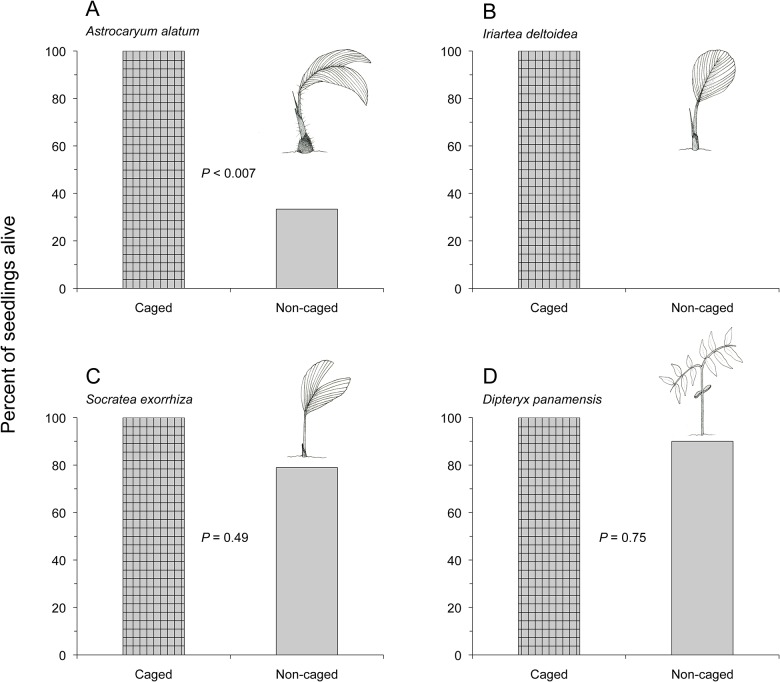
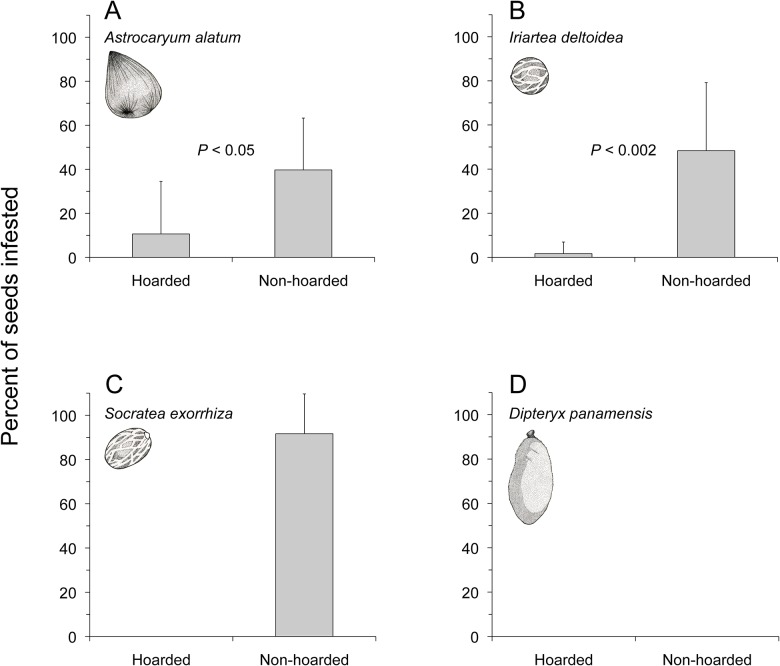
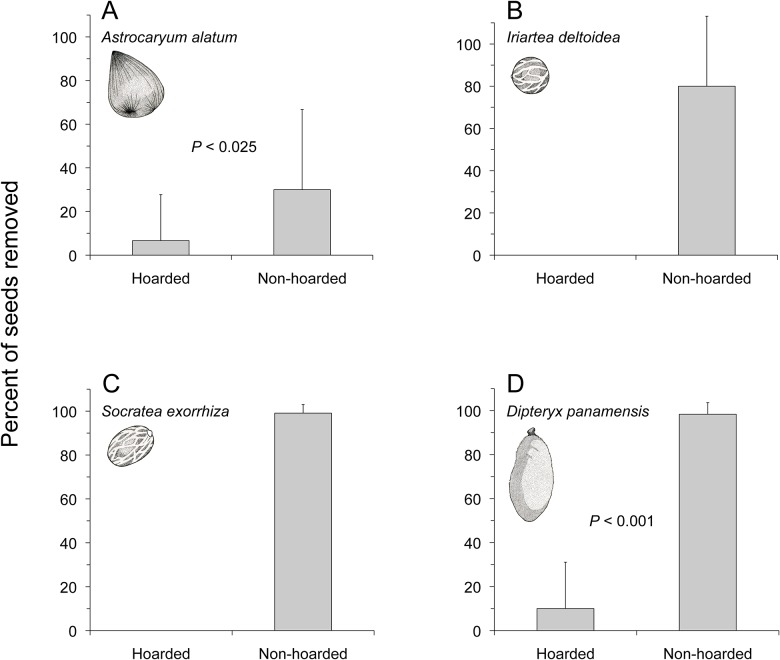
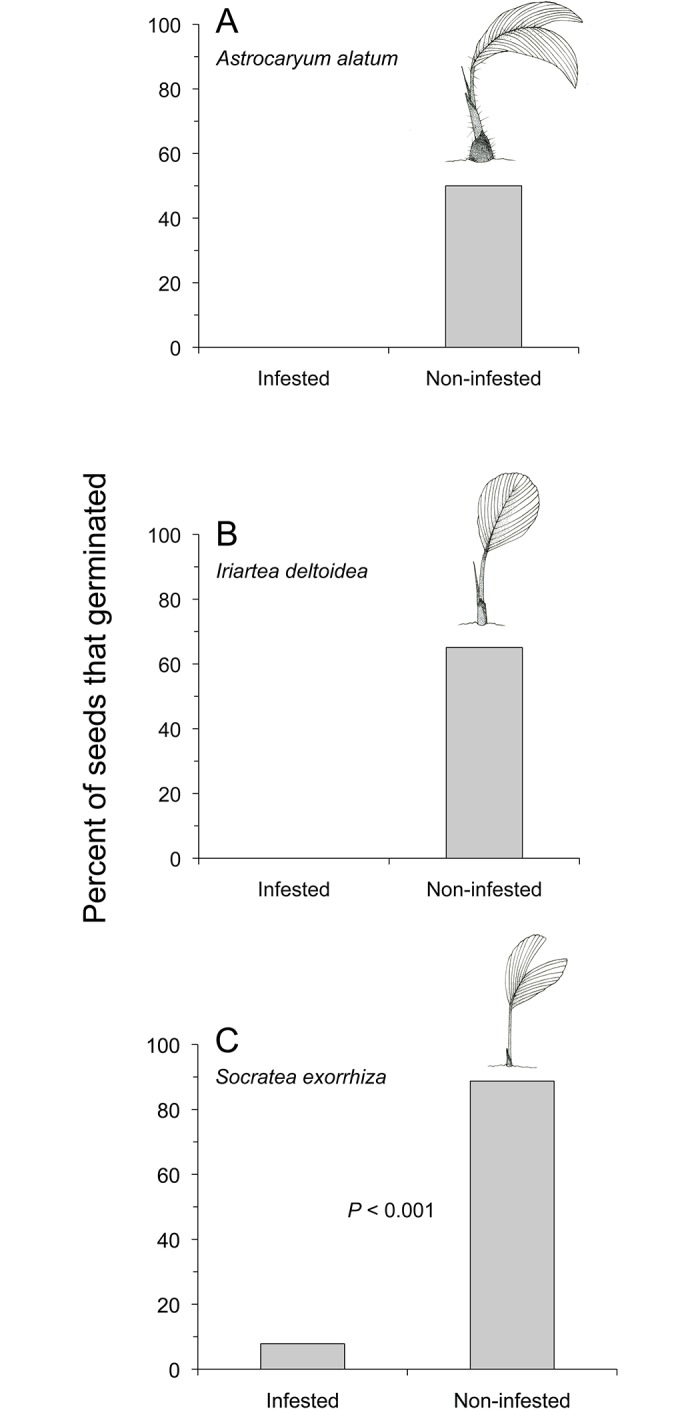
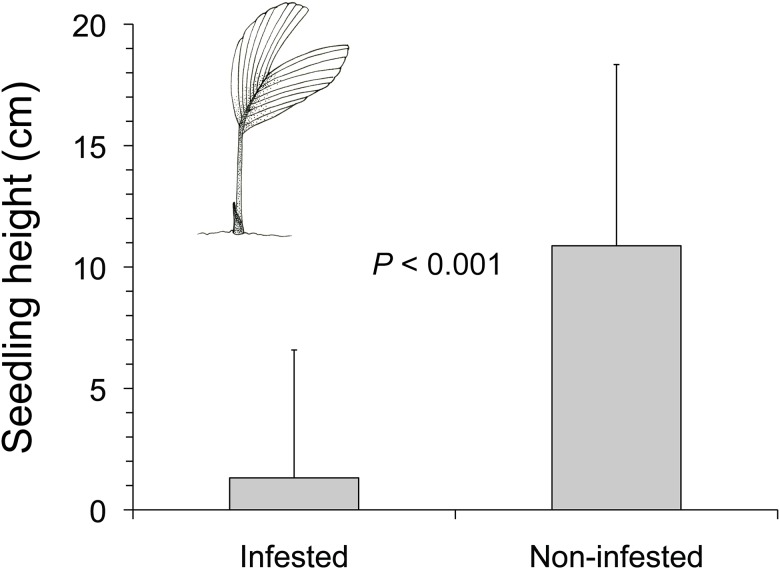
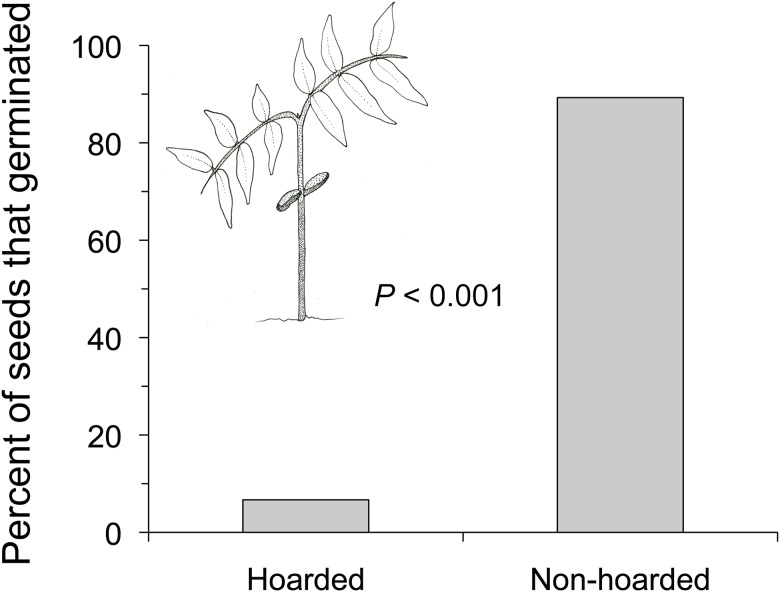
Scatter hoarding of seeds by animals contributes significantly to forest-level processes, including plant recruitment and forest community composition. However, the potential positive and negative effects of caching on seed survival, germination success, and seedling survival have rarely been assessed through experimental studies. Here, I tested the hypothesis that seed burial mimicking caches made by scatter hoarding Central American agoutis (Dasyprocta punctate) enhances seed survival, germination, and growth by protecting seeds from seed predators and providing favorable microhabitats for germination. In a series of experiments, I used simulated agouti seed caches to assess how hoarding affects seed predation by ground-dwelling invertebrates and vertebrates for four plant species. I tracked germination and seedling growth of intact and beetle-infested seeds and, using exclosures, monitored the effects of mammals on seedling survival through time. All experiments were conducted over three years in a lowland wet forest in Costa Rica. The majority of hoarded palm seeds escaped predation by both invertebrates and vertebrates while exposed seeds suffered high levels of infestation and removal. Hoarding had no effect on infestation rates of D. panamensis, but burial negatively affected germination success by preventing endocarp dehiscence. Non-infested palm seeds had higher germination success and produced larger seedlings than infested seeds. Seedlings of A. alatum and I. deltoidea suffered high mortality by seed-eating mammals. Hoarding protected most seeds from predators and enhanced germination success (except for D. panamensis) and seedling growth, although mammals killed many seedlings of two plant species; all seedling deaths were due to seed removal from the plant base. Using experimental caches, this study shows that scatter hoarding is beneficial to most seeds and may positively affect plant propagation in tropical forests, although tradeoffs in seed survival do exist.
动物对种子的分散贮藏对森林层面的过程有显著贡献,包括植物更新和森林群落组成。然而,通过实验研究很少评估贮藏对种子存活、发芽成功率和幼苗存活的潜在正负效应。在此,我检验了这样一个假设:模仿中美洲刺豚鼠(Dasyprocta punctata)分散贮藏所形成的种子埋藏,通过保护种子免受种子捕食者侵害并为发芽提供有利的微生境,从而提高种子存活、发芽和生长。在一系列实验中,我使用模拟刺豚鼠种子贮藏来评估贮藏如何影响四种植物物种被地面无脊椎动物和脊椎动物捕食种子的情况。我追踪了完整种子和被甲虫侵害种子的发芽及幼苗生长情况,并使用围栏监测哺乳动物随时间对幼苗存活的影响。所有实验在哥斯达黎加的一个低地湿润森林中进行了三年。大多数被贮藏的棕榈种子逃脱了无脊椎动物和脊椎动物的捕食,而暴露的种子遭受了高水平的侵害和移除。贮藏对巴拿马棕榈(D. panamensis)的侵害率没有影响,但埋藏通过阻止内果皮开裂对发芽成功率产生了负面影响。未受侵害的棕榈种子比受侵害的种子有更高的发芽成功率且长出的幼苗更大。翅荚决明(A. alatum)和三角叶滨藜(I. deltoidea)的幼苗因食种子哺乳动物而死亡率很高。贮藏保护了大多数种子免受捕食者侵害,提高了发芽成功率(巴拿马棕榈除外)和幼苗生长,尽管哺乳动物杀死了两种植物物种的许多幼苗;所有幼苗死亡都是由于从植株基部移除种子所致。通过实验贮藏,本研究表明分散贮藏对大多数种子有益,可能对热带森林中的植物繁殖产生积极影响,尽管在种子存活方面确实存在权衡。