Ibrahim Ahmed M S, Koolen Pieter G L, Ashraf Azra A, Kim Kuylhee, Mureau Marc A M, Lee Bernard T, Lin Samuel J
Division of Plastic Surgery, Beth Israel Deaconess Medical Center, Harvard Medical School, Boston, Mass.; and Department of Plastic and Reconstructive Surgery, Erasmus MC, University Medical Center Rotterdam, Rotterdam, The Netherlands.
Plast Reconstr Surg Glob Open. 2015 May 7;3(4):e381. doi: 10.1097/GOX.0000000000000148. eCollection 2015 Apr.
Acellular dermal matrices (ADMs) in plastic surgery have become increasingly popular particularly for breast reconstruction. Despite their advantages, questions exist regarding their association with a possible increased incidence of complications. We describe a collective experience of plastic surgeons' use of ADMs in reconstructive breast surgery using an internet-based survey.
Members of the American Society of Plastic Surgeons were recruited through voluntary, anonymous participation in an online survey. The web-based survey garnered information about participant demographics and their experience with ADM use in breast reconstruction procedures. After responses were collected, all data were anonymously processed.
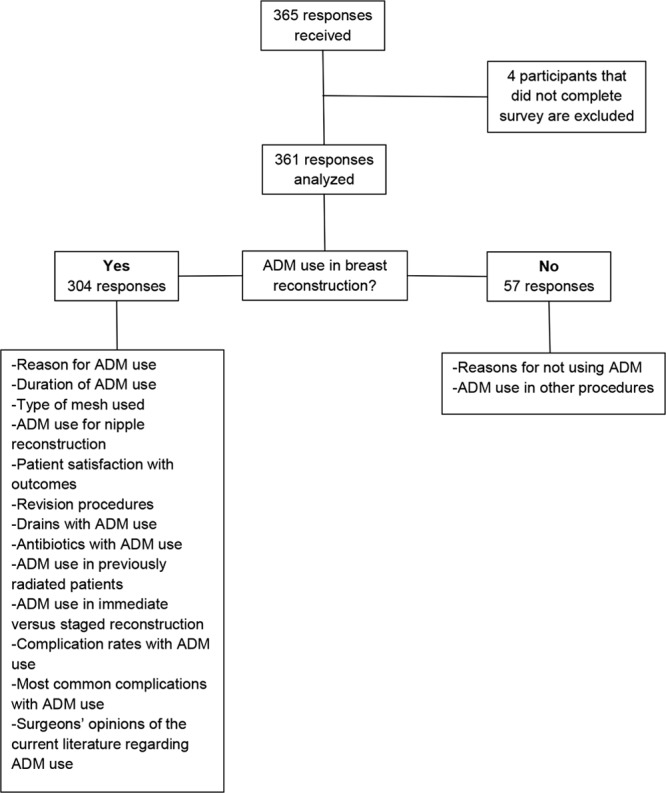
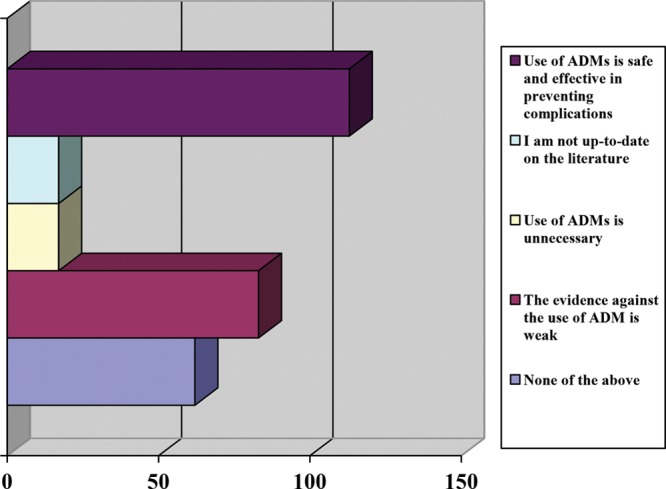
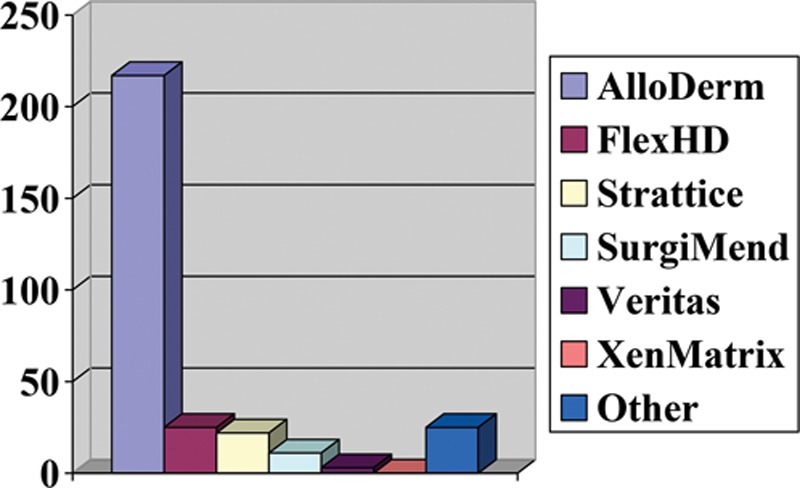
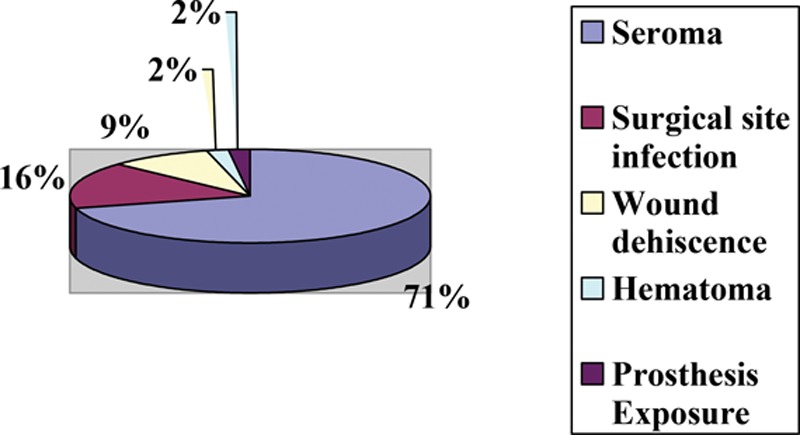
Data were ascertained through 365 physician responses of which 99% (n = 361) completed the survey. The majority of participants were men (84.5%) between 51 and 60 years (37.4%); 84.2% used ADM in breast reconstruction, including radiated patients (79.7%). ADM use was not favored for nipple reconstruction (81.5%); 94.6% of participants used drains, and 87.8% administered antibiotics postoperatively. The most common complications were seroma (70.9%) and infection (16%), although 57.4% claimed anecdotally that overall complication rate was unchanged after incorporating ADM into their practice. High cost was a deterrent for ADM use (37.5%).
Plastic surgeons currently use ADM in breast reconstruction for both immediate and staged procedures. Of those responding, a majority of plastic surgeons will incorporate drains and use postoperative antibiotics for more than 48 hours.
整形手术中的脱细胞真皮基质(ADM)越来越受欢迎,尤其是在乳房重建方面。尽管它们具有优势,但关于其与并发症发生率可能增加之间的关联仍存在疑问。我们通过一项基于互联网的调查描述了整形外科医生在乳房重建手术中使用ADM的总体经验。
通过自愿、匿名参与在线调查招募美国整形外科协会成员。基于网络的调查收集了有关参与者人口统计学信息及其在乳房重建手术中使用ADM的经验。收集回复后,所有数据均进行匿名处理。
通过365名医生的回复确定了数据,其中99%(n = 361)完成了调查。大多数参与者为男性(84.5%),年龄在51至60岁之间(37.4%);84.2%的人在乳房重建中使用ADM,包括接受过放疗的患者(79.7%)。ADM不常用于乳头重建(81.5%);94.6%的参与者使用引流管,87.8%的人术后使用抗生素。最常见的并发症是血清肿(70.9%)和感染(16%),尽管57.4%的人凭经验称在将ADM纳入其手术实践后总体并发症发生率没有变化。高成本是使用ADM的一个阻碍(37.5%)。
整形外科医生目前在乳房重建的即刻和分期手术中使用ADM。在做出回应的医生中,大多数整形外科医生会使用引流管并术后使用抗生素超过48小时。