Mehal W Z, Schuppan D
Section of Digestive Diseases, Yale University, New Haven, Connecticut.
Department of Medicine, Institute of Translational Immunology and Research Center for Immunotherapy, University of Mainz Medical Center, Mainz, Germany.
Semin Liver Dis. 2015 May;35(2):184-98. doi: 10.1055/s-0035-1550055. Epub 2015 May 14.
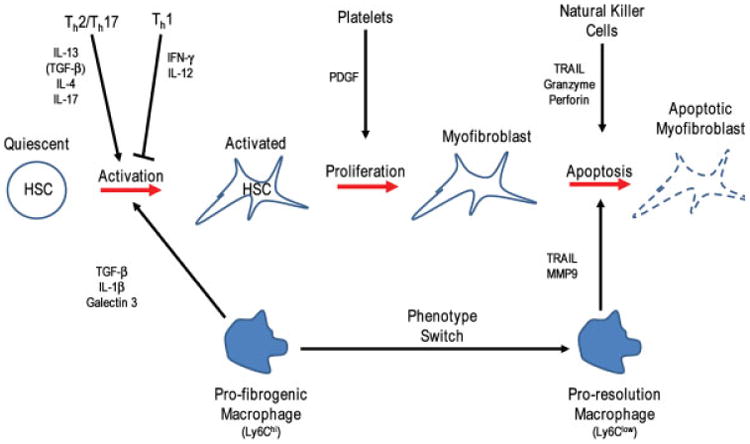
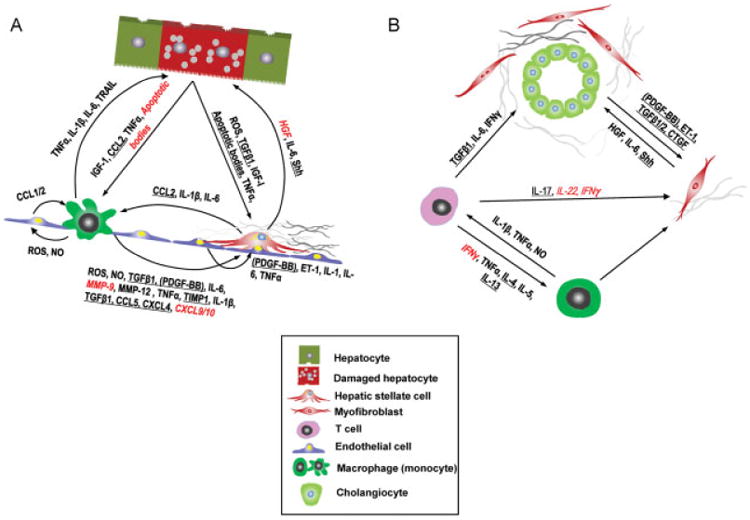
Significant progress has been made in understanding the principles underlying the development of liver fibrosis. This includes appreciating its dynamic nature, the importance of active fibrolysis in fibrosis regression, and the plasticity of cell populations endowing them with fibrogenic or fibrolytic properties. This is complemented by an increasing array of therapeutic targets with known roles in the progression or regression of fibrosis. With a key role for fibrosis in determining clinical outcomes and encouraging data from recently Food and Drug Administration-approved antifibrotics for pulmonary fibrosis, the development and validation of antifibrotic therapies has taken center stage in translational hepatology. In addition to summarizing the recent progress in antifibrotic therapies, the authors discuss some of the challenges ahead, such as achieving a better understanding of the interindividual heterogeneity of the fibrotic response, how to match interventions with the ideal patient population, and the development of better noninvasive methods to assess the dynamics of fibrogenesis and fibrolysis. Together, these advances will permit a better targeting and dose titration of individualized therapies. Finally, the authors discuss combination therapy with different antifibrotics as possibly the most potent approach for treating fibrosis in the liver.
在理解肝纤维化发展的潜在原理方面已取得显著进展。这包括认识到其动态性质、主动纤维溶解在纤维化消退中的重要性,以及赋予细胞群体促纤维化或抗纤维化特性的可塑性。越来越多在纤维化进展或消退中具有已知作用的治疗靶点对此起到了补充作用。鉴于纤维化在决定临床结果方面的关键作用以及来自美国食品药品监督管理局最近批准的用于治疗肺纤维化的抗纤维化药物的鼓舞人心的数据,抗纤维化疗法的开发和验证已成为转化肝脏病学的核心。除了总结抗纤维化疗法的最新进展外,作者还讨论了一些未来面临的挑战,例如如何更好地理解纤维化反应的个体间异质性、如何使干预措施与理想的患者群体相匹配,以及开发更好的非侵入性方法来评估纤维生成和纤维溶解的动态过程。这些进展共同将使个体化疗法能够更精准地靶向和进行剂量滴定。最后,作者讨论了联合使用不同的抗纤维化药物作为治疗肝纤维化可能最有效的方法。