Cai Songwang, Ye Zhiqiang, Wang Xiaohong, Pan Yuhang, Weng Yimin, Lao Sen, Wei Hongbo, Li Lian
Department of Cardiothoracic Surgery, The Third Affiliated Hospital, Sun Yat-sen University, Guangzhou, Guangdong, China.
Department of Emergency, The Third Affiliated Hospital, Sun Yat-sen University, Guangzhou, Guangdong, China.
J Exp Clin Cancer Res. 2015 May 15;34(1):48. doi: 10.1186/s13046-015-0165-2.
P21-activated kinase 4 (PAK4), an effector of the Rho family protein Cdc42, is an important oncogene whose expression is increased in many human cancers and is generally positively correlated with advanced disease and decreased survival. However, little is known about the expression and biological function of PAK4 in human non-small cell lung cancer (NSCLC).
PAK4 expression in NSCLC tissues and adjacent non-tumor tissues were assessed by immunohistochemistry, real-time PCR, and western blotting. Prognostic value of PAK4 expression was evaluated by Kaplan-Meier analysis and Cox regression. siRNA-mediated gene silencing and protein kinase assay was applied to demonstrate the role and the mechanism of PAK4 in lung cancer cell migration, invasion.
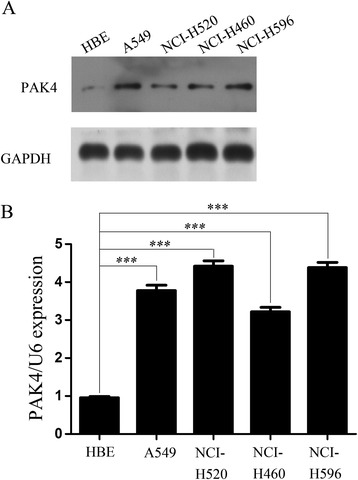
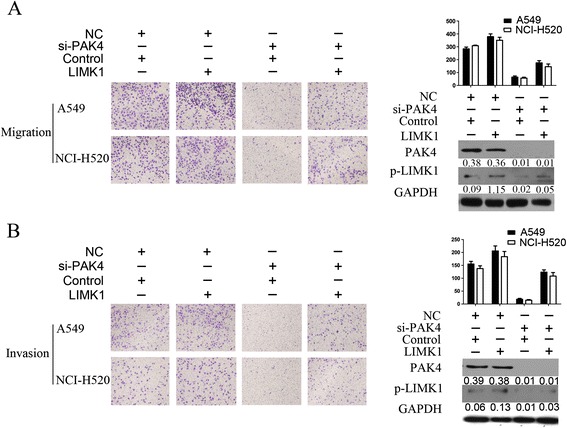
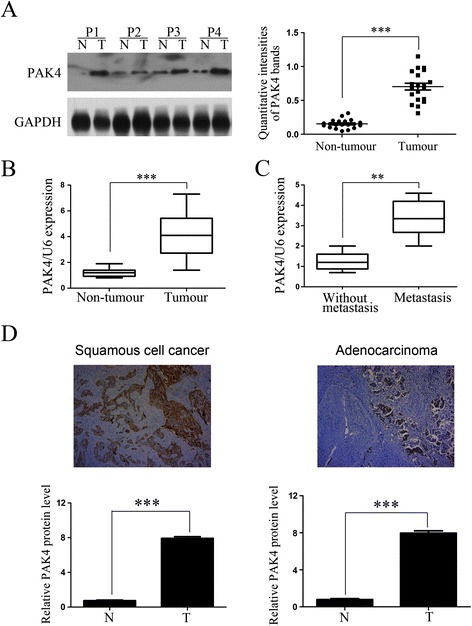
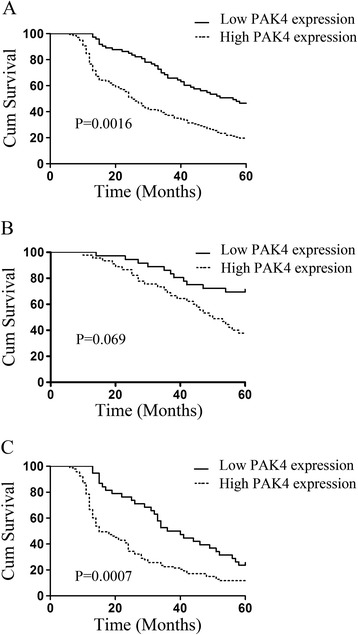
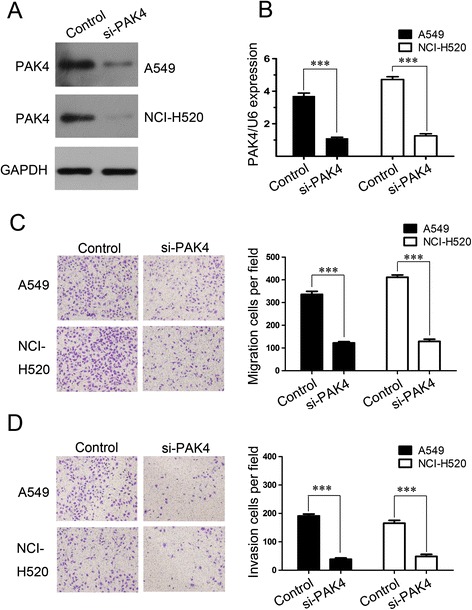
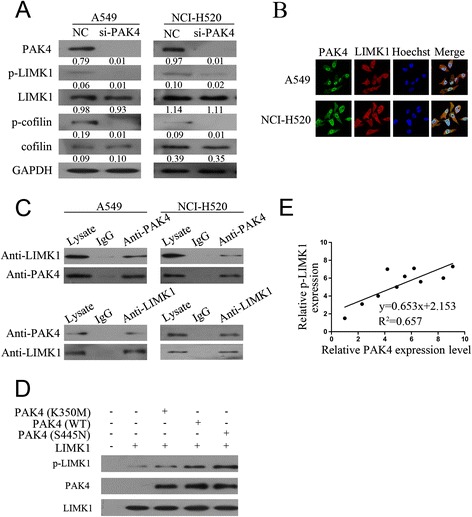
The results showed that PAK4 was overexpressed in NSCLC cell lines and human NSCLC tissues. PAK4 expression was detected both in the membranes and cytoplasm of NSCLC cancer cells in vivo. Moreover, increased expression of PAK4 was associated with metastasis, shorter overall survival, advanced stage of NSCLC. Furthermore, PAK4 expression was positively correlated with phosphorylation of LIMK1 expression levels. Knockdown of PAK4 in NSCLC cell lines led to reduce the phosphorylation of LIMK1, which resulted in decrease of the cell migration and invasion. In addition, PAK4 bound to LIMK1 directly and activated it via phosphorylation.
These data demonstrate that PAK4 mediated LIMK1 phosphorylation regulates the migration and invasion in NSCLC. Therefore, PAK4 might be a significant prognostic marker and potential therapeutic molecular target in NSCLC.
p21激活激酶4(PAK4)是Rho家族蛋白Cdc42的效应器,是一种重要的癌基因,其在许多人类癌症中表达增加,并且通常与疾病进展和生存率降低呈正相关。然而,关于PAK4在人类非小细胞肺癌(NSCLC)中的表达和生物学功能知之甚少。
通过免疫组织化学、实时PCR和蛋白质印迹法评估NSCLC组织和癌旁非肿瘤组织中PAK4的表达。通过Kaplan-Meier分析和Cox回归评估PAK4表达的预后价值。应用小干扰RNA介导的基因沉默和蛋白激酶测定来证明PAK4在肺癌细胞迁移、侵袭中的作用和机制。
结果显示PAK4在NSCLC细胞系和人类NSCLC组织中过表达。在体内NSCLC癌细胞的细胞膜和细胞质中均检测到PAK4表达。此外,PAK4表达增加与NSCLC的转移、较短的总生存期、晚期相关。此外,PAK4表达与LIMK1表达水平的磷酸化呈正相关。敲低NSCLC细胞系中的PAK4导致LIMK1磷酸化减少,从而导致细胞迁移和侵袭减少。此外,PAK4直接与LIMK1结合并通过磷酸化激活它。
这些数据表明PAK4介导的LIMK1磷酸化调节NSCLC中的迁移和侵袭。因此,PAK4可能是NSCLC中一个重要的预后标志物和潜在的治疗分子靶点。