Dinkova-Kostova Albena T, Abramov Andrey Y
Jacqui Wood Cancer Centre, Division of Cancer Research, Medical Research Institute, University of Dundee, Dundee DD1 9SY, Scotland, UK; Departments of Medicine and Pharmacology and Molecular Sciences, Johns Hopkins University School of Medicine, Baltimore, MD 21205, USA.
Department of Molecular Neuroscience, University College London Institute of Neurology, London WC1N 3BG, UK.
Free Radic Biol Med. 2015 Nov;88(Pt B):179-188. doi: 10.1016/j.freeradbiomed.2015.04.036. Epub 2015 May 11.
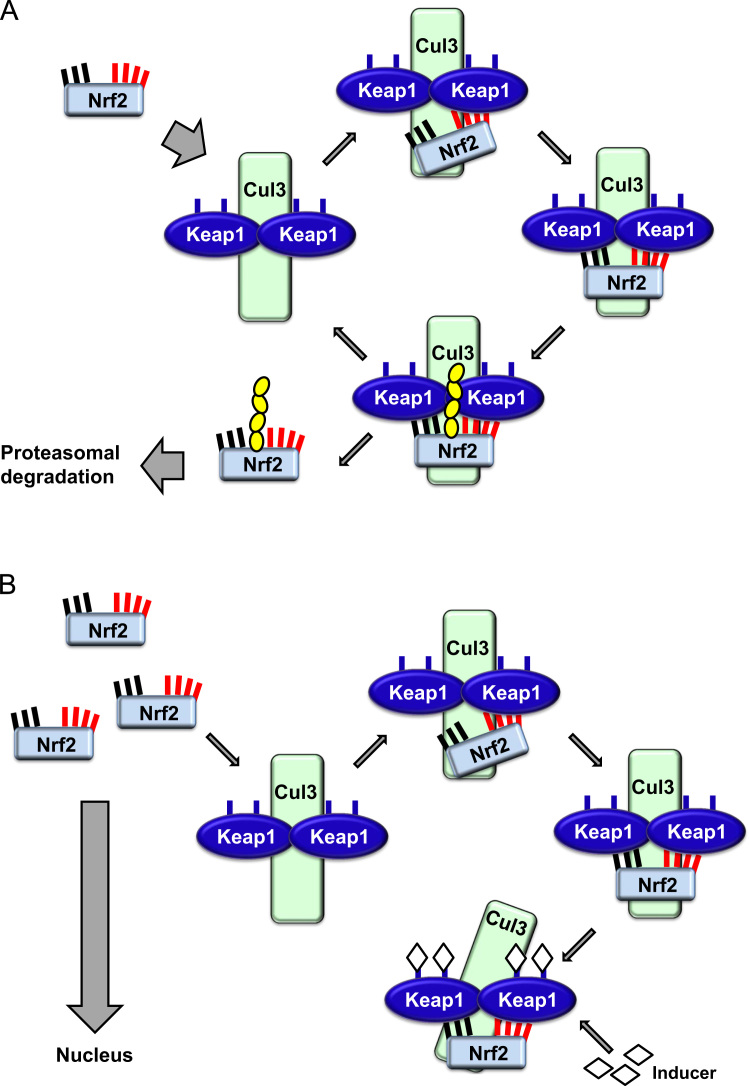
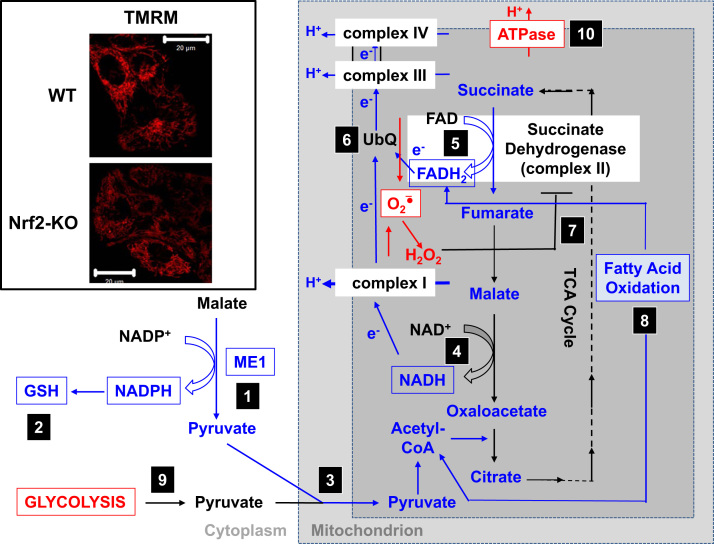
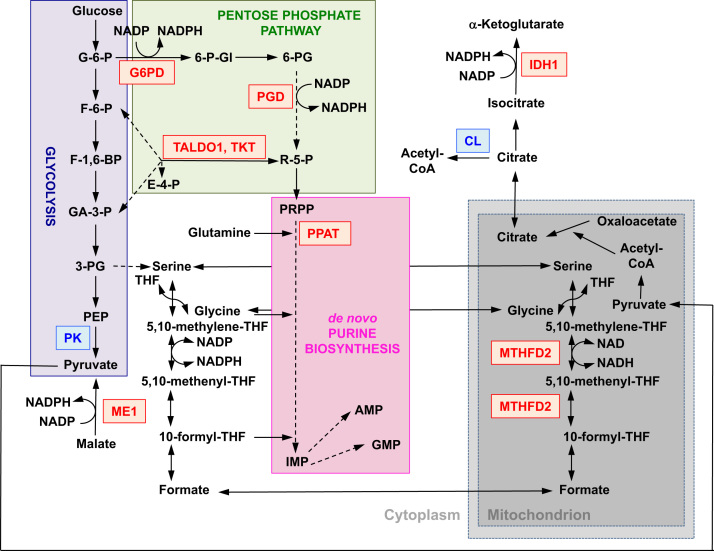
The transcription factor NF-E2 p45-related factor 2 (Nrf2; gene name NFE2L2) allows adaptation and survival under conditions of stress by regulating the gene expression of diverse networks of cytoprotective proteins, including antioxidant, anti-inflammatory, and detoxification enzymes as well as proteins that assist in the repair or removal of damaged macromolecules. Nrf2 has a crucial role in the maintenance of cellular redox homeostasis by regulating the biosynthesis, utilization, and regeneration of glutathione, thioredoxin, and NADPH and by controlling the production of reactive oxygen species by mitochondria and NADPH oxidase. Under homeostatic conditions, Nrf2 affects the mitochondrial membrane potential, fatty acid oxidation, availability of substrates (NADH and FADH2/succinate) for respiration, and ATP synthesis. Under conditions of stress or growth factor stimulation, activation of Nrf2 counteracts the increased reactive oxygen species production in mitochondria via transcriptional upregulation of uncoupling protein 3 and influences mitochondrial biogenesis by maintaining the levels of nuclear respiratory factor 1 and peroxisome proliferator-activated receptor γ coactivator 1α, as well as by promoting purine nucleotide biosynthesis. Pharmacological Nrf2 activators, such as the naturally occurring isothiocyanate sulforaphane, inhibit oxidant-mediated opening of the mitochondrial permeability transition pore and mitochondrial swelling. Curiously, a synthetic 1,4-diphenyl-1,2,3-triazole compound, originally designed as an Nrf2 activator, was found to promote mitophagy, thereby contributing to the overall mitochondrial homeostasis. Thus, Nrf2 is a prominent player in supporting the structural and functional integrity of the mitochondria, and this role is particularly crucial under conditions of stress.
转录因子NF-E2 p45相关因子2(Nrf2;基因名NFE2L2)通过调节多种细胞保护蛋白网络的基因表达,使细胞在应激条件下实现适应与存活,这些细胞保护蛋白包括抗氧化、抗炎和解毒酶,以及有助于修复或清除受损大分子的蛋白质。Nrf2在维持细胞氧化还原稳态中发挥关键作用,它通过调节谷胱甘肽、硫氧还蛋白和NADPH的生物合成、利用和再生,以及控制线粒体和NADPH氧化酶产生的活性氧来实现这一功能。在稳态条件下,Nrf2影响线粒体膜电位、脂肪酸氧化、呼吸作用底物(NADH和FADH2/琥珀酸)的可用性以及ATP合成。在应激或生长因子刺激条件下,Nrf2的激活通过解偶联蛋白3的转录上调抵消线粒体中活性氧产生的增加,并通过维持核呼吸因子1和过氧化物酶体增殖物激活受体γ共激活因子1α的水平,以及促进嘌呤核苷酸生物合成来影响线粒体生物发生。药理学上的Nrf2激活剂,如天然存在的异硫氰酸酯萝卜硫素,可抑制氧化剂介导的线粒体通透性转换孔开放和线粒体肿胀。奇怪的是,一种最初设计为Nrf2激活剂的合成1,4 - 二苯基 - 1,2,3 - 三唑化合物,被发现可促进线粒体自噬,从而有助于整体线粒体稳态。因此,Nrf2在维持线粒体的结构和功能完整性方面起着重要作用,并且这一作用在应激条件下尤为关键。