Sun Bin, Wang Yu-Fei, Li Cheng-Sen, Yang Jian, Li Jin-Feng, Li Ye-Liang, Deng Tao, Wang Shi-Qi, Zhao Min, Spicer Robert A, Ferguson David K, Mehrotra Rakesh C
1] State Key Laboratory of Systematic and Evolutionary Botany, Institute of Botany, Chinese Academy of Sciences, Beijing 100093, China [2] University of Chinese Academy of Sciences, Beijing 100039, China.
State Key Laboratory of Systematic and Evolutionary Botany, Institute of Botany, Chinese Academy of Sciences, Beijing 100093, China.
Sci Rep. 2015 May 15;5:10379. doi: 10.1038/srep10379.
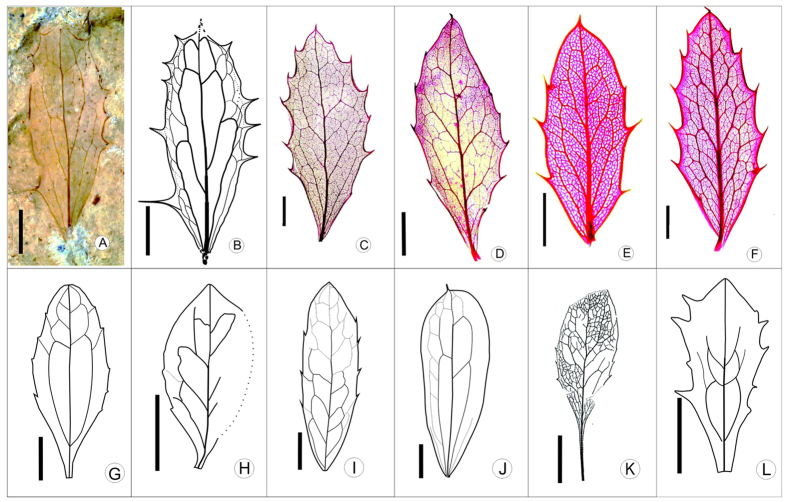
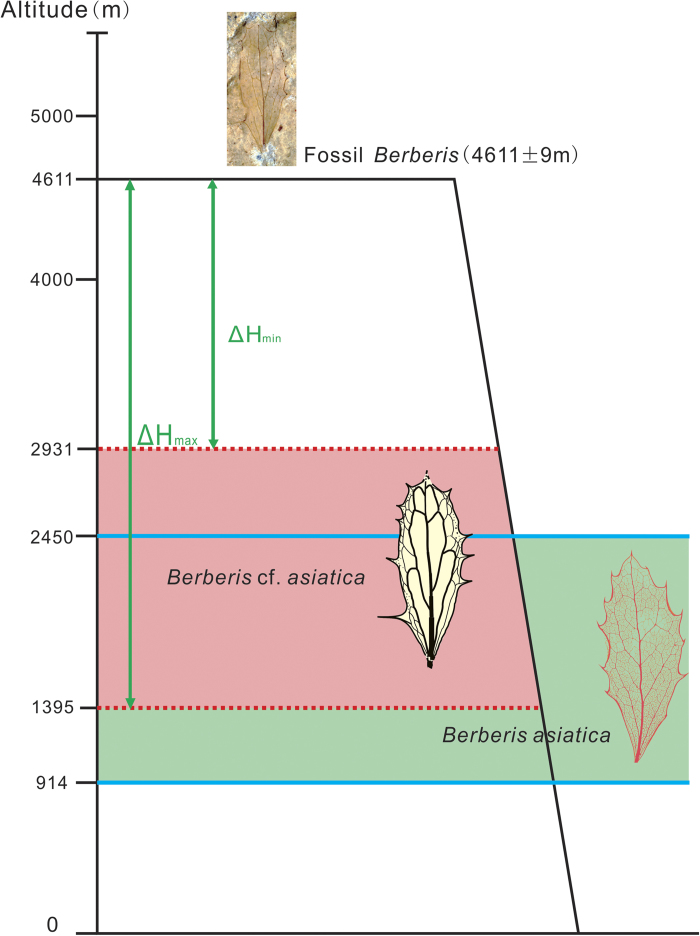
The area and elevation of the Tibetan Plateau over time has directly affected Asia's topography, the characteristics of the Asian monsoon, and modified global climate, but in ways that are poorly understood. Charting the uplift history is crucial for understanding the mechanisms that link elevation and climate irrespective of time and place. While some palaeoelevation data are available for southern and central Tibet, clues to the uplift history of northern Tibet remain sparse and largely circumstantial. Leaf fossils are extremely rare in Tibet but here we report a newly discovered early Miocene barberry (Berberis) from Wudaoliang in the Hoh-Xil Basin in northern Tibet, at a present altitude of 4611 ± 9 m. Considering the fossil and its nearest living species probably occupied a similar or identical environmental niche, the palaeoelevation of the fossil locality, corrected for Miocene global temperature difference, is estimated to have been between 1395 and 2931 m, which means this basin has been uplifted ~2-3 km in the last 17 million years. Our findings contradict hypotheses that suggest northern Tibet had reached or exceeded its present elevation prior to the Miocene.
青藏高原的面积和海拔随时间的变化直接影响了亚洲的地形、亚洲季风的特征,并改变了全球气候,但其影响方式却鲜为人知。绘制隆升历史对于理解海拔与气候之间的联系机制至关重要,无论时间和地点如何。虽然在西藏南部和中部有一些古海拔数据,但西藏北部隆升历史的线索仍然稀少,且大多是间接证据。叶化石在西藏极为罕见,但我们在此报告了一个新发现的中新世早期小檗属植物化石,来自西藏北部可可西里盆地五道梁,当前海拔为4611±9米。考虑到该化石及其最近的现存物种可能占据了相似或相同的环境生态位,经中新世全球温差校正后,化石所在地的古海拔估计在1395至2931米之间,这意味着该盆地在过去1700万年中隆升了约2 - 3千米。我们的发现与那些认为西藏北部在中新世之前就已达到或超过其当前海拔的假说相矛盾。