Blozik Eva, Rapold Roland, Reich Oliver
Department of Health Sciences, Helsana Group, Zürich, Switzerland ; Department of Medicine, Division of General Practice, University Medical Centre Freiburg, Freiburg, Germany.
Department of Health Sciences, Helsana Group, Zürich, Switzerland.
Risk Manag Healthc Policy. 2015 Apr 24;8:73-80. doi: 10.2147/RMHP.S78179. eCollection 2015.
Drugs can be supplied either directly from the prescribing physician (physician dispensing [PD]) or via a pharmacy. It is unclear whether the dispensing channel is associated with quality problems. Potentially inappropriate medication (PIM) is associated with adverse outcomes in older persons and can be considered a marker for quality deficits in prescribing. We investigated whether prevalence of PIM differs across dispensing channels.
We analyzed basic health insurance claims of 50,747 person quarter years with PIM use of residents of the Swiss cantons Aargau and Lucerne of the years 2012 and 2013. PIM was identified using the Beers 2012 criteria and the PRISCUS list. We calculated PIM prevalence stratified by supply channel. Adjusted mixed effects logistic regression analysis was done to estimate the effect of obtaining medications through the dispensing physician as compared to the pharmacy channel on receipt of PIM. The most frequent PIMs were identified.
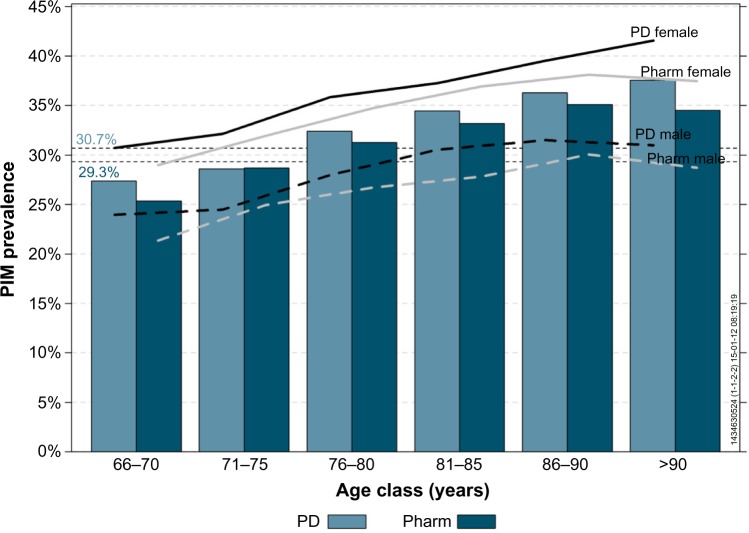
There is a small but detectable difference in total PIM prevalence: 30.7% of the population supplied by a dispensing physician as opposed to 29.3% individuals who received medication in a pharmacy. According to adjusted logistic regression individuals who obtained the majority of their medications from their prescribing physician had a 15% higher chance to receive a PIM (odds ratio 1.15, 95% confidence interval 1.08-1.22; P<0.001).
Physician dispensing seems to affect quality and safety of drug prescriptions. Quality issues should not be neglected in the political discussion about the regulations on PD. Future studies should explore whether PD is related to other indicators of inefficiency or quality flaws. The present study also underlines the need for interventions to reduce the high rates of PIM prescribing in Switzerland.
药物可以直接由开处方的医生提供(医生配药[PD]),也可以通过药房供应。尚不清楚配药渠道是否与质量问题有关。潜在不适当用药(PIM)与老年人的不良结局相关,可被视为处方质量缺陷的一个指标。我们调查了不同配药渠道的PIM患病率是否存在差异。
我们分析了2012年和2013年瑞士阿尔高州和卢塞恩州居民50747人季度年的基本医疗保险索赔记录。使用2012年版《Beers标准》和PRISCUS清单来识别PIM。我们计算了按供应渠道分层的PIM患病率。进行了调整后的混合效应逻辑回归分析,以估计与通过药房渠道获取药物相比,通过配药医生获取药物对PIM接受情况的影响。确定了最常见的PIM。
总PIM患病率存在微小但可检测到的差异:由配药医生供应药物的人群中,PIM患病率为30.7%,而在药房接受药物治疗的个体中这一比例为29.3%。根据调整后的逻辑回归分析,大部分药物从开处方医生处获取的个体接受PIM的几率高15%(优势比1.15,95%置信区间1.08 - 1.22;P<0.001)。
医生配药似乎会影响药物处方的质量和安全性。在关于医生配药规定的政治讨论中,不应忽视质量问题。未来的研究应探讨医生配药是否与其他效率低下或质量缺陷指标相关。本研究还强调了在瑞士采取干预措施以降低PIM高处方率的必要性。