Zhao Feng, Wang Zhe, Lang Hongxin, Liu Xiaoyu, Zhang Dianbao, Wang Xiliang, Zhang Tao, Wang Rui, Shi Ping, Pang Xining
Department of Stem Cells and Regenerative Medicine, Key Laboratory of Cell Biology, Ministry of Public Health and Key Laboratory of Medical Cell Biology, Ministry of Education, China Medical University, 77 Puhe Street, Shenbei New District, Shenyang City 110013, Liaoning Province, China.
Department of Blood Transfusion, Shengjing Hospital of China Medical University, 39 Huaxiang Street, Tiexi District, Shenyang City 110004, Liaoning Province, China.
PLoS One. 2015 May 15;10(5):e0126087. doi: 10.1371/journal.pone.0126087. eCollection 2015.
Early- to mid-gestational fetal mammalian skin wounds heal rapidly and without scarring. Keratinocytes (KCs) have been found to exert important effects on the regulation of fibroblasts. There may be significant differences of gestational fetal KCs at different ages. The advantages in early- to mid-gestational fetal KCs could lead to fetal scarless wound healing.
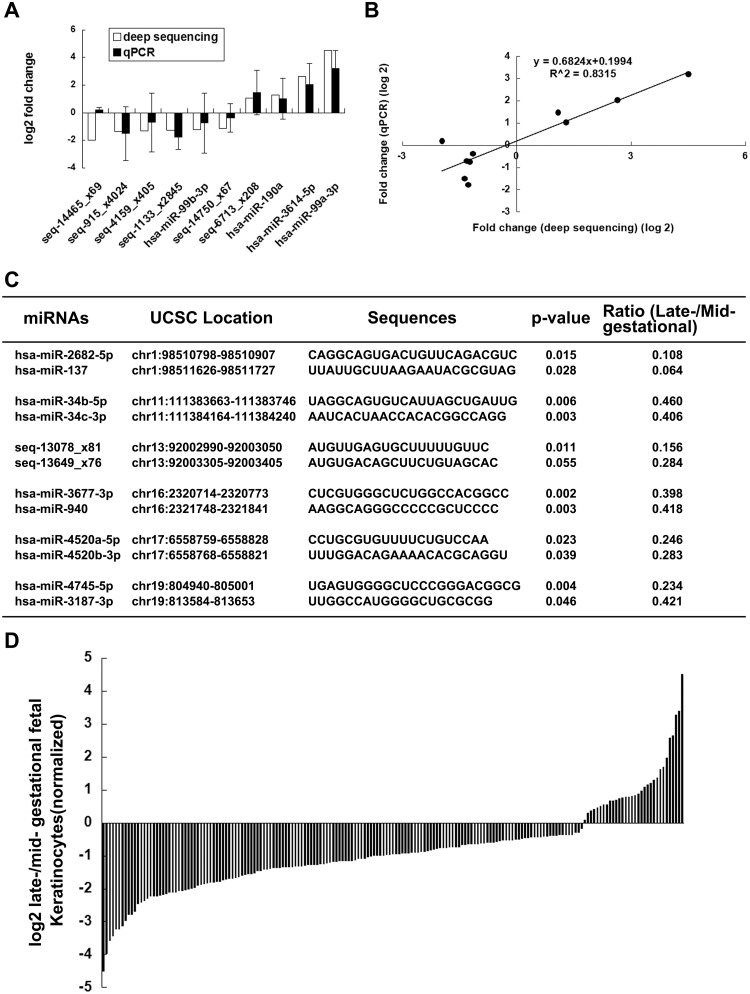
KCs from six human fetal skin samples were divided into two groups: a mid-gestation group (less than 28 weeks of gestational age) and a late-gestation group (more than 28 weeks of gestational age). RNA extracted from KCs was used to prepare a library of small RNAs for next-generation sequencing (NGS). To uncover potential novel microRNA (miRNAs), the mirTools 2.0 web server was used to identify candidate novel human miRNAs from the NGS data. Other bioinformatical analyses were used to further validate the novel miRNAs. The expression levels of the miRNAs were further confirmed by real-time quantitative RT-PCR.
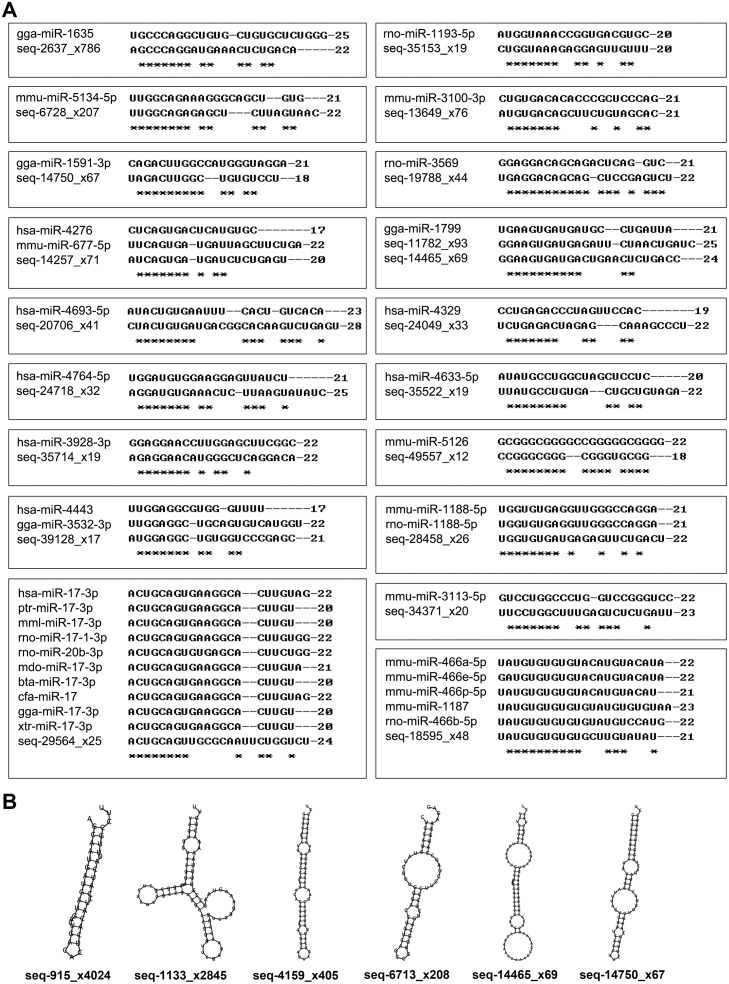
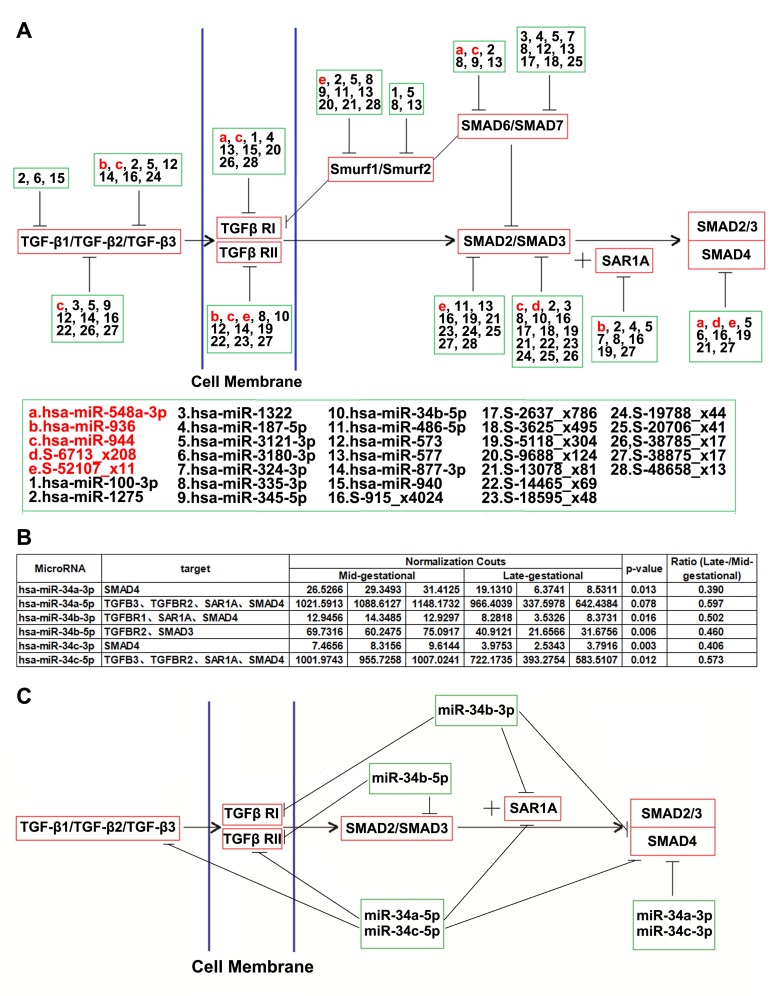
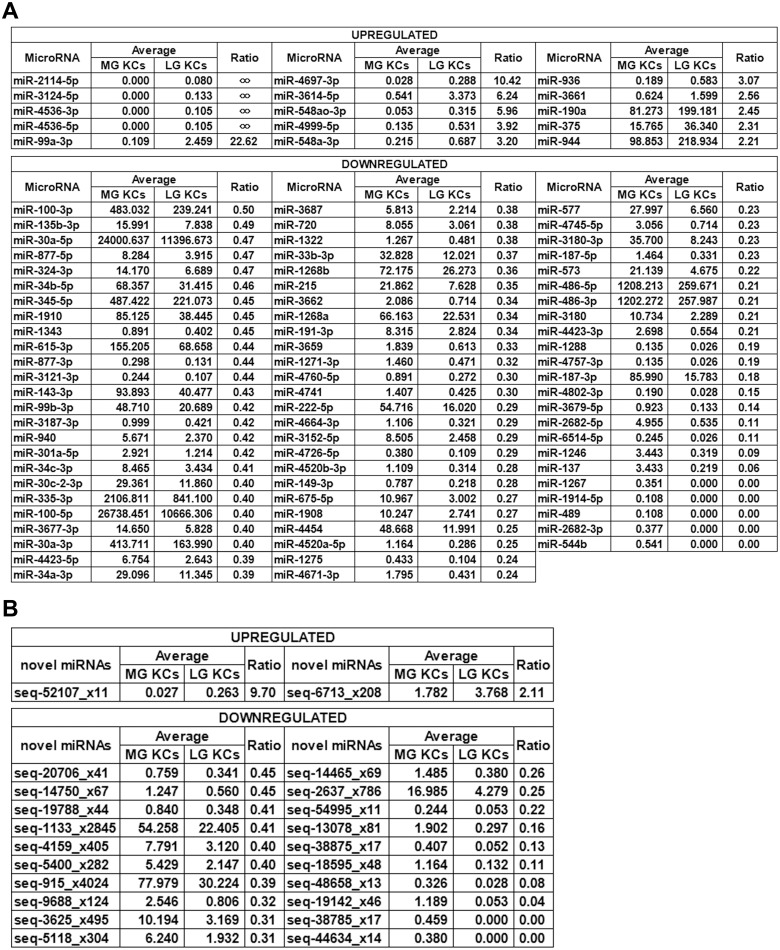
A total of 61.59 million reads were mapped to 1,170 known human miRNAs in miRBase. Among a total of 202 potential novel miRNAs uncovered, 106 candidates have a higher probability of being novel human miRNAs. A total of 110 miRNAs, including 22 novel miRNA candidates, were significantly differently expressed between mid- and late-gestational fetal KCs. Thirty-three differentially expressed miRNAs and miR-34 family members are correlated with the transforming growth factor-β (TGF-β) pathway.
Taken together, our results provide compelling evidence supporting the existence of 106 novel miRNAs and the dynamic expression of miRNAs that extensively targets the TGF-β pathway at different gestational ages in fetal KCs. MiRNAs showing altered expression at different gestational ages in fetal KCs may contribute to scarless wound healing in early- to mid-gestational fetal KCs, and thus may be new targets for potential scar prevention and reduction therapies.
妊娠早期至中期的哺乳动物胎儿皮肤伤口愈合迅速且无瘢痕形成。已发现角质形成细胞(KC)对成纤维细胞的调节发挥重要作用。不同孕周的妊娠胎儿KC可能存在显著差异。妊娠早期至中期胎儿KC的优势可能导致胎儿无瘢痕伤口愈合。
从6例人类胎儿皮肤样本中获取的KC分为两组:妊娠中期组(胎龄小于28周)和妊娠晚期组(胎龄大于28周)。从KC中提取的RNA用于制备小RNA文库以进行下一代测序(NGS)。为了发现潜在的新型微小RNA(miRNA),使用mirTools 2.0网络服务器从NGS数据中鉴定候选新型人类miRNA。其他生物信息学分析用于进一步验证新型miRNA。通过实时定量RT-PCR进一步确认miRNA的表达水平。
共有6159万条读数映射到miRBase中的1170种已知人类miRNA。在总共发现的202种潜在新型miRNA中,106种候选物更有可能是新型人类miRNA。共有110种miRNA,包括22种新型miRNA候选物,在妊娠中期和晚期胎儿KC之间存在显著差异表达。33种差异表达的miRNA和miR-34家族成员与转化生长因子-β(TGF-β)途径相关。
综上所述,我们的结果提供了有力证据,支持106种新型miRNA的存在以及miRNA在胎儿KC不同孕周广泛靶向TGF-β途径的动态表达。在胎儿KC不同孕周表达改变的miRNA可能有助于妊娠早期至中期胎儿KC的无瘢痕伤口愈合,因此可能是潜在瘢痕预防和减少治疗的新靶点。