Wang Jipeng, Wang Shuqi, Liu Xiufeng, Xu Bin, Chai Riyi, Zhou Pan, Ju Chuan, Sun Jun, Brindley Paul J, Hu Wei
Department of Microbiology and Microbial Engineering, School of Life Sciences, Fudan University, Shanghai, China.
Key Laboratory of Parasite and Vector Biology of Ministry of Public Health, Institute of Parasitic Diseases, Chinese Center for Disease Control and Prevention, Shanghai, China.
PLoS One. 2015 May 15;10(5):e0126822. doi: 10.1371/journal.pone.0126822. eCollection 2015.
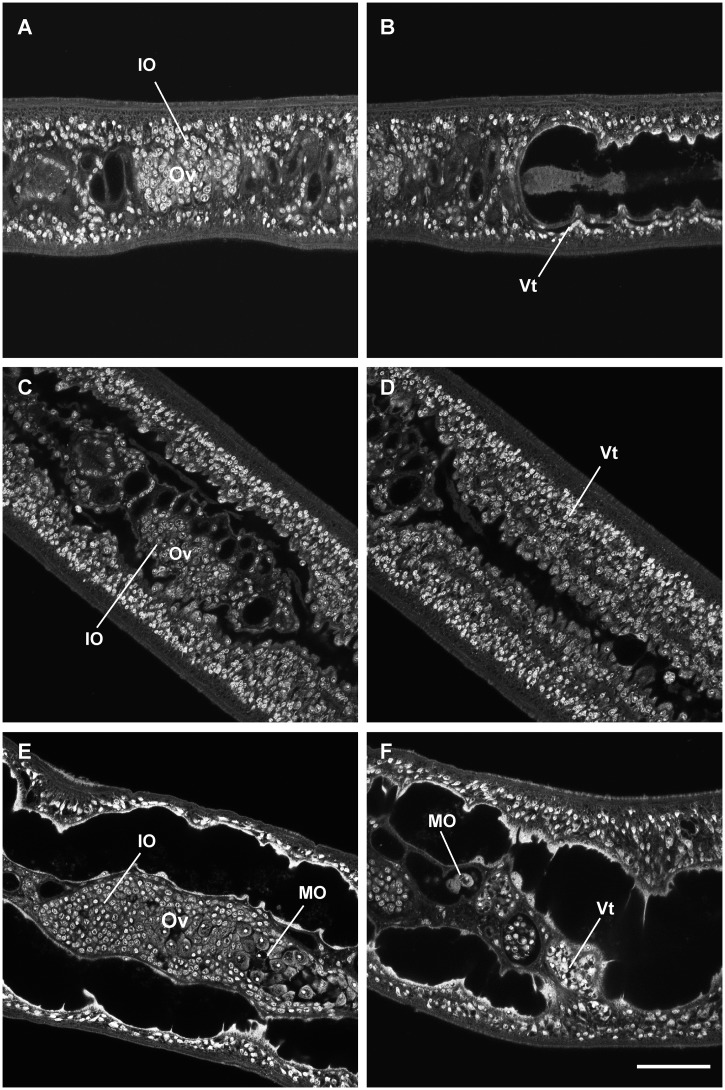
The reproductive development and maturation of female schistosomes are crucial since their released eggs are responsible for the host immunopathology and transmission of schistosomiasis. However, little is known about the nutrients required by female Schistosoma japonicum during its sexual maturation. We evaluated the promoting effect of several nutrients (calf serum, red blood cells (RBCs), ATP and hypoxanthine) on the reproductive development of pre-adult females at 18 days post infection (dpi) from mixed infections and at 50 dpi from unisexual infections of laboratory mice in basic medium RPMI-1640. We found RBCs, rather than other nutrients, promoted the female sexual maturation and egg production with significant morphological changes. In 27% of females (18 dpi) from mixed infections that paired with males in vitro on day 14, vitelline glands could be positively stained by Fast Blue B; and in 35% of females (50 dpi) from unisexual infections on day 21, mature vitelline cells were observed. Infertile eggs were detected among both groups. To analyze which component of mouse RBCs possesses the stimulating effect, RBCs were fractionated and included in media. However, the RBC fractions failed to stimulate development of the female reproductive organs. In addition, bovine hemoglobin hydrolysate, digested by neutral protease, was found to exhibit the promoting activity instead of untreated bovine hemoglobin. The other protein hydrolysate, lactalbumin hydrolysate, exhibited a similar effect with bovine hemoglobin hydrolysate. Using quantitative RT-PCR, we found the expression levels of four reproduction-related genes were significantly stimulated by RBCs. These data indicate that RBCs provide essential nutrients for the sexual maturation of female S. japonicum and that the protein component of RBCs appeared to constitute the key nutrient. These findings would improve laboratory culture of pre-adult schistosomes to adult worms in medium with well-defined components, which is important to investigate the function of genes related to female sexual maturation.
雌性血吸虫的生殖发育和成熟至关重要,因为其释放的虫卵是宿主免疫病理学和血吸虫病传播的原因。然而,关于日本血吸虫雌性虫体性成熟所需的营养物质知之甚少。我们在基础培养基RPMI - 1640中评估了几种营养物质(小牛血清、红细胞(RBCs)、ATP和次黄嘌呤)对感染后18天(dpi)混合感染的未成年雌性和50 dpi单性感染的实验室小鼠的未成年雌性生殖发育的促进作用。我们发现,红细胞而非其他营养物质促进了雌性性成熟和产卵,并伴有显著的形态变化。在混合感染的27%的雌性(18 dpi)中,于第14天在体外与雄性配对,卵黄腺可被固蓝B阳性染色;在单性感染的35%的雌性(50 dpi)中,于第21天观察到成熟的卵黄细胞。两组中均检测到不育卵。为分析小鼠红细胞的哪个成分具有刺激作用,将红细胞进行分级分离并添加到培养基中。然而,红细胞分级分离物未能刺激雌性生殖器官的发育。此外,发现经中性蛋白酶消化的牛血红蛋白水解物具有促进活性,而非未处理的牛血红蛋白。另一种蛋白水解物,乳白蛋白水解物,与牛血红蛋白水解物表现出相似的效果。使用定量RT - PCR,我们发现红细胞显著刺激了四个生殖相关基因的表达水平。这些数据表明,红细胞为日本血吸虫雌性虫体的性成熟提供了必需的营养物质,并且红细胞的蛋白质成分似乎构成了关键营养物质。这些发现将改善在成分明确的培养基中将未成年血吸虫培养至成虫的实验室培养方法,这对于研究与雌性性成熟相关基因的功能很重要。