Jensen Sacha A, Iqbal Sarah, Bulsiewicz Alicja, Handford Penny A
Department of Biochemistry, University of Oxford, South Parks Rd, Oxford OX1 3QU, UK
Department of Biochemistry, University of Oxford, South Parks Rd, Oxford OX1 3QU, UK.
Hum Mol Genet. 2015 Aug 1;24(15):4454-63. doi: 10.1093/hmg/ddv181. Epub 2015 May 15.
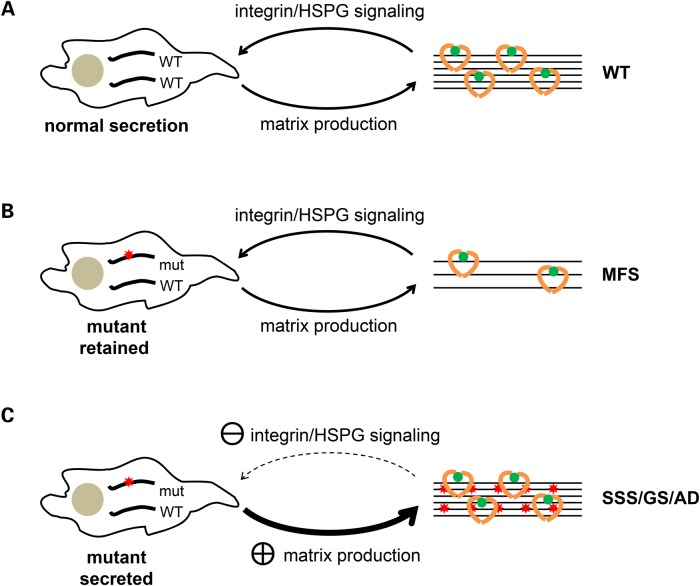
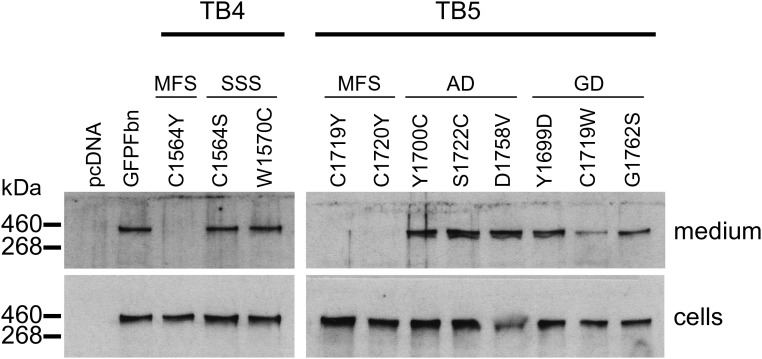
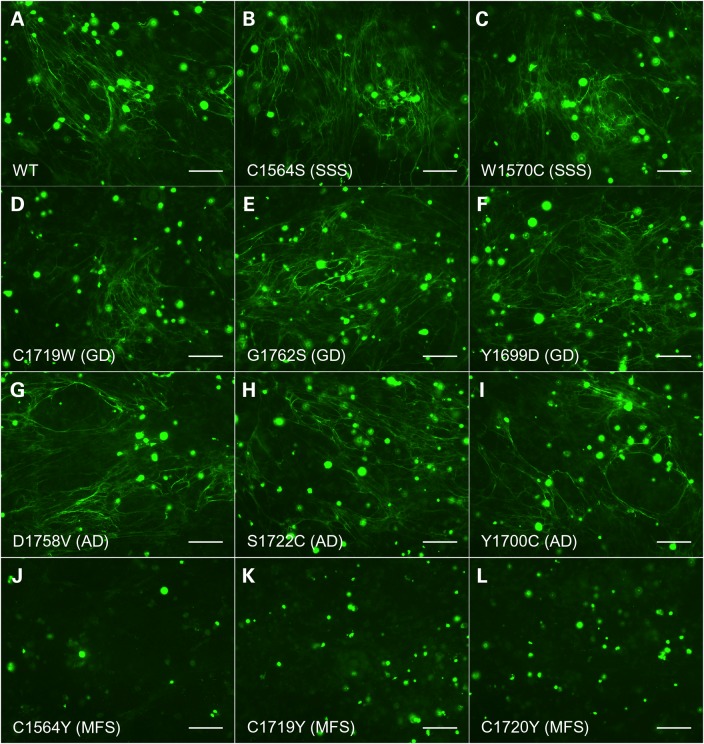
Fibrillin-1 is the major component of the 10-12 nm diameter extracellular matrix microfibrils. The majority of mutations affecting the human fibrillin-1 gene, FBN1, result in Marfan syndrome (MFS), a common connective tissue disorder characterised by tall stature, ocular and cardiovascular defects. Recently, stiff skin syndrome (SSS) and a group of syndromes known collectively as the acromelic dysplasias, which typically result in short stature, skin thickening and joint stiffness, have been linked to FBN1 mutations that affect specific domains of the fibrillin-1 protein. Despite their apparent phenotypic differences, dysregulation of transforming growth factor β (TGFβ) is a common factor in all of these disorders. Using a newly developed assay to track the secretion and incorporation of full-length, GFP-tagged fibrillin-1 into the extracellular matrix, we investigated whether or not there were differences in the secretion and microfibril assembly profiles of fibrillin-1 variants containing substitutions associated with MFS, SSS or the acromelic dysplasias. We show that substitutions in fibrillin-1 domains TB4 and TB5 that cause SSS and the acromelic dysplasias do not prevent fibrillin-1 from being secreted or assembled into microfibrils, whereas MFS-associated substitutions in these domains result in a loss of recombinant protein in the culture medium and no association with microfibrils. These results suggest fundamental differences in the dominant pathogenic mechanisms underlying MFS, SSS and the acromelic dysplasias, which give rise to TGFβ dysregulation associated with these diseases.
原纤蛋白-1是直径为10 - 12纳米的细胞外基质微原纤维的主要成分。影响人类原纤蛋白-1基因(FBN1)的大多数突变会导致马凡综合征(MFS),这是一种常见的结缔组织疾病,其特征为身材高大、眼部和心血管缺陷。最近,僵硬皮肤综合征(SSS)以及一组统称为肢端发育异常的综合征(通常导致身材矮小、皮肤增厚和关节僵硬)已被发现与影响原纤蛋白-1蛋白特定结构域的FBN1突变有关。尽管它们在表型上存在明显差异,但转化生长因子β(TGFβ)失调是所有这些疾病的一个共同因素。我们使用一种新开发的检测方法来追踪全长、绿色荧光蛋白标记的原纤蛋白-1分泌并整合到细胞外基质中的情况,研究了含有与MFS、SSS或肢端发育异常相关替代突变的原纤蛋白-1变体在分泌和微原纤维组装方面是否存在差异。我们发现,导致SSS和肢端发育异常的原纤蛋白-1结构域TB4和TB5中的替代突变并不妨碍原纤蛋白-1的分泌或组装成微原纤维,而这些结构域中与MFS相关的替代突变会导致培养基中重组蛋白的丢失,且与微原纤维无关联。这些结果表明,MFS、SSS和肢端发育异常的主要致病机制存在根本差异,这些差异导致了与这些疾病相关的TGFβ失调。