Overath Tobias, McDermott Josh H, Zarate Jean Mary, Poeppel David
1] Duke Institute for Brain Sciences, Duke University, Durham, North Carolina, USA. [2] Department of Psychology, New York University, New York, New York, USA.
Department of Brain and Cognitive Sciences, Massachusetts Institute of Technology, Cambridge, USA.
Nat Neurosci. 2015 Jun;18(6):903-11. doi: 10.1038/nn.4021. Epub 2015 May 18.
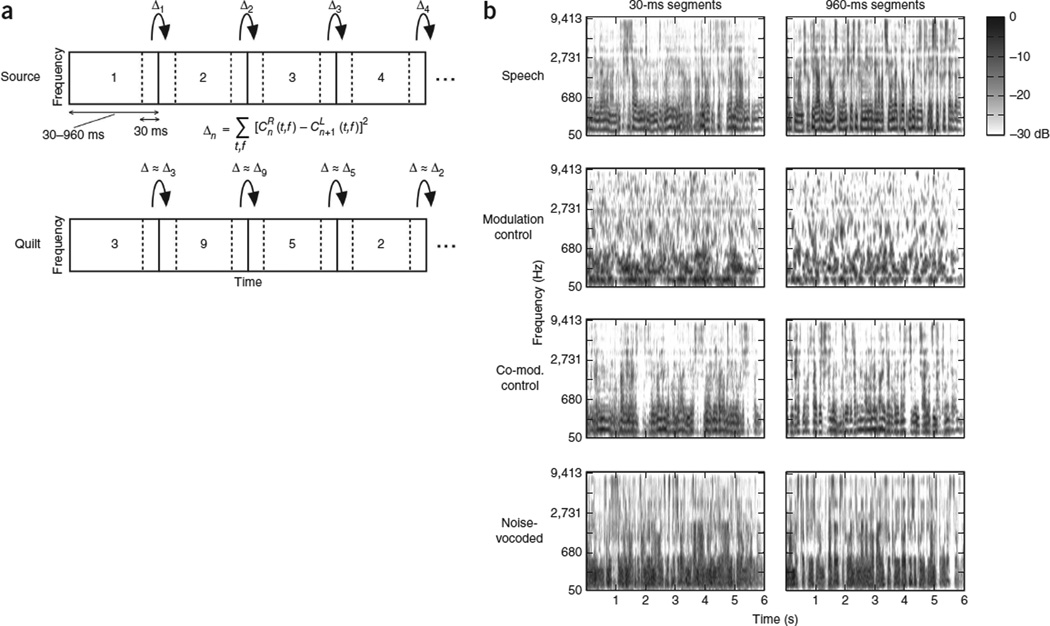
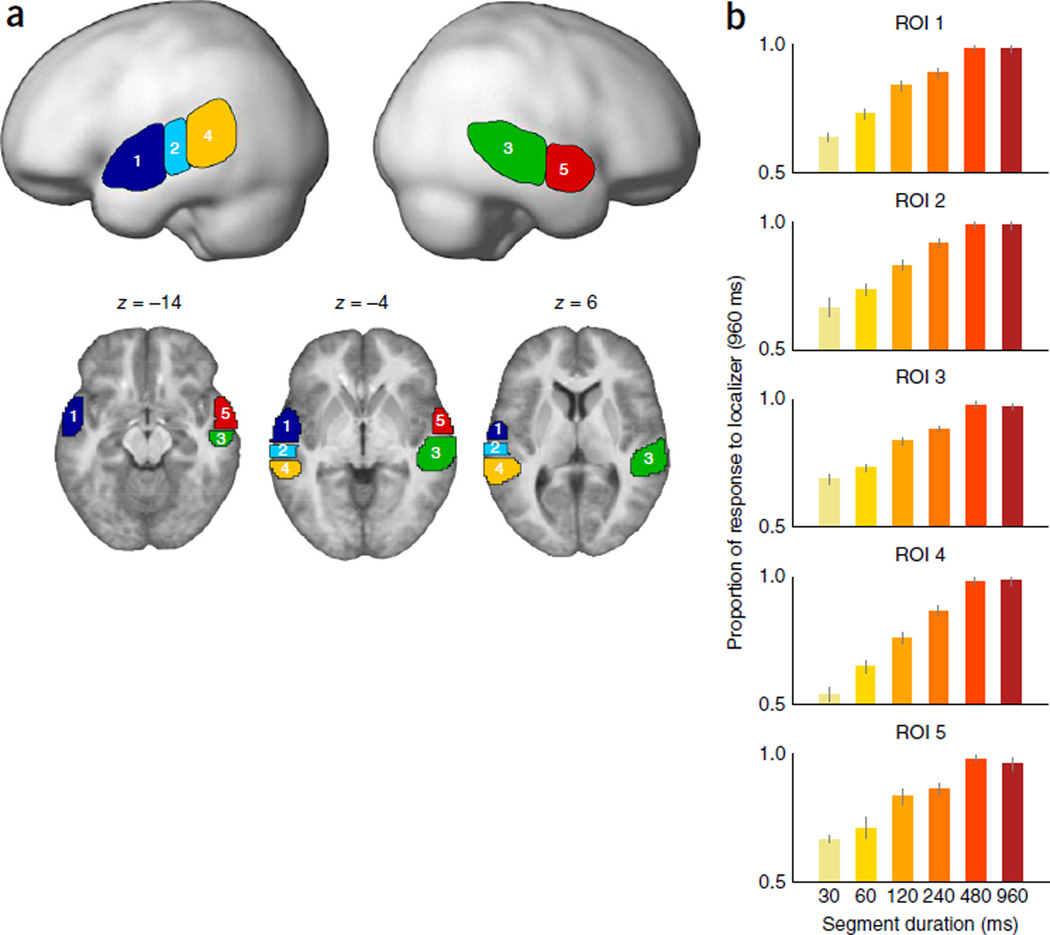
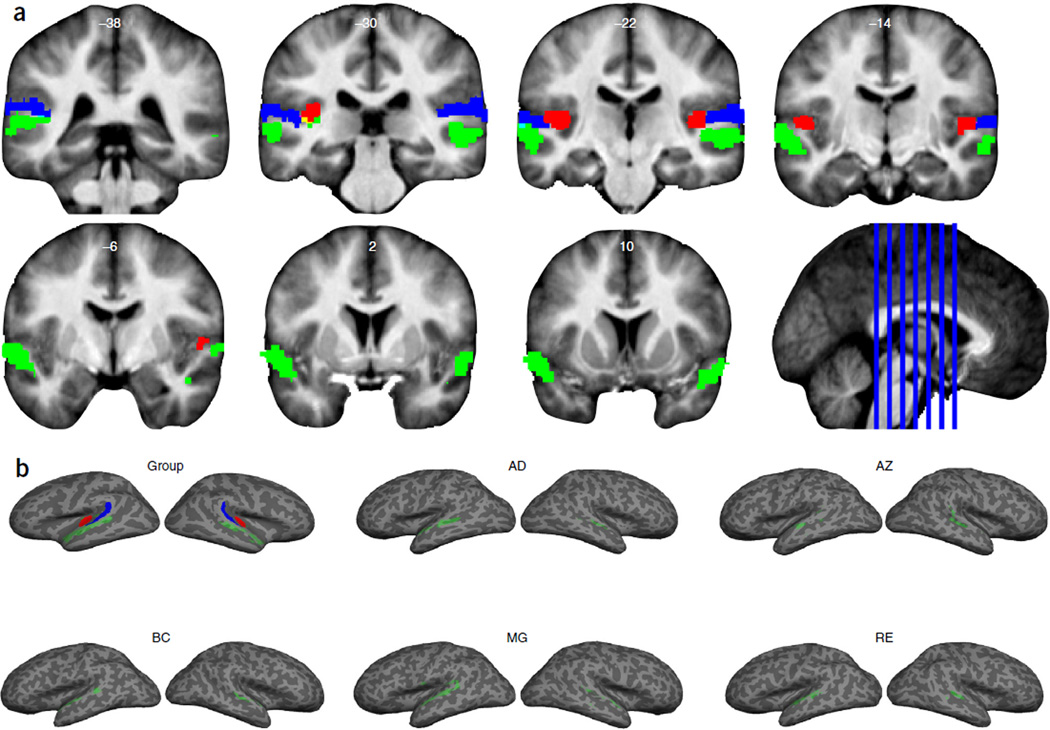
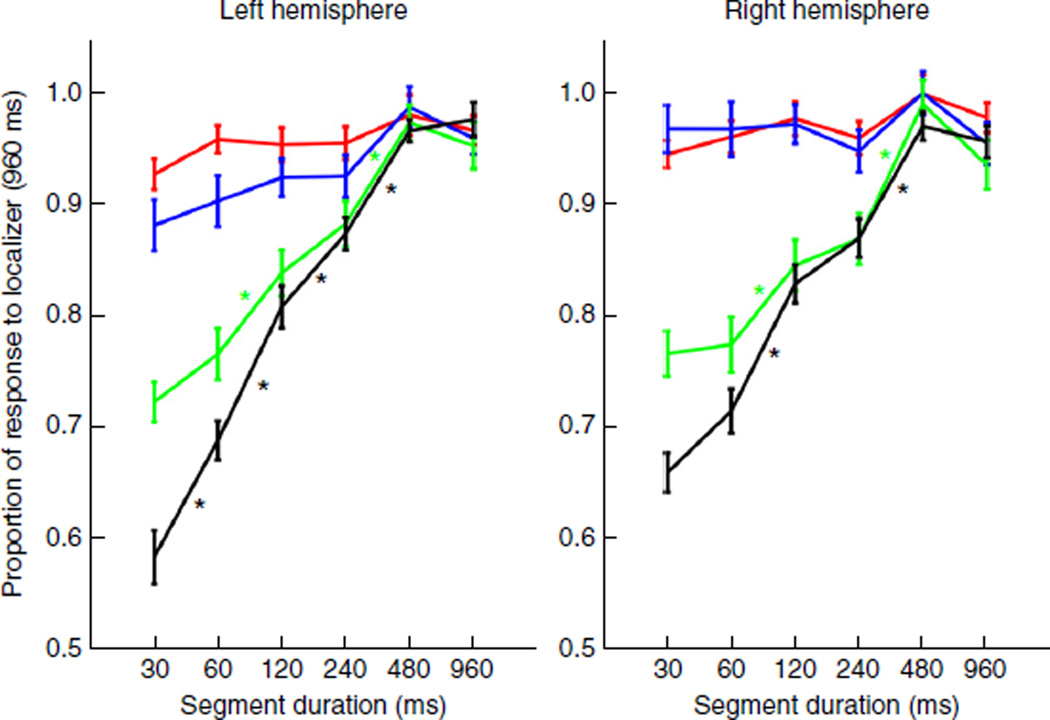
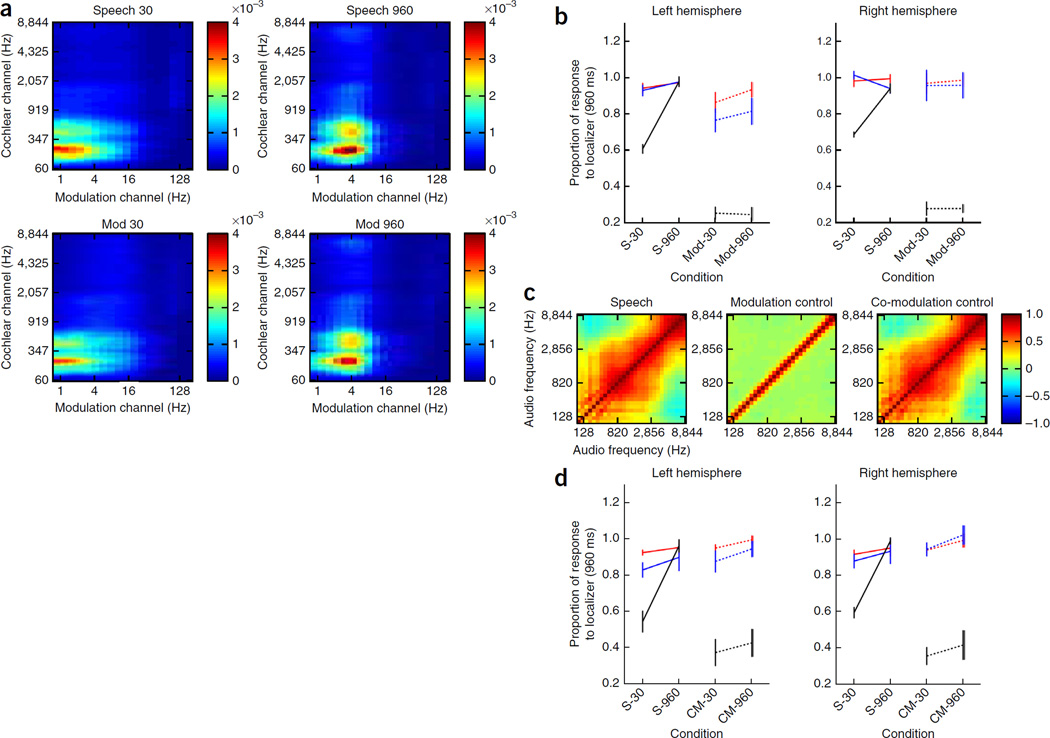
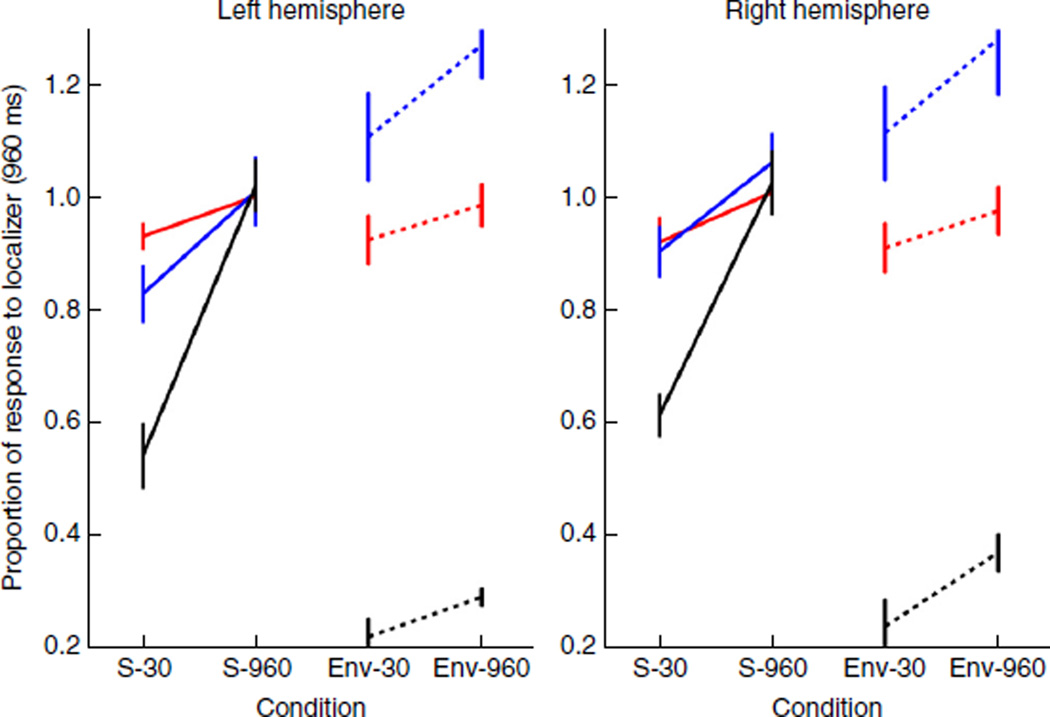
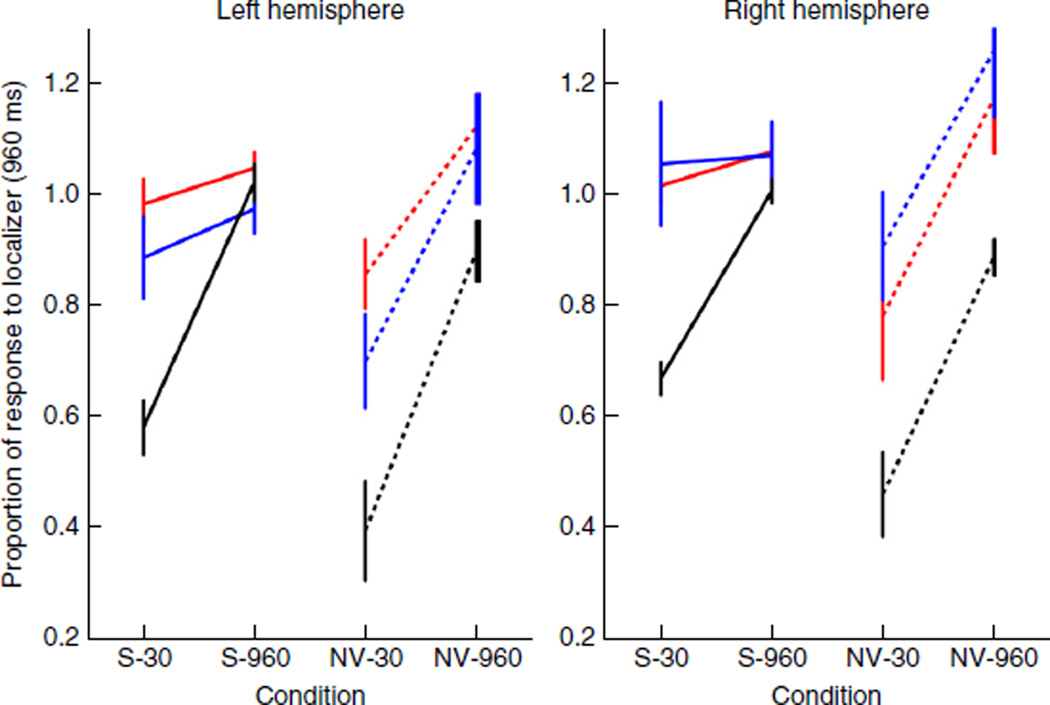
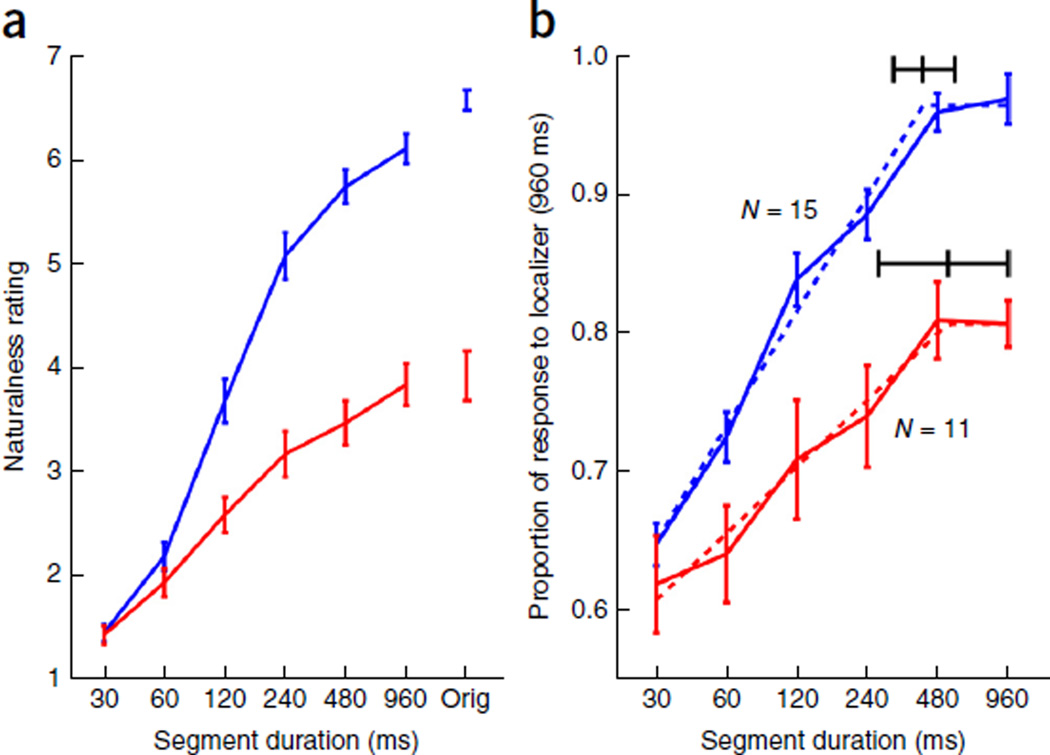
Speech contains temporal structure that the brain must analyze to enable linguistic processing. To investigate the neural basis of this analysis, we used sound quilts, stimuli constructed by shuffling segments of a natural sound, approximately preserving its properties on short timescales while disrupting them on longer scales. We generated quilts from foreign speech to eliminate language cues and manipulated the extent of natural acoustic structure by varying the segment length. Using functional magnetic resonance imaging, we identified bilateral regions of the superior temporal sulcus (STS) whose responses varied with segment length. This effect was absent in primary auditory cortex and did not occur for quilts made from other natural sounds or acoustically matched synthetic sounds, suggesting tuning to speech-specific spectrotemporal structure. When examined parametrically, the STS response increased with segment length up to ∼500 ms. Our results identify a locus of speech analysis in human auditory cortex that is distinct from lexical, semantic or syntactic processes.
言语包含大脑必须进行分析以实现语言处理的时间结构。为了研究这种分析的神经基础,我们使用了声音拼贴,即通过打乱自然声音的片段构建的刺激,在短时间尺度上大致保留其特性,而在较长尺度上破坏它们。我们用外语语音生成拼贴以消除语言线索,并通过改变片段长度来操纵自然声学结构的程度。使用功能磁共振成像,我们确定了颞上沟(STS)的双侧区域,其反应随片段长度而变化。这种效应在初级听觉皮层中不存在,并且对于由其他自然声音或声学匹配的合成声音制成的拼贴也未出现,这表明是对语音特定的频谱时间结构进行了调谐。当进行参数研究时,STS的反应随着片段长度增加,直至约500毫秒。我们的结果确定了人类听觉皮层中一个与词汇、语义或句法过程不同的言语分析位点。