Roales Javier, Pedrosa José M, Guillén María G, Lopes-Costa Tânia, Castillero Pedro, Barranco Angel, González-Elipe Agustín R
Departamento de Sistemas Físicos, Químicos y Naturales, Universidad Pablo de Olavide, Ctra. Utrera Km. 1, 41013 Sevilla, Spain.
Instituto de Ciencia de Materiales de Sevilla, Universidad de Sevilla-CSIC, Américo Vespucio 49, 41092 Sevilla, Spain.
Sensors (Basel). 2015 May 12;15(5):11118-32. doi: 10.3390/s150511118.
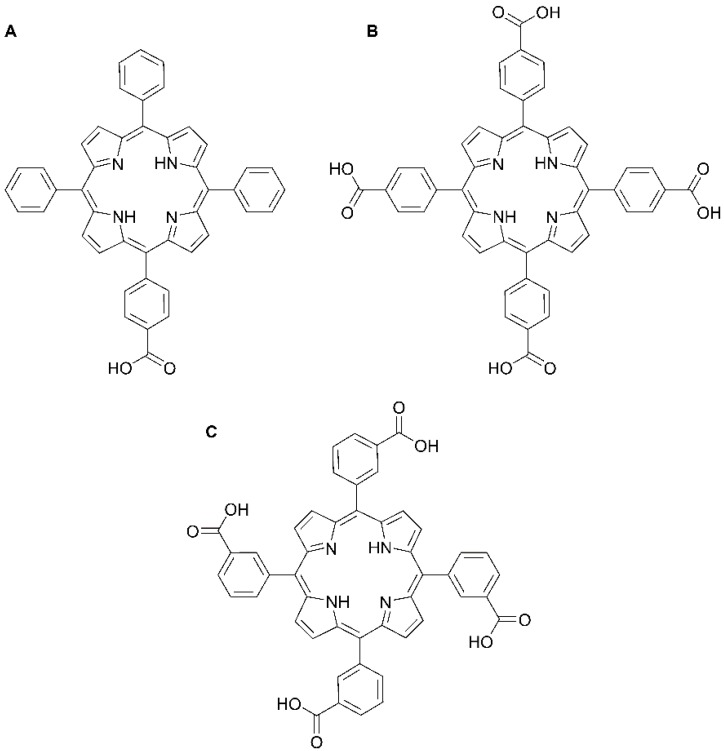
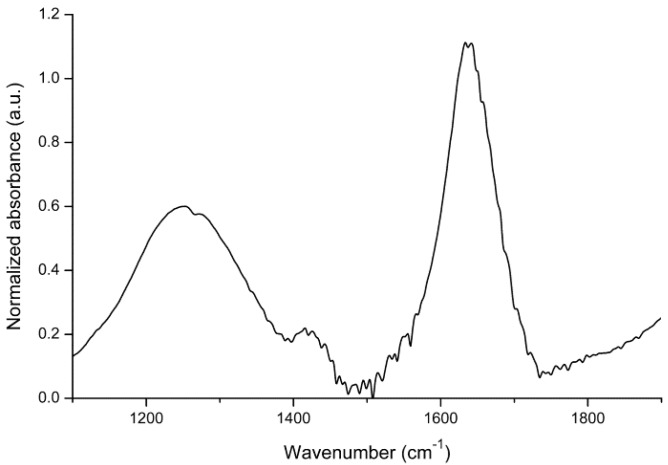
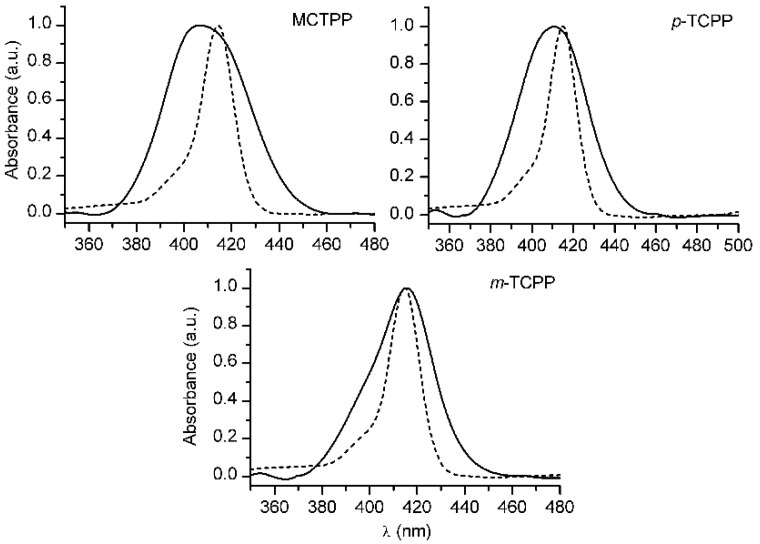
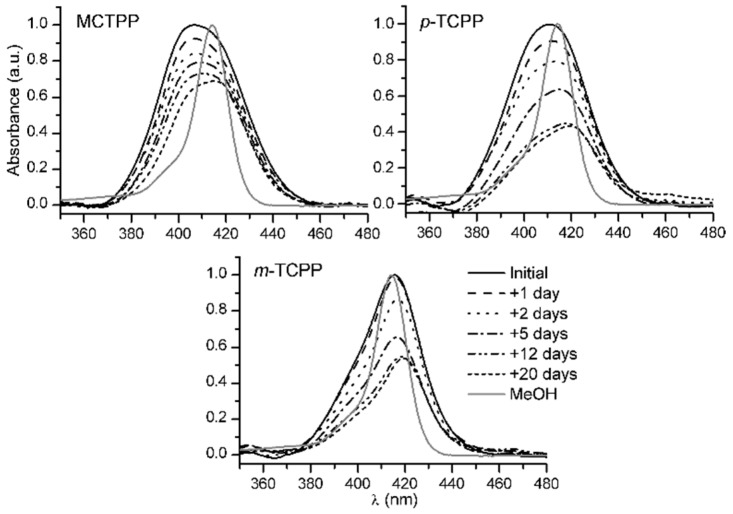
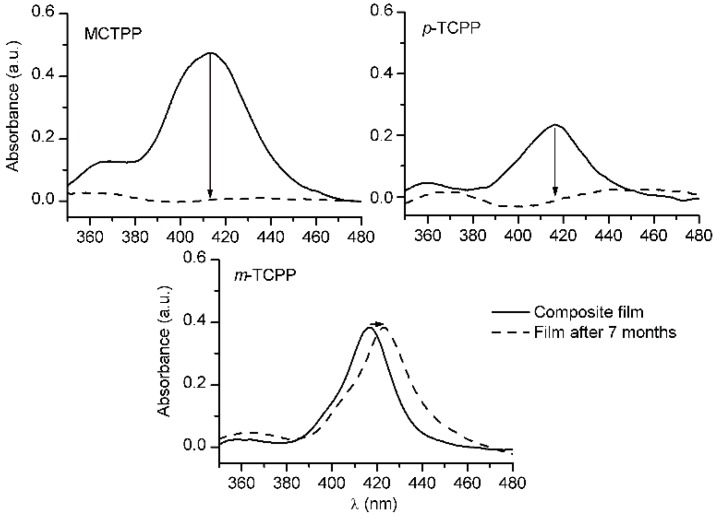
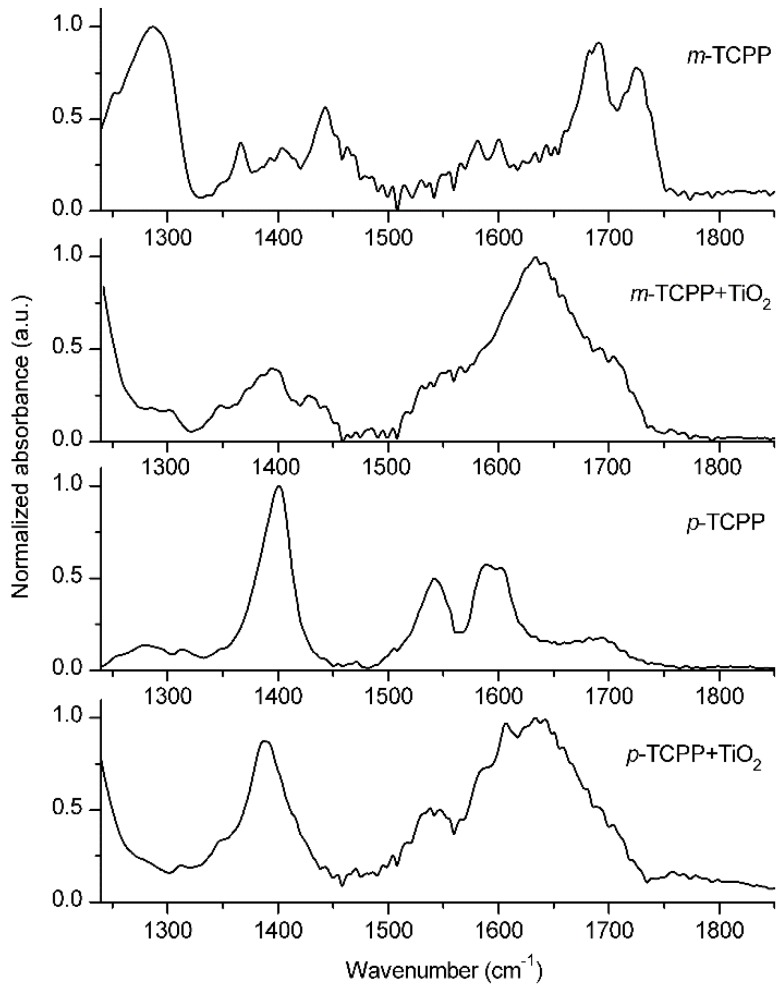
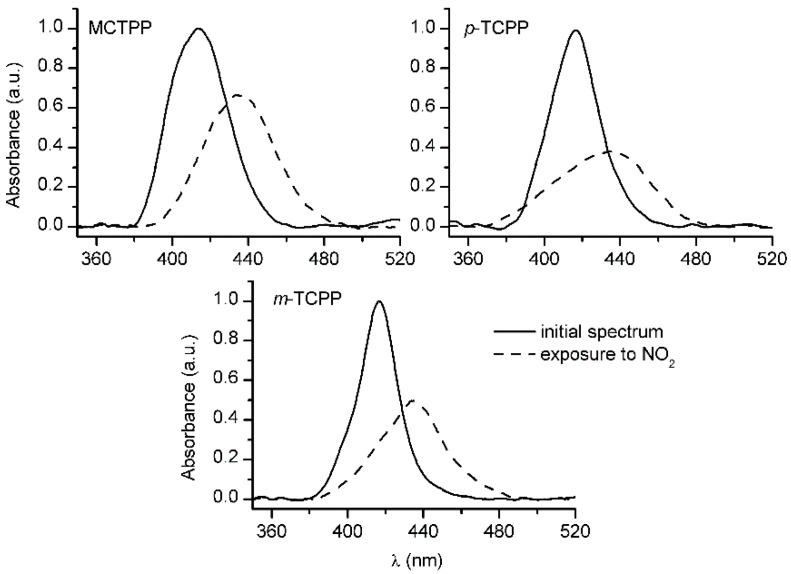
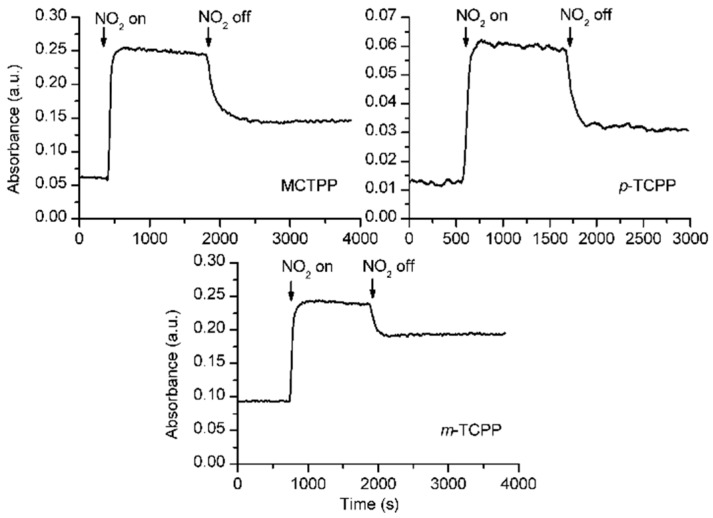
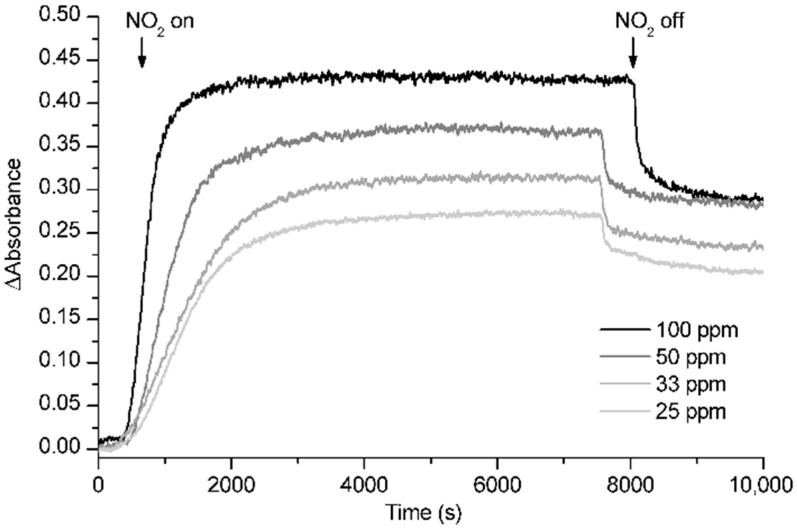
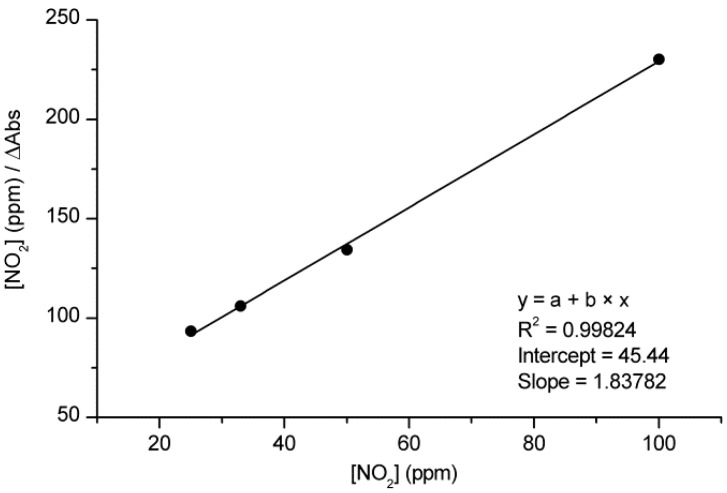
The anchoring effect on free-base carboxyphenyl porphyrin films using TiO2 microstructured columns as a host matrix and its influence on NO2 sensing have been studied in this work. Three porphyrins have been used: 5-(4-carboxyphenyl)10,15,20-triphenyl-21H,23H-porphyrin (MCTPP); 5,10,15,20-tetrakis(4-carboxyphenyl)-21H,23H-porphyrin (p-TCPP); and 5,10,15,20-tetrakis(3-carboxyphenyl)-21H,23H-porphyrin (m-TCPP). The analysis of UV-Vis spectra of MCTPP/TiO2, p-TCPP/TiO2 and m-TCPP/TiO2 composite films has revealed that m-TCPP/TiO2 films are the most stable, showing less aggregation than the other porphyrins. IR spectroscopy has shown that m-TCPP is bound to TiO2 through its four carboxylic acid groups, while p-TCPP is anchored by only one or two of these groups. MCTPP can only be bound by one carboxylic acid. Consequently, the binding of p-TCPP and MCTPP to the substrate allows them to form aggregates, whereas the more fixed anchoring of m-TCPP reduces this effect. The exposure of MCTPP/TiO2, p-TCPP/TiO2 and m-TCPP/TiO2 films to NO2 has resulted in important changes in their UV-Vis spectra, revealing good sensing capabilities in all cases. The improved stability of films made with m-TCPP suggests this molecule as the best candidate among our set of porphyrins for the fabrication of NO2 sensors. Moreover, their concentration-dependent responses upon exposure to low concentrations of NO2 confirm the potential of m-TCPP as a NO2 sensor.
本工作研究了以TiO₂微结构柱为主体基质对游离碱羧基苯基卟啉薄膜的锚定效应及其对NO₂传感的影响。使用了三种卟啉:5-(4-羧基苯基)-10,15,20-三苯基-21H,23H-卟啉(MCTPP);5,10,15,20-四(4-羧基苯基)-21H,23H-卟啉(p-TCPP);以及5,10,15,20-四(3-羧基苯基)-21H,23H-卟啉(m-TCPP)。对MCTPP/TiO₂、p-TCPP/TiO₂和m-TCPP/TiO₂复合薄膜的紫外-可见光谱分析表明,m-TCPP/TiO₂薄膜最稳定,与其他卟啉相比聚集较少。红外光谱表明,m-TCPP通过其四个羧酸基团与TiO₂结合,而p-TCPP仅通过其中一两个基团锚定。MCTPP只能通过一个羧酸结合。因此,p-TCPP和MCTPP与底物的结合使它们形成聚集体,而m-TCPP更固定的锚定减少了这种效应。MCTPP/TiO₂、p-TCPP/TiO₂和m-TCPP/TiO₂薄膜暴露于NO₂后,其紫外-可见光谱发生了重要变化,表明在所有情况下都具有良好的传感能力。用m-TCPP制成的薄膜稳定性提高,表明该分子是我们这组卟啉中制造NO₂传感器的最佳候选者。此外,它们在暴露于低浓度NO₂时的浓度依赖性响应证实了m-TCPP作为NO₂传感器的潜力。