Zhu Bo, Mizoguchi Takuro, Kojima Takaaki, Nakano Hideo
Laboratory of Molecular Biotechnology, Graduate School of Bioagricultural Sciences, Nagoya University, Furo-cho, Chikusa-ku, Nagoya, Japan.
PLoS One. 2015 May 20;10(5):e0127479. doi: 10.1371/journal.pone.0127479. eCollection 2015.
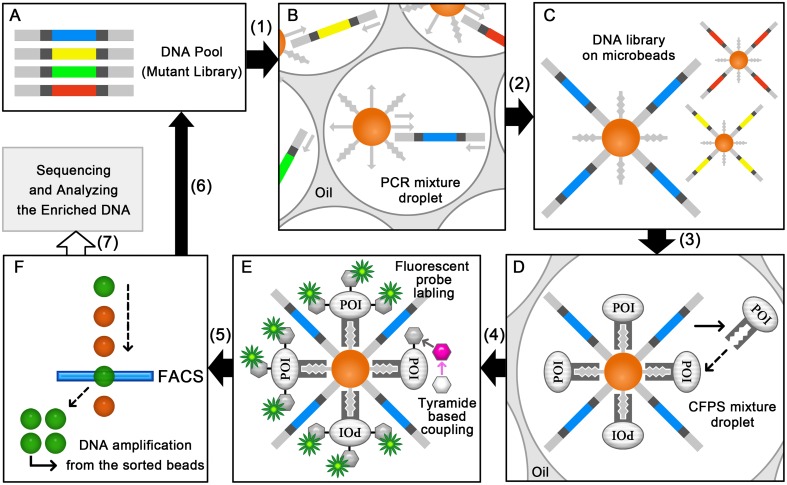
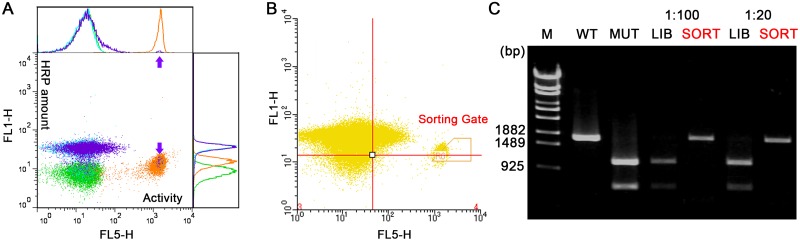
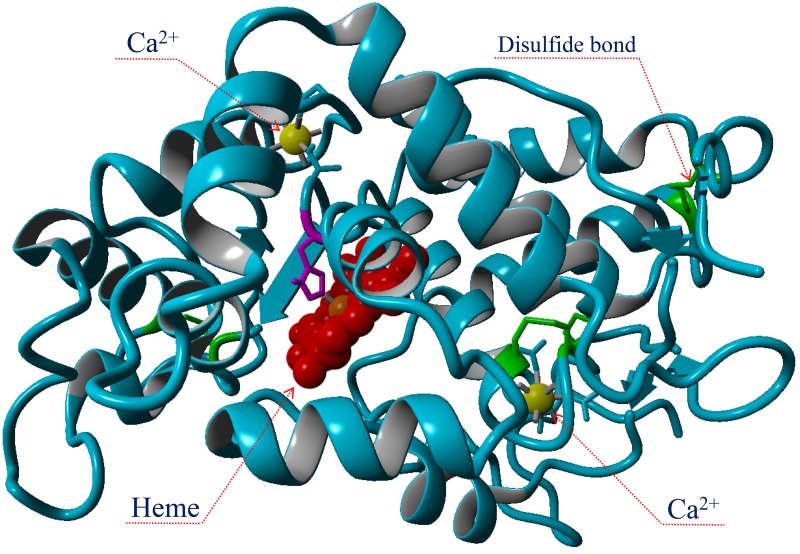
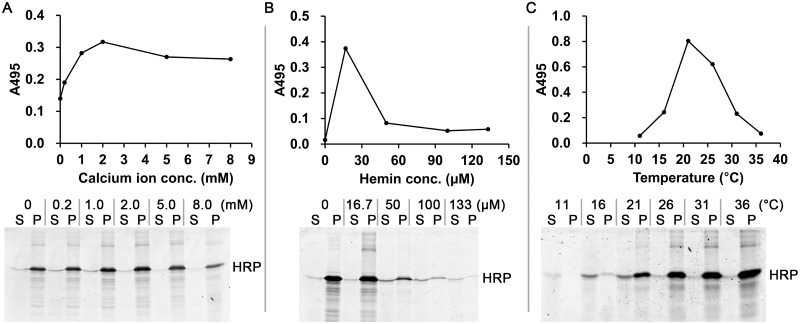
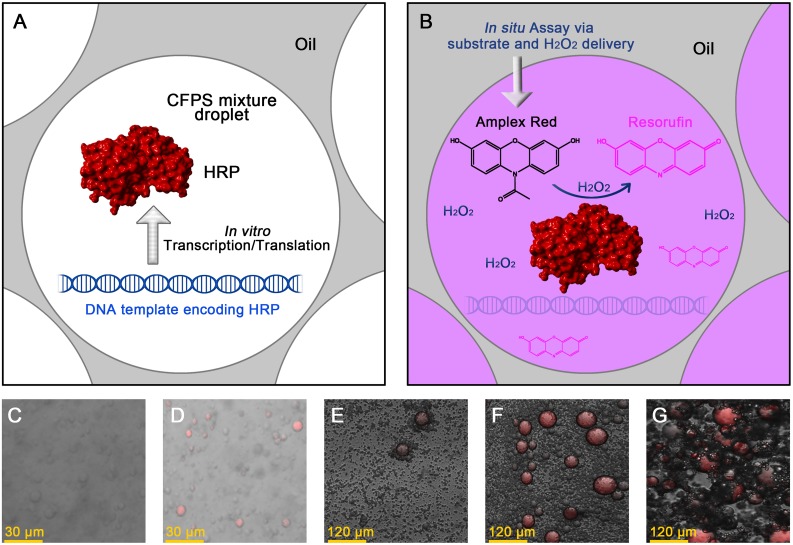
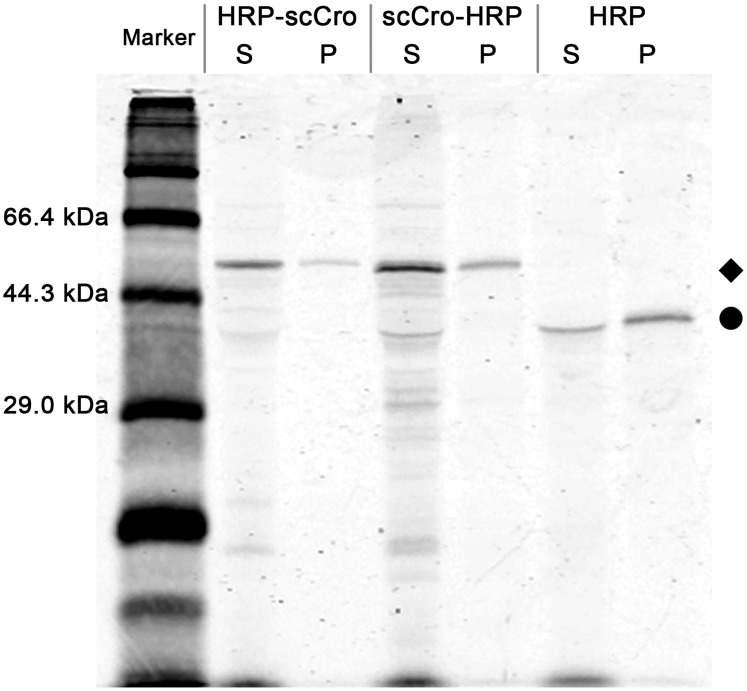
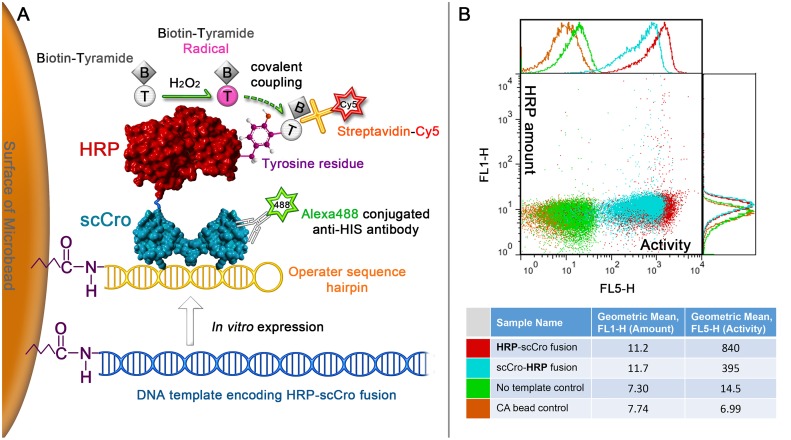
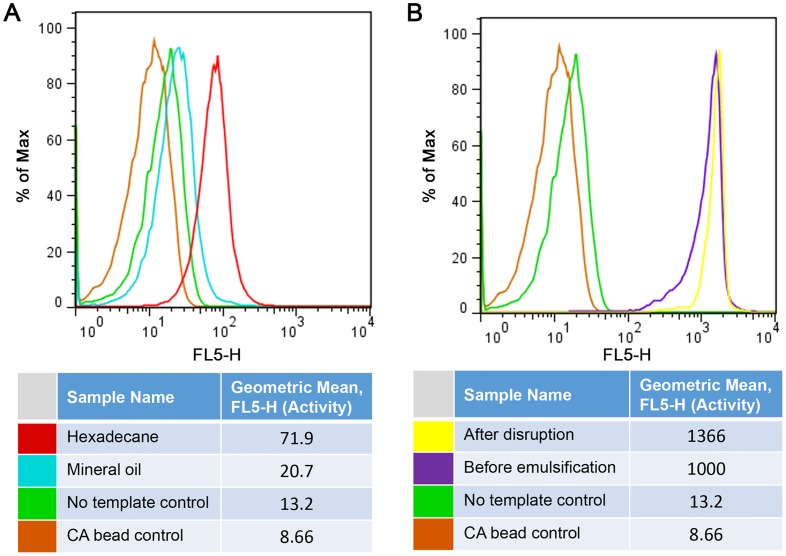
The C1a isoenzyme of horseradish peroxidase (HRP) is an industrially important heme-containing enzyme that utilizes hydrogen peroxide to oxidize a wide variety of inorganic and organic compounds for practical applications, including synthesis of fine chemicals, medical diagnostics, and bioremediation. To develop a ultra-high-throughput screening system for HRP, we successfully produced active HRP in an Escherichia coli cell-free protein synthesis system, by adding disulfide bond isomerase DsbC and optimizing the concentrations of hemin and calcium ions and the temperature. The biosynthesized HRP was fused with a single-chain Cro (scCro) DNA-binding tag at its N-terminal and C-terminal sites. The addition of the scCro-tag at both ends increased the solubility of the protein. Next, HRP and its fusion proteins were successfully synthesized in a water droplet emulsion by using hexadecane as the oil phase and SunSoft No. 818SK as the surfactant. HRP fusion proteins were displayed on microbeads attached with double-stranded DNA (containing the scCro binding sequence) via scCro-DNA interactions. The activities of the immobilized HRP fusion proteins were detected with a tyramide-based fluorogenic assay using flow cytometry. Moreover, a model microbead library containing wild type hrp (WT) and inactive mutant (MUT) genes was screened using fluorescence-activated cell-sorting, thus efficiently enriching the WT gene from the 1:100 (WT:MUT) library. The technique described here could serve as a novel platform for the ultra-high-throughput discovery of more useful HRP mutants and other heme-containing peroxidases.
辣根过氧化物酶(HRP)的C1a同工酶是一种在工业上具有重要意义的含血红素酶,它利用过氧化氢氧化多种无机和有机化合物以用于实际应用,包括精细化学品合成、医学诊断和生物修复。为了开发一种用于HRP的超高通量筛选系统,我们通过添加二硫键异构酶DsbC并优化血红素、钙离子浓度和温度,在大肠杆菌无细胞蛋白质合成系统中成功生产出了活性HRP。生物合成的HRP在其N端和C端位点与单链Cro(scCro)DNA结合标签融合。在两端添加scCro标签增加了蛋白质的溶解度。接下来,以十六烷为油相、SunSoft No. 818SK为表面活性剂,在水滴乳液中成功合成了HRP及其融合蛋白。HRP融合蛋白通过scCro-DNA相互作用展示在附着有双链DNA(包含scCro结合序列)的微珠上。使用流式细胞术通过基于酪胺的荧光测定法检测固定化HRP融合蛋白的活性。此外,使用荧光激活细胞分选技术筛选了一个包含野生型hrp(WT)和无活性突变体(MUT)基因的模型微珠文库,从而从1:100(WT:MUT)文库中有效地富集了WT基因。本文所述技术可作为一个新平台,用于超高通量发现更有用的HRP突变体和其他含血红素过氧化物酶。