Huang Chung-Hao, Hsiao Weng-Rong, Huang Ching-Wen, Chen Kuan-Chun, Lin Shih-Shun, Chen Tsung-Chi, Raja Joseph A J, Wu Hui-Wen, Yeh Shyi-Dong
Department of Plant Pathology, National Chung Hsing University, Taichung, 40227, Taiwan.
Institute of Biotechnology, National Taiwan University, Taipei 106, Taiwan.
PLoS One. 2015 May 20;10(5):e0126161. doi: 10.1371/journal.pone.0126161. eCollection 2015.
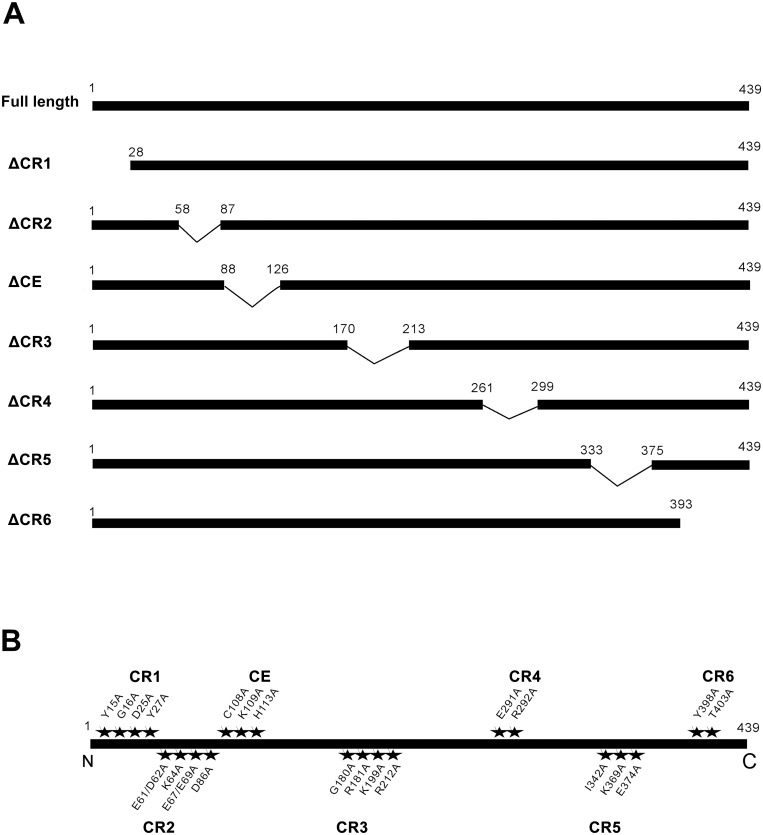
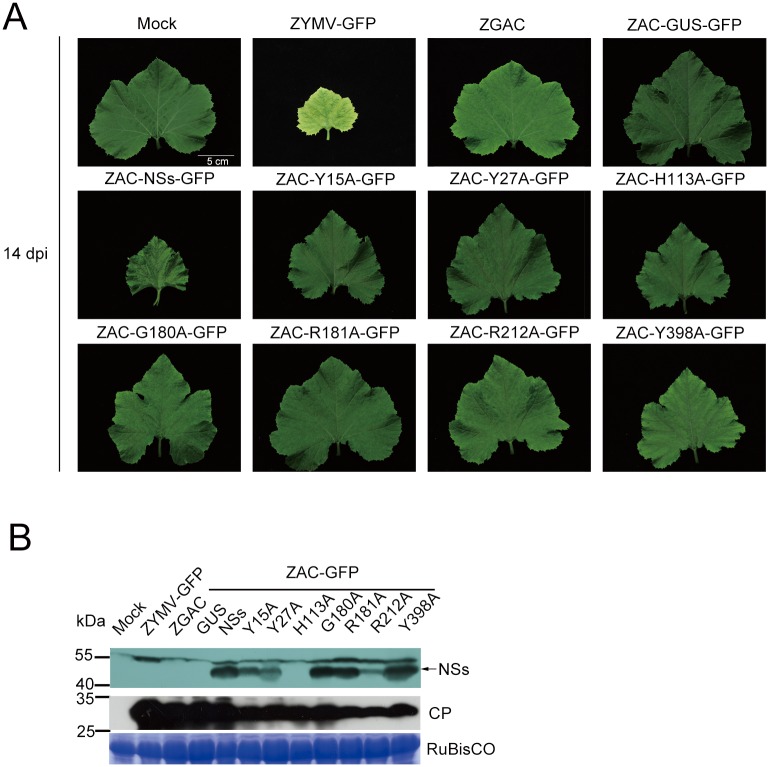
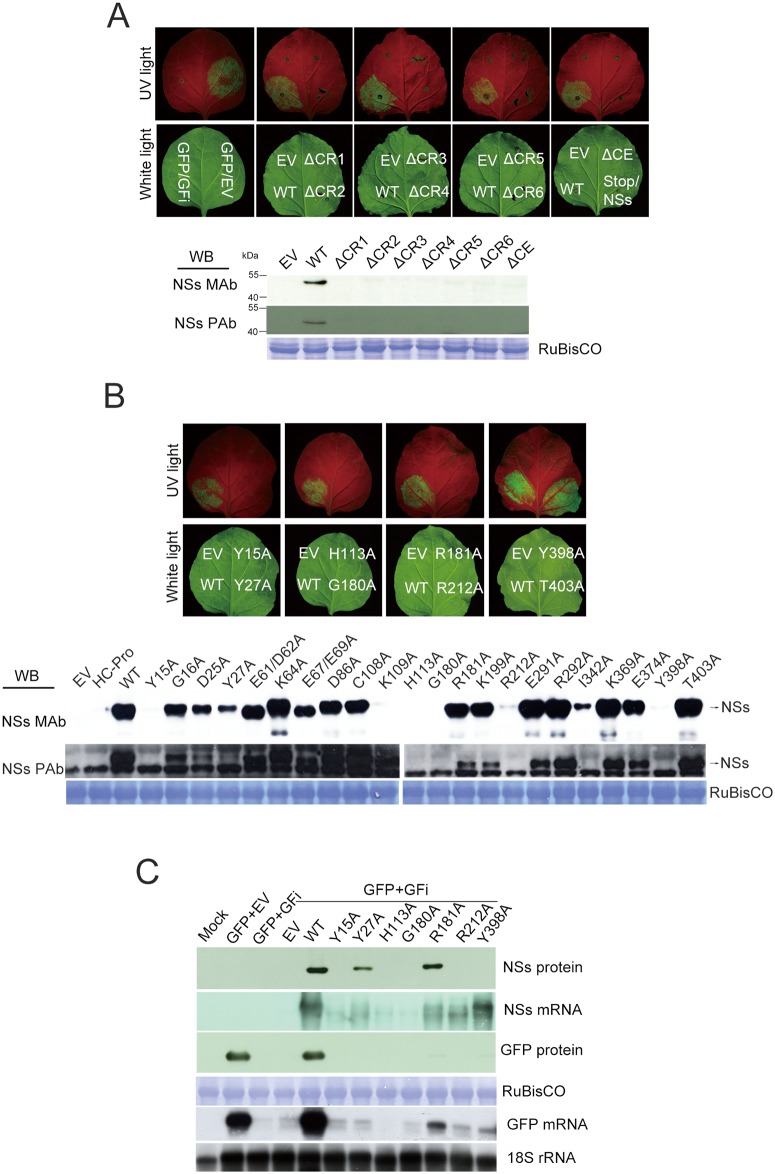
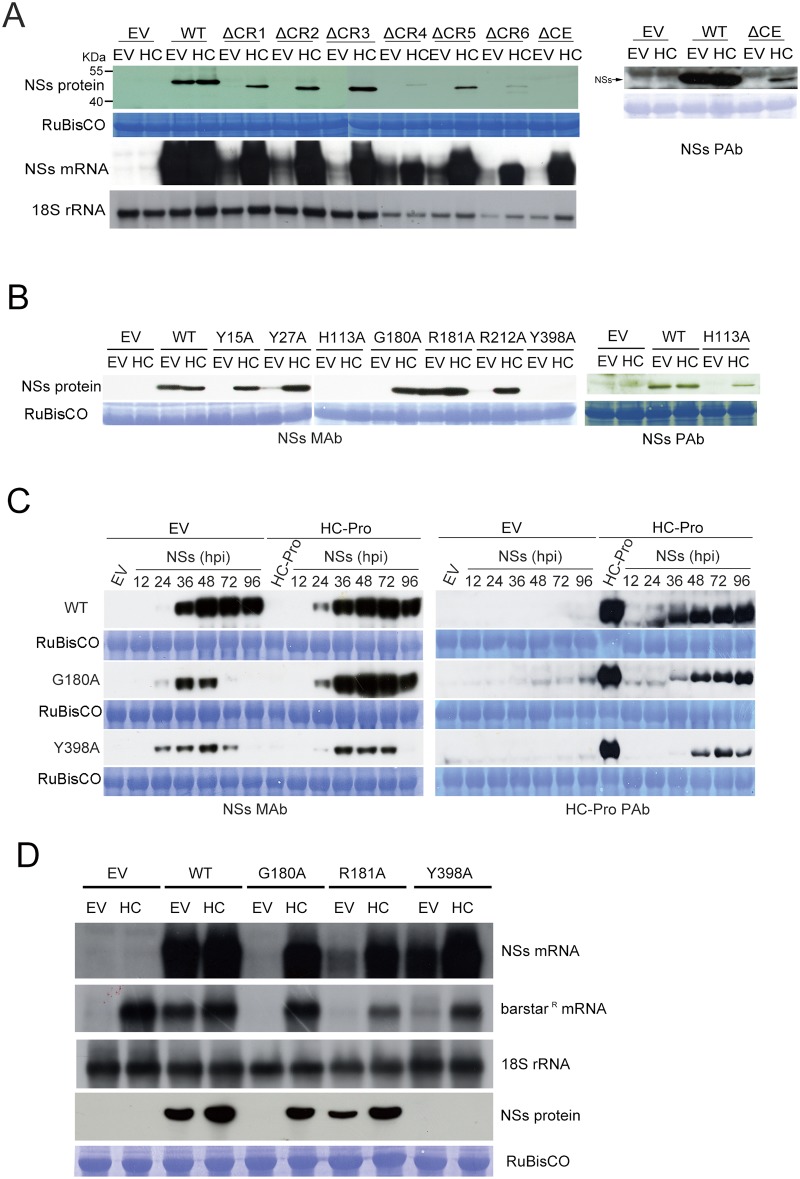
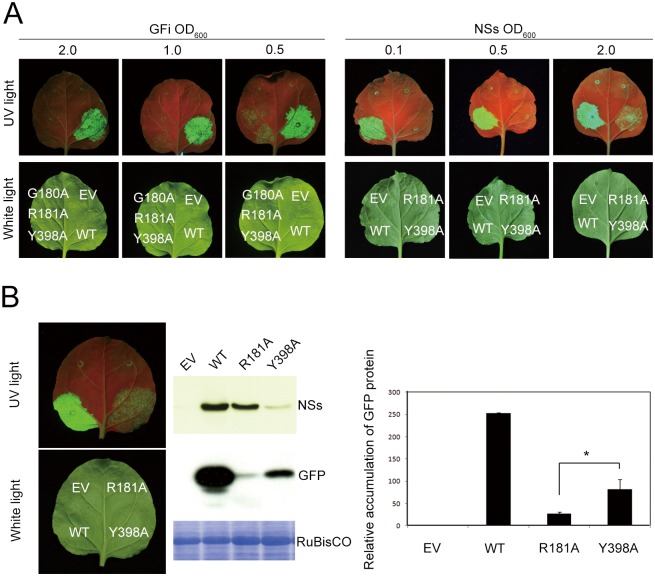
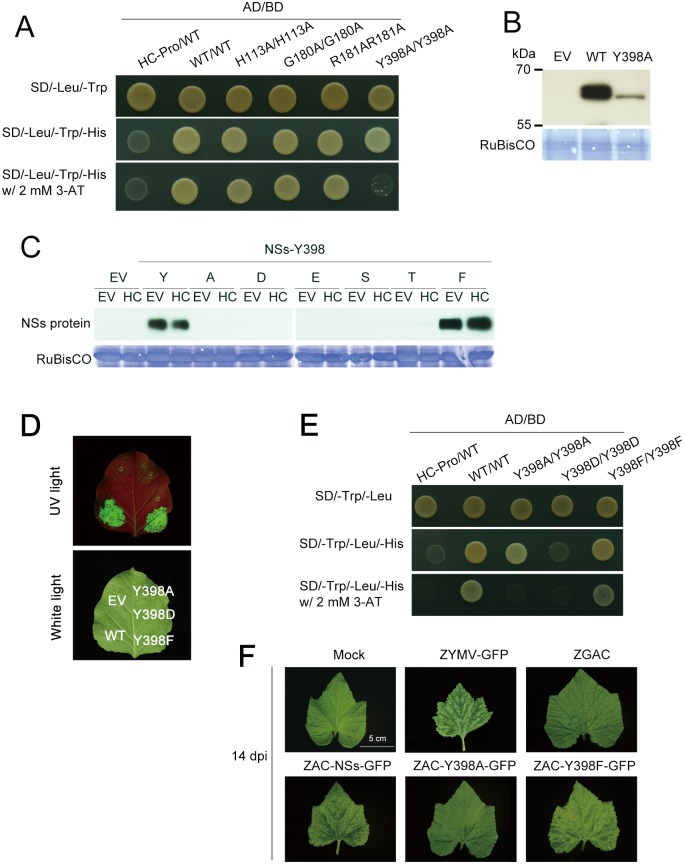
The NSs protein of Watermelon silver mottle virus (WSMoV) is the RNA silencing suppressor and pathogenicity determinant. In this study, serial deletion and point-mutation mutagenesis of conserved regions (CR) of NSs protein were performed, and the silencing suppression function was analyzed through agroinfiltration in Nicotiana benthamiana plants. We found two amino acid (aa) residues, H113 and Y398, are novel functional residues for RNA silencing suppression. Our further analyses demonstrated that H113 at the common epitope (CE) ((109)KFTMHNQ(117)), which is highly conserved in Asia type tospoviruses, and the benzene ring of Y398 at the C-terminal β-sheet motif ((397)IYFL(400)) affect NSs mRNA stability and protein stability, respectively, and are thus critical for NSs RNA silencing suppression. Additionally, protein expression of other six deleted (ΔCR1-ΔCR6) and five point-mutated (Y15A, Y27A, G180A, R181A and R212A) mutants were hampered and their silencing suppression ability was abolished. The accumulation of the mutant mRNAs and proteins, except Y398A, could be rescued or enhanced by co-infiltration with potyviral suppressor HC-Pro. When assayed with the attenuated Zucchini yellow mosaic virus vector in squash plants, the recombinants carrying individual seven point-mutated NSs proteins displayed symptoms much milder than the recombinant carrying the wild type NSs protein, suggesting that these aa residues also affect viral pathogenicity by suppressing the host silencing mechanism.
西瓜银斑驳病毒(WSMoV)的NSs蛋白是RNA沉默抑制子和致病性决定因素。在本研究中,对NSs蛋白保守区(CR)进行了系列缺失和点突变诱变,并通过在本氏烟草植株中进行农杆菌浸润分析了沉默抑制功能。我们发现两个氨基酸残基H113和Y398是RNA沉默抑制的新功能残基。我们的进一步分析表明,在亚洲型番茄斑萎病毒中高度保守的共同表位(CE)((109)KFTMHNQ(117))处的H113以及C端β-折叠基序((397)IYFL(400))处Y398的苯环分别影响NSs mRNA稳定性和蛋白质稳定性,因此对NSs RNA沉默抑制至关重要。此外,其他六个缺失突变体(ΔCR1 - ΔCR6)和五个点突变体(Y15A、Y27A、G180A、R181A和R212A)的蛋白质表达受到阻碍,其沉默抑制能力丧失。除Y398A外,通过与马铃薯Y病毒抑制子HC-Pro共浸润可挽救或增强突变体mRNA和蛋白质的积累。当在南瓜植株中用减毒的小西葫芦黄花叶病毒载体进行检测时,携带单个七个点突变NSs蛋白的重组体表现出比携带野生型NSs蛋白的重组体温和得多的症状,这表明这些氨基酸残基也通过抑制宿主沉默机制影响病毒致病性。