Sato Misako, Matsubara Tsutomu, Adachi Jun, Hashimoto Yuuki, Fukamizu Kazuna, Kishida Marina, Yang Yu-An, Wakefield Lalage M, Tomonaga Takeshi
Laboratory of Proteome Research, Proteome Research Center, National Institute of Biomedical Innovation, Saito, Osaka, Japan; Department of Hepatology, Graduate School of Medicine, Osaka City University, Osaka, Japan.
Department of Anatomy and Regenerative Biology, Graduate School of Medicine, Osaka City University, Osaka, Japan.
PLoS One. 2015 May 18;10(5):e0126483. doi: 10.1371/journal.pone.0126483. eCollection 2015.
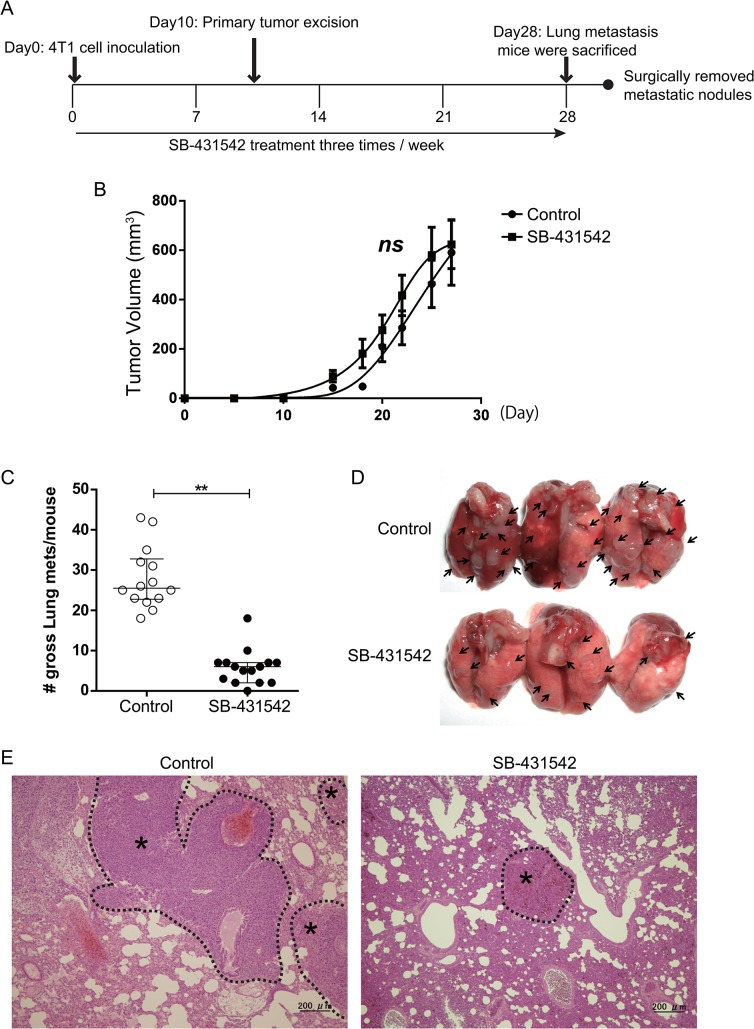
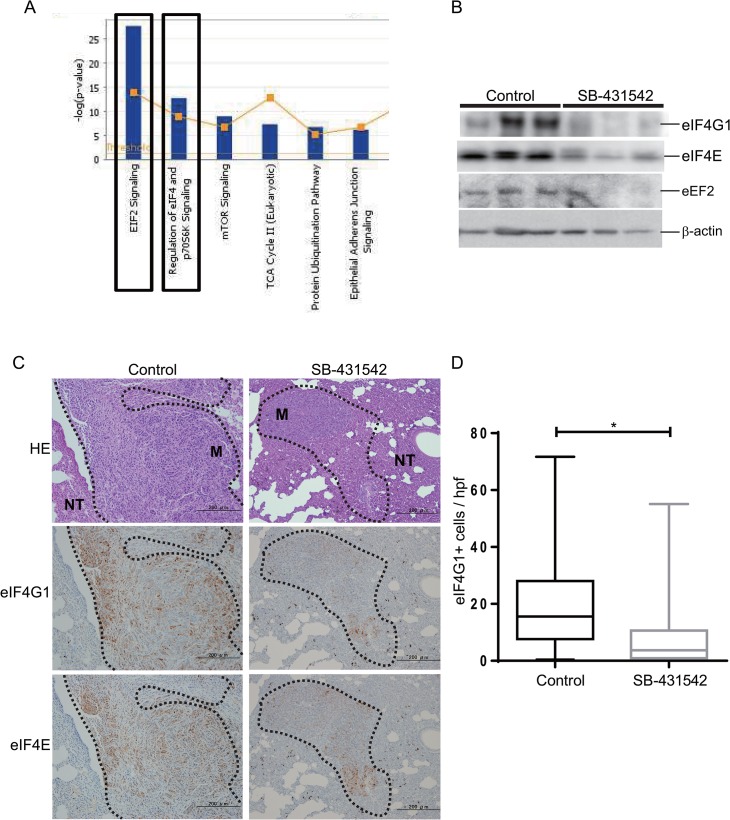
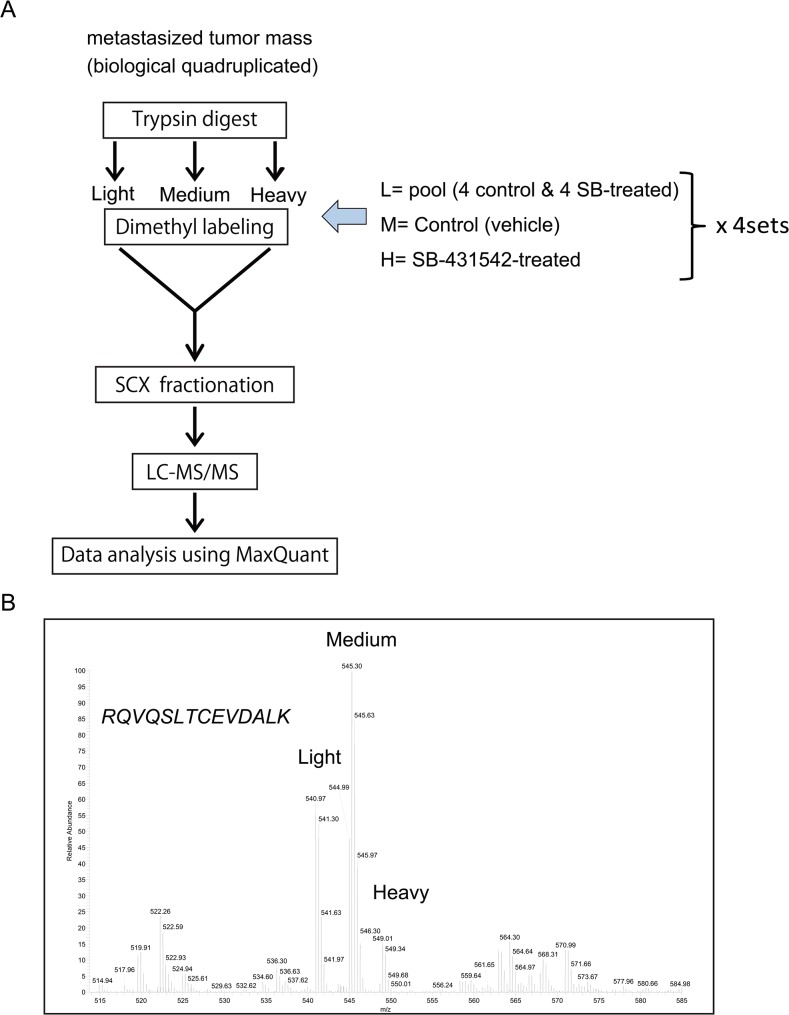
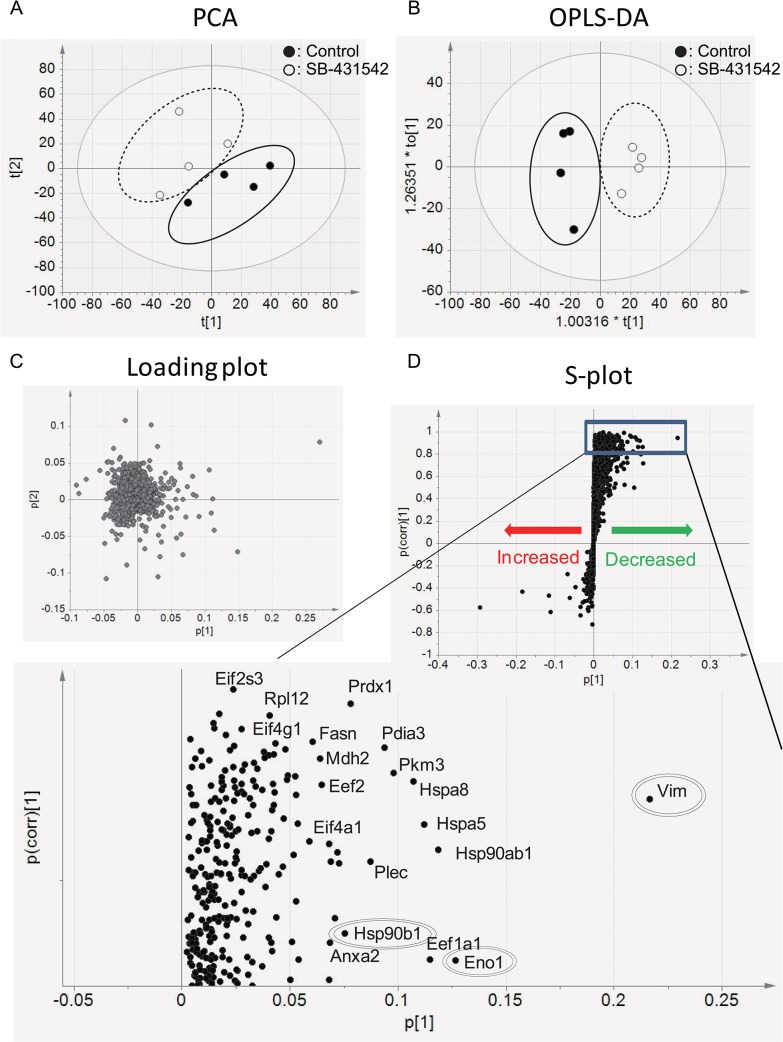
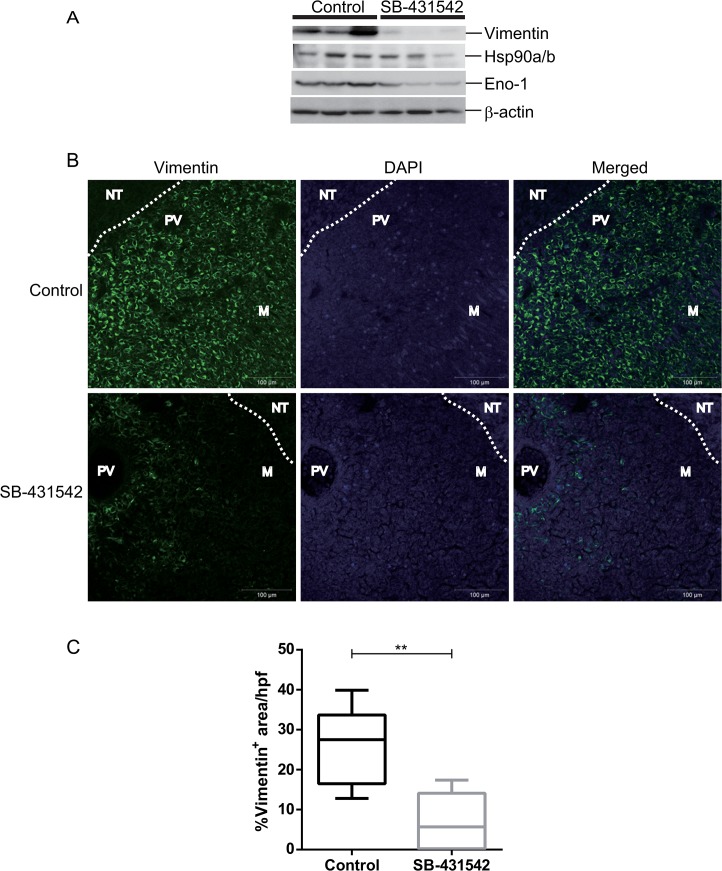
Transforming growth factor-β (TGF-β) has a dual role in tumorigenesis, acting as either a tumor suppressor or as a pro-oncogenic factor in a context-dependent manner. Although TGF-β antagonists have been proposed as anti-metastatic therapies for patients with advanced stage cancer, how TGF-β mediates metastasis-promoting effects is poorly understood. Establishment of TGF-β-related protein expression signatures at the metastatic site could provide new mechanistic information and potentially allow identification of novel biomarkers for clinical intervention to discriminate TGF-β oncogenic effects from tumor suppressive effects. In the present study, we found that systemic administration of the TGF-β receptor kinase inhibitor, SB-431542, significantly inhibited lung metastasis from transplanted 4T1 mammary tumors in Balb/c mice. The differentially expressed proteins in the comparison of lung metastases from SB-431542 treated and control vehicle-treated groups were analyzed by a quantitative LTQ Orbitrap Velos system coupled with stable isotope dimethyl labeling. A total of 36,239 peptides from 6,694 proteins were identified, out of which 4,531 proteins were characterized as differentially expressed. A subset of upregulated proteins in the control group was validated by western blotting and immunohistochemistry. The eukaryotic initiation factor (eIF) family members constituted the most enriched protein pathway in vehicle-treated compared with SB-43512-treated lung metastases, suggesting that increased protein expression of specific eIF family members, especially eIF4A1 and eEF2, is related to the metastatic phenotype of advanced breast cancer and can be down-regulated by TGF-β pathway inhibitors. Thus our proteomic approach identified eIF pathway proteins as novel potential mediators of TGF-β tumor-promoting activity.
转化生长因子-β(TGF-β)在肿瘤发生过程中具有双重作用,在不同背景下既可以作为肿瘤抑制因子,也可以作为促癌因子。尽管TGF-β拮抗剂已被提议作为晚期癌症患者的抗转移疗法,但TGF-β如何介导促转移作用仍知之甚少。在转移部位建立与TGF-β相关的蛋白质表达特征,可为新的作用机制提供信息,并有可能识别新的生物标志物,用于临床干预,以区分TGF-β的致癌作用和肿瘤抑制作用。在本研究中,我们发现全身给予TGF-β受体激酶抑制剂SB-431542,可显著抑制Balb/c小鼠移植的4T1乳腺肿瘤的肺转移。通过定量LTQ Orbitrap Velos系统结合稳定同位素二甲基标记,分析了SB-431542处理组和对照载体处理组肺转移灶中差异表达的蛋白质。共鉴定出6694种蛋白质的36239条肽段,其中4531种蛋白质被鉴定为差异表达。通过蛋白质印迹法和免疫组织化学法对对照组中上调的蛋白质子集进行了验证。与SB-43512处理的肺转移灶相比,真核起始因子(eIF)家族成员在载体处理的肺转移灶中构成了最丰富的蛋白质通路,这表明特定eIF家族成员,尤其是eIF4A1和eEF2的蛋白质表达增加与晚期乳腺癌的转移表型有关,并且可以被TGF-β通路抑制剂下调。因此,我们的蛋白质组学方法确定eIF通路蛋白是TGF-β肿瘤促进活性的新型潜在介质。