Plumb Rachel, Zhang Zai-Rong, Appathurai Suhila, Mariappan Malaiyalam
Department of Cell Biology, Nanobiology Institute, Yale School of Medicine, West Haven, United States.
Elife. 2015 May 20;4:e07426. doi: 10.7554/eLife.07426.
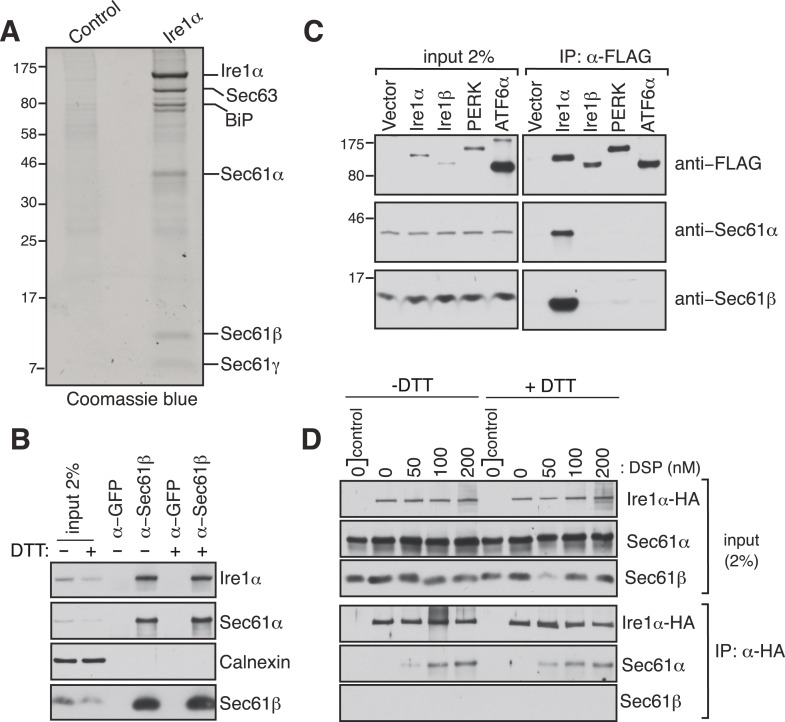
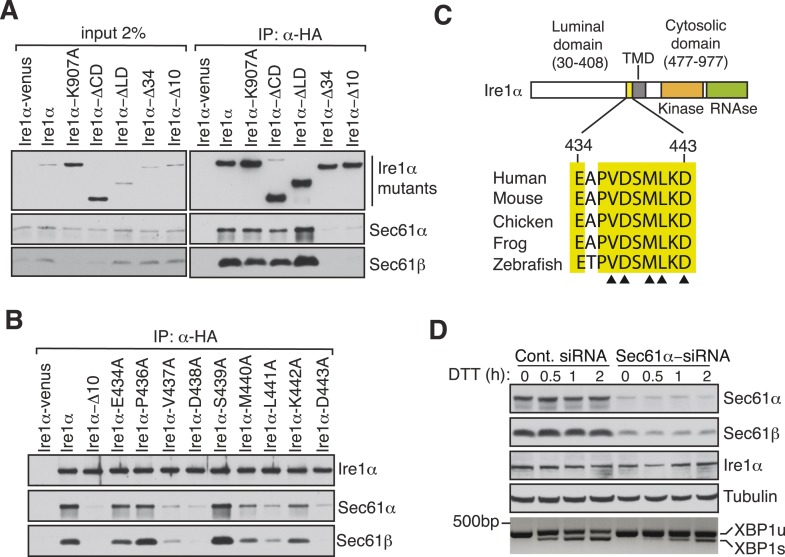
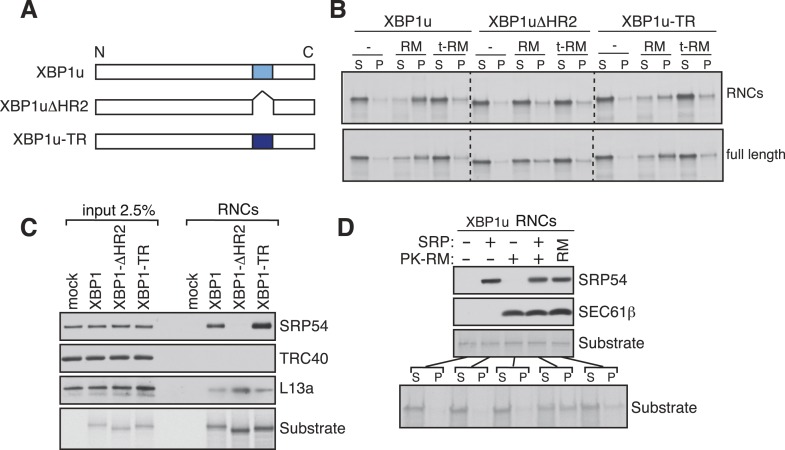
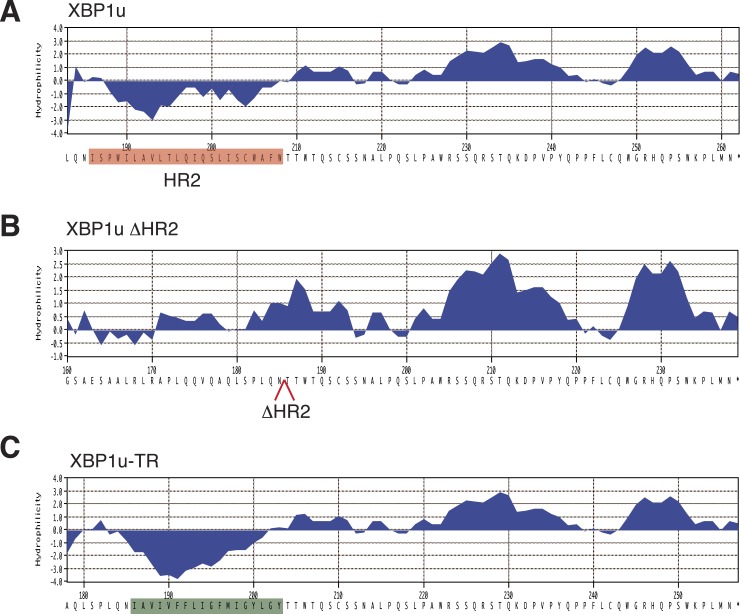
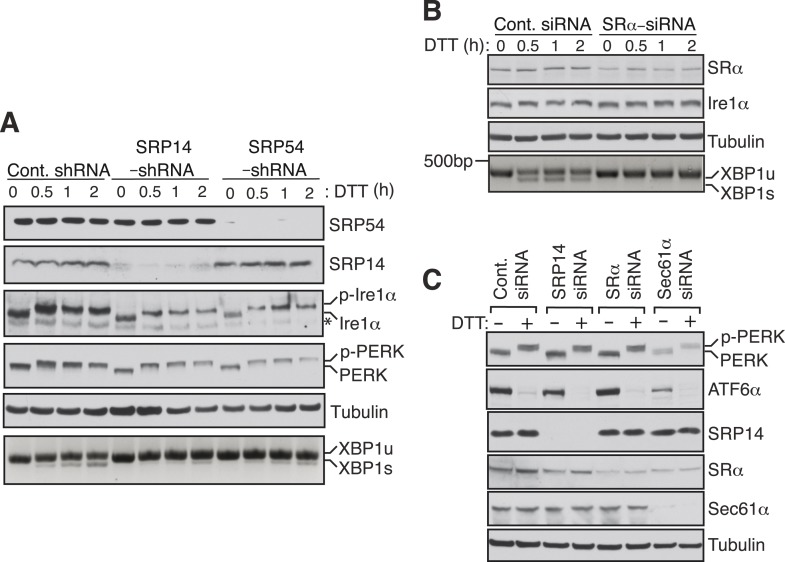
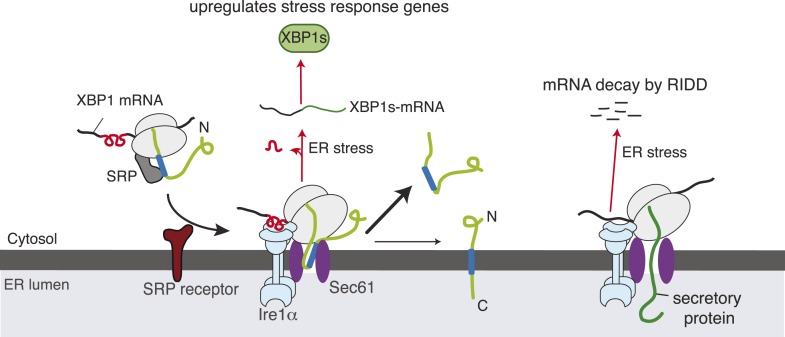
Upon endoplasmic reticulum (ER) stress, the transmembrane endoribonuclease Ire1α performs mRNA cleavage reactions to increase the ER folding capacity. It is unclear how the low abundant Ire1α efficiently finds and cleaves the majority of mRNAs at the ER membrane. Here, we reveal that Ire1α forms a complex with the Sec61 translocon to cleave its mRNA substrates. We show that Ire1α's key substrate, XBP1u mRNA, is recruited to the Ire1α-Sec61 translocon complex through its nascent chain, which contains a pseudo-transmembrane domain to utilize the signal recognition particle (SRP)-mediated pathway. Depletion of SRP, the SRP receptor or the Sec61 translocon in cells leads to reduced Ire1α-mediated splicing of XBP1u mRNA. Furthermore, mutations in Ire1α that disrupt the Ire1α-Sec61 complex causes reduced Ire1α-mediated cleavage of ER-targeted mRNAs. Thus, our data suggest that the Unfolded Protein Response is coupled with the co-translational protein translocation pathway to maintain protein homeostasis in the ER during stress conditions.
在内质网(ER)应激时,跨膜核糖核酸酶Ire1α进行mRNA切割反应以增加内质网的折叠能力。目前尚不清楚低丰度的Ire1α如何在内质网膜上有效地找到并切割大多数mRNA。在这里,我们发现Ire1α与Sec61转运体形成复合物以切割其mRNA底物。我们表明,Ire1α的关键底物XBP1u mRNA通过其新生链被招募到Ire1α-Sec61转运体复合物,该新生链包含一个假跨膜结构域,以利用信号识别颗粒(SRP)介导途径。细胞中SRP、SRP受体或Sec61转运体的缺失会导致Ire1α介导的XBP1u mRNA剪接减少。此外,破坏Ire1α-Sec61复合物的Ire1α突变会导致Ire1α介导的内质网靶向mRNA切割减少。因此,我们的数据表明,未折叠蛋白反应与共翻译蛋白转运途径相结合,以在应激条件下维持内质网中的蛋白质稳态。