Risse Emmanuel, Nicoll Andrew J, Taylor William A, Wright Daniel, Badoni Mayank, Yang Xiaofan, Farrow Mark A, Collinge John
From the Medical Research Council (MRC) Prion Unit and Department of Neurodegenerative Disease, University College London (UCL) Institute of Neurology, London WC1N 3BG, United Kingdom.
From the Medical Research Council (MRC) Prion Unit and Department of Neurodegenerative Disease, University College London (UCL) Institute of Neurology, London WC1N 3BG, United Kingdom
J Biol Chem. 2015 Jul 3;290(27):17020-8. doi: 10.1074/jbc.M115.637124. Epub 2015 May 20.
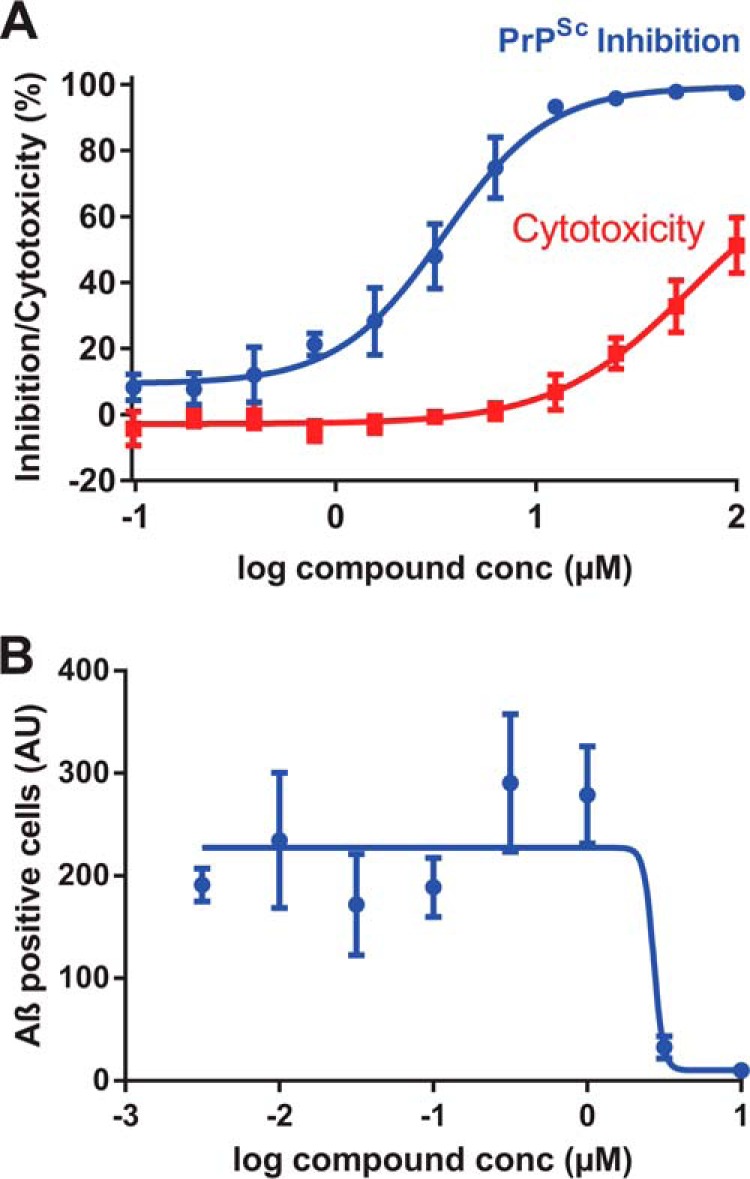
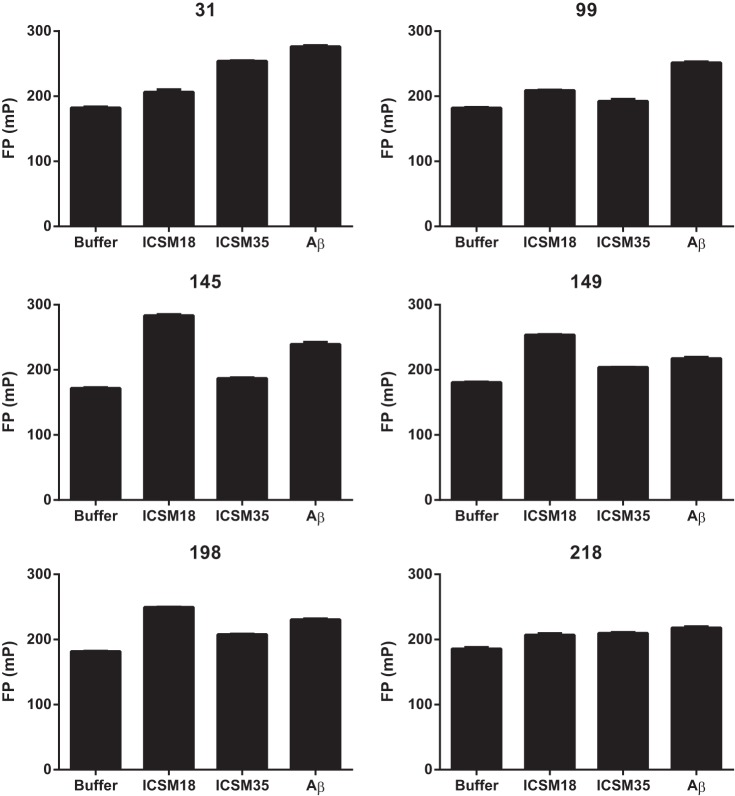
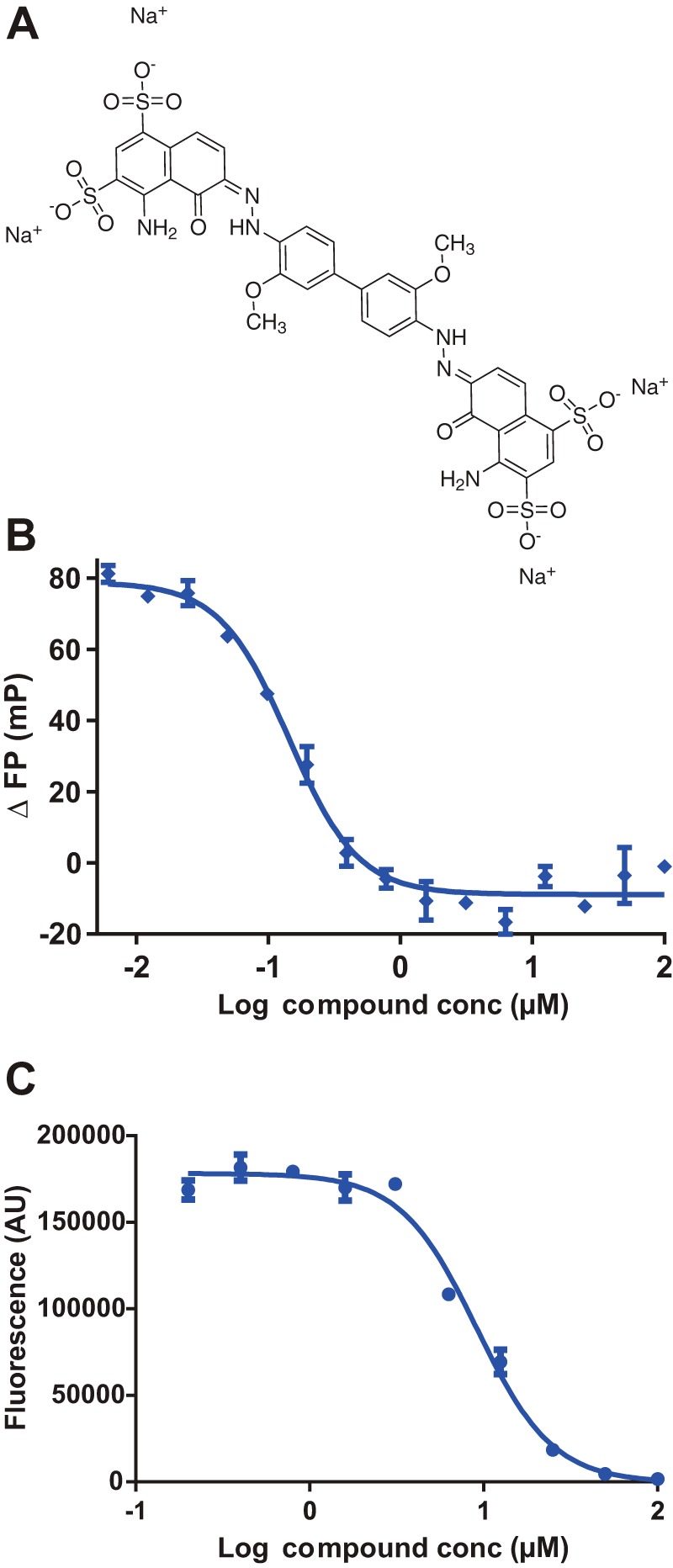
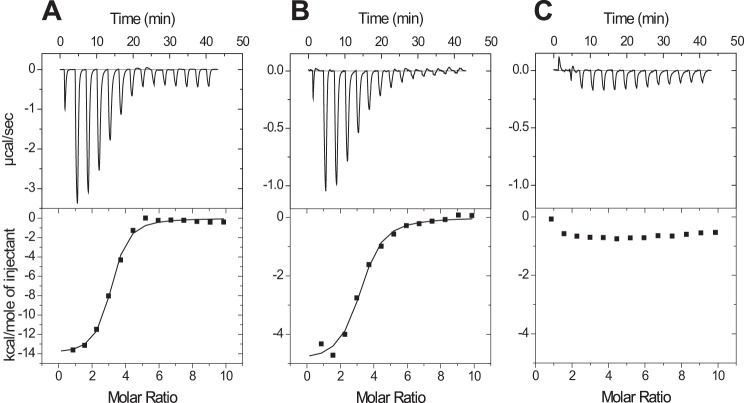
The prion protein (PrP) has been implicated both in prion diseases such as Creutzfeldt-Jakob disease, where its monomeric cellular isoform (PrP(C)) is recruited into pathogenic self-propagating polymers of misfolded protein, and in Alzheimer disease, where PrP(C) may act as a receptor for synaptotoxic oligomeric forms of amyloid-β (Aβ). There has been considerable interest in identification of compounds that bind to PrP(C), stabilizing its native fold and thereby acting as pharmacological chaperones to block prion propagation and pathogenesis. However, compounds binding PrP(C) could also inhibit the binding of toxic Aβ species and may have a role in treating Alzheimer disease, a highly prevalent dementia for which there are currently no disease-modifying treatments. However, the absence of a unitary, readily measurable, physiological function of PrP makes screening for ligands challenging, and the highly heterogeneous nature of Aβ oligomer preparations makes conventional competition binding assays difficult to interpret. We have therefore developed a high-throughput screen that utilizes site-specifically fluorescently labeled protein to identify compounds that bind to PrP and inhibit both Aβ binding and prion propagation. Following a screen of 1,200 approved drugs, we identified Chicago Sky Blue 6B as the first small molecule PrP ligand capable of inhibiting Aβ binding, demonstrating the feasibility of development of drugs to block this interaction. The interaction of Chicago Sky Blue 6B was characterized by isothermal titration calorimetry, and its ability to inhibit Aβ binding and reduce prion levels was established in cell-based assays.
朊病毒蛋白(PrP)与多种疾病相关,如克雅氏病,在这种疾病中,其单体细胞异构体(PrP(C))会被招募到错误折叠蛋白的致病性自我传播聚合物中;同时也与阿尔茨海默病有关,在该病中,PrP(C)可能作为淀粉样β蛋白(Aβ)的突触毒性寡聚体形式的受体。人们对鉴定与PrP(C)结合的化合物颇感兴趣,这些化合物可稳定其天然构象,从而作为药理伴侣来阻断朊病毒的传播和发病机制。然而,与PrP(C)结合的化合物也可能抑制有毒Aβ物种的结合,并且可能在治疗阿尔茨海默病中发挥作用,阿尔茨海默病是一种非常普遍的痴呆症,目前尚无改善疾病的治疗方法。然而,PrP缺乏单一、易于测量的生理功能,这使得筛选配体具有挑战性,而且Aβ寡聚体制剂的高度异质性使得传统的竞争结合试验难以解释。因此,我们开发了一种高通量筛选方法,利用位点特异性荧光标记蛋白来鉴定与PrP结合并抑制Aβ结合和朊病毒传播的化合物。在对1200种已批准药物进行筛选后,我们确定芝加哥天蓝6B是第一种能够抑制Aβ结合的小分子PrP配体,证明了开发阻断这种相互作用的药物的可行性。通过等温滴定量热法对芝加哥天蓝6B的相互作用进行了表征,并在基于细胞的试验中确定了其抑制Aβ结合和降低朊病毒水平的能力。