Alyahya S Anisah, Nolan Scott T, Smith Cara M R, Bishai William R, Sadoff Jerald, Lamichhane Gyanu
Crucell Holland B.V., Janssen Infectious Diseases and Vaccines, Leiden, The Netherlands.
Center for Tuberculosis Research, Department of Medicine, Johns Hopkins University School of Medicine, Baltimore, Maryland, United States of America.
PLoS One. 2015 May 21;10(5):e0127907. doi: 10.1371/journal.pone.0127907. eCollection 2015.
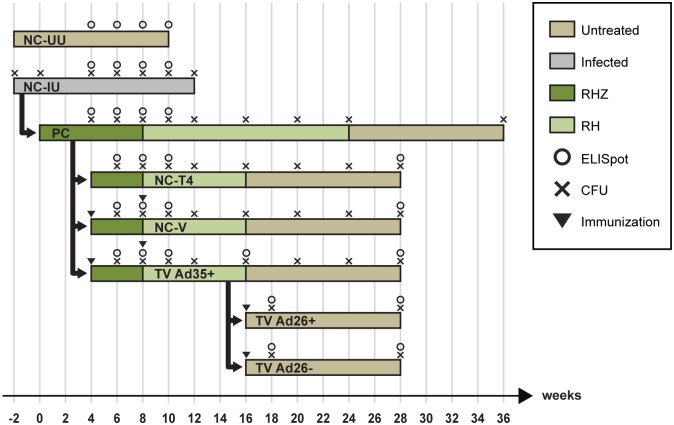
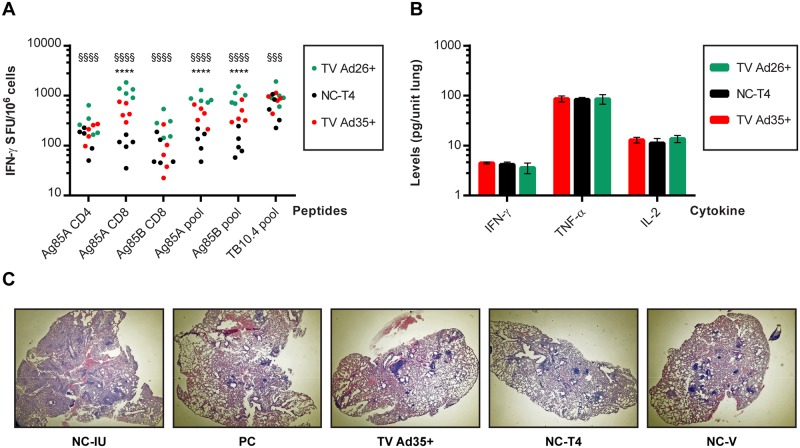
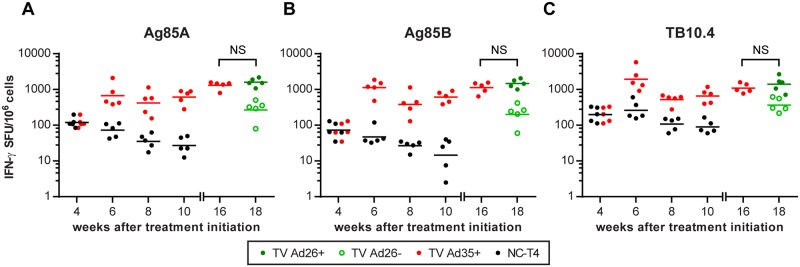
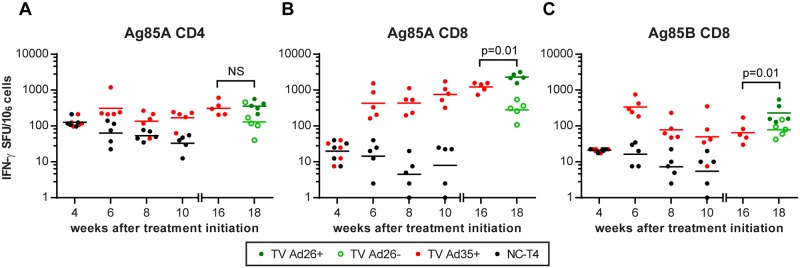
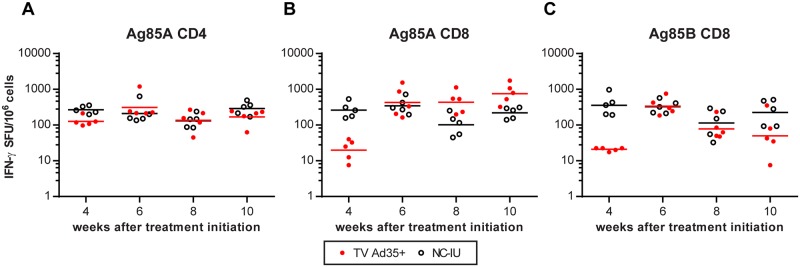
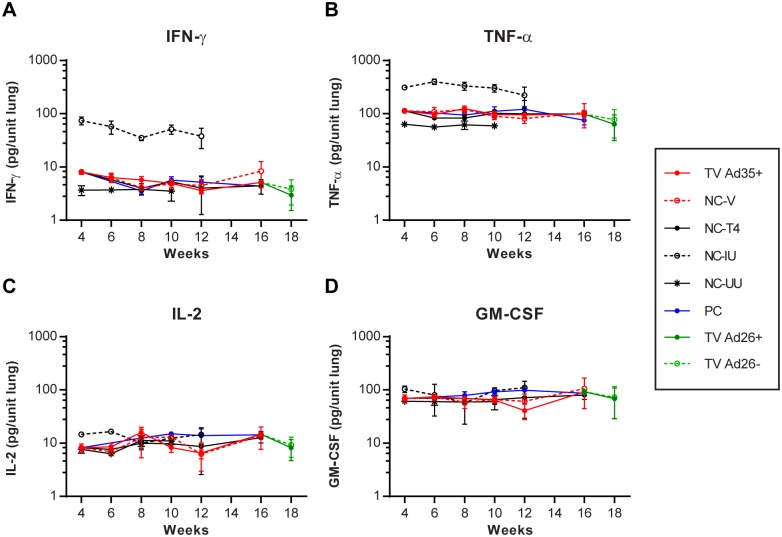
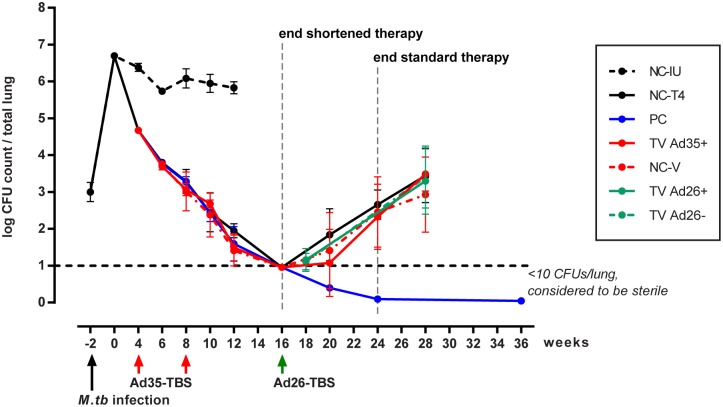
To investigate if bacterial persistence during TB drug treatment could be overcome by modulation of host immunity, we adapted a clinically-relevant model developed for the evaluation of new drugs and examined if immunotherapy with two adenoviral vaccines, Ad35-TBS (AERAS-402) and Ad26-TBS, could shorten therapy in mice. Even though immunotherapy resulted in strong splenic IFN-γ responses, no effect on bacterial replication in the lungs was seen. Multiplex assay analysis of lung samples revealed the absence of cytokine augmentation such as IFN-γ, TNF-α and IL-2, suggesting that immunization failed to induce immunity in the lungs. In this model, we show that IFN-γ levels were not associated with protection against disease relapse. The results obtained from our study raise questions regarding the traits of protective TB immunity that are relevant for the development of future immunotherapeutic and post-exposure vaccination strategies.
为了研究在结核病药物治疗期间细菌的持续存在是否可以通过调节宿主免疫来克服,我们采用了一个为评估新药而开发的临床相关模型,并研究了两种腺病毒疫苗Ad35-TBS(AERAS-402)和Ad26-TBS的免疫疗法是否可以缩短小鼠的治疗时间。尽管免疫疗法导致脾脏产生强烈的IFN-γ反应,但未观察到对肺部细菌复制有任何影响。对肺样本的多重分析显示缺乏细胞因子增强,如IFN-γ、TNF-α和IL-2,这表明免疫未能在肺部诱导免疫。在这个模型中,我们表明IFN-γ水平与预防疾病复发无关。我们的研究结果对与未来免疫治疗和暴露后疫苗接种策略发展相关的保护性结核病免疫特征提出了疑问。