Igual Jorge, Salazar Addisson, Safont Gonzalo, Vergara Luis
Departamento de Comunicaciones, Universitat Politecnica de Valencia, Camino de Vera s/n, 46022 Valencia, Spain.
Sensors (Basel). 2015 May 19;15(5):11528-50. doi: 10.3390/s150511528.
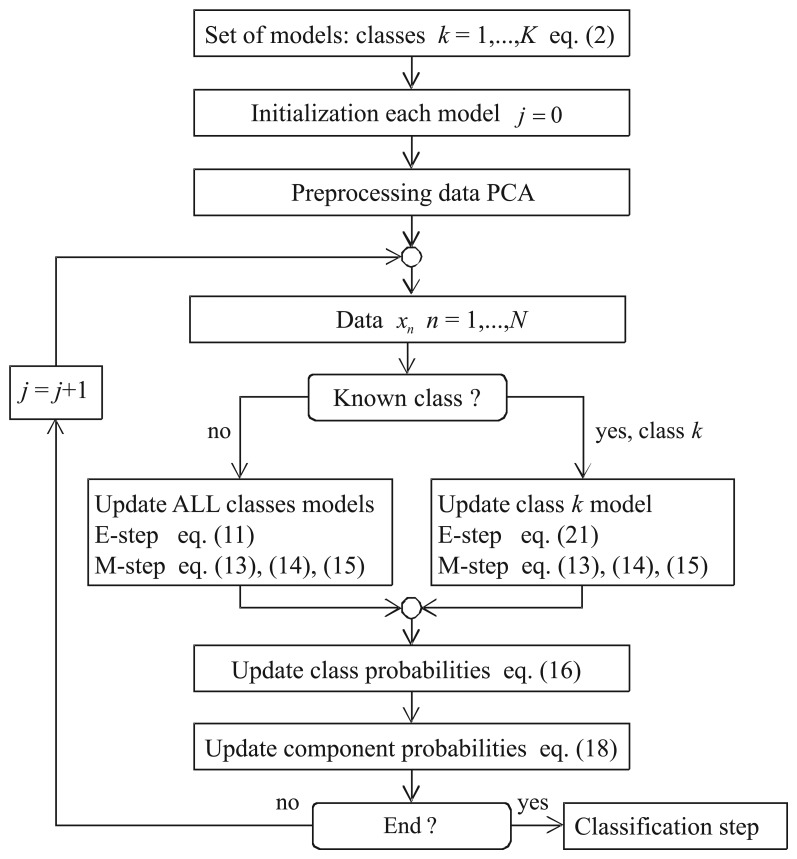
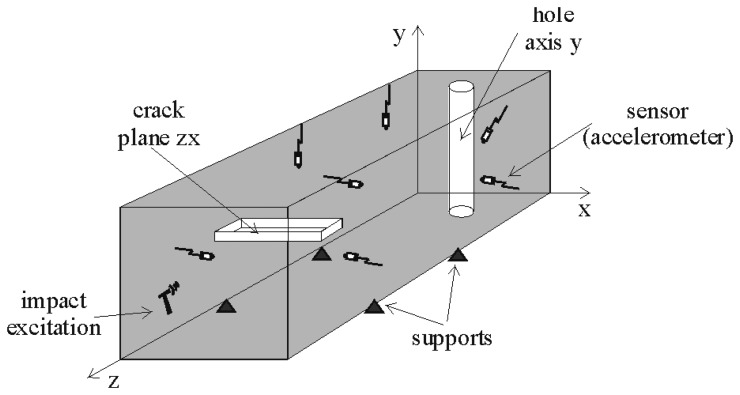
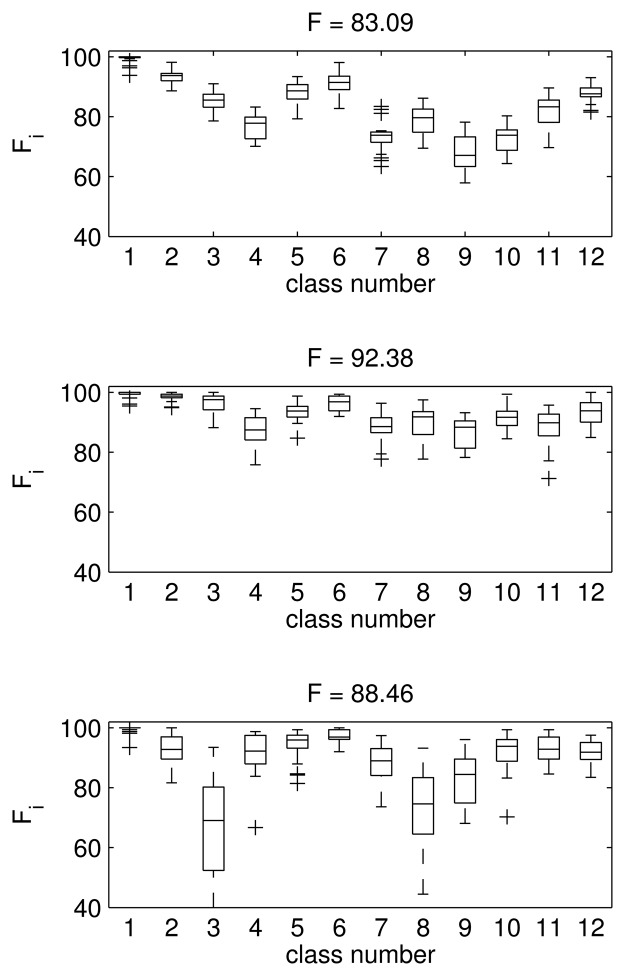
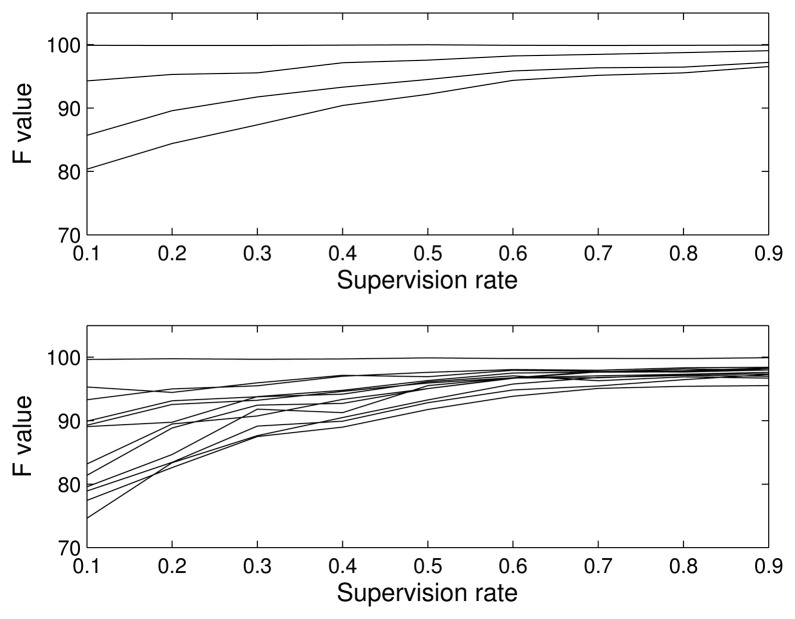
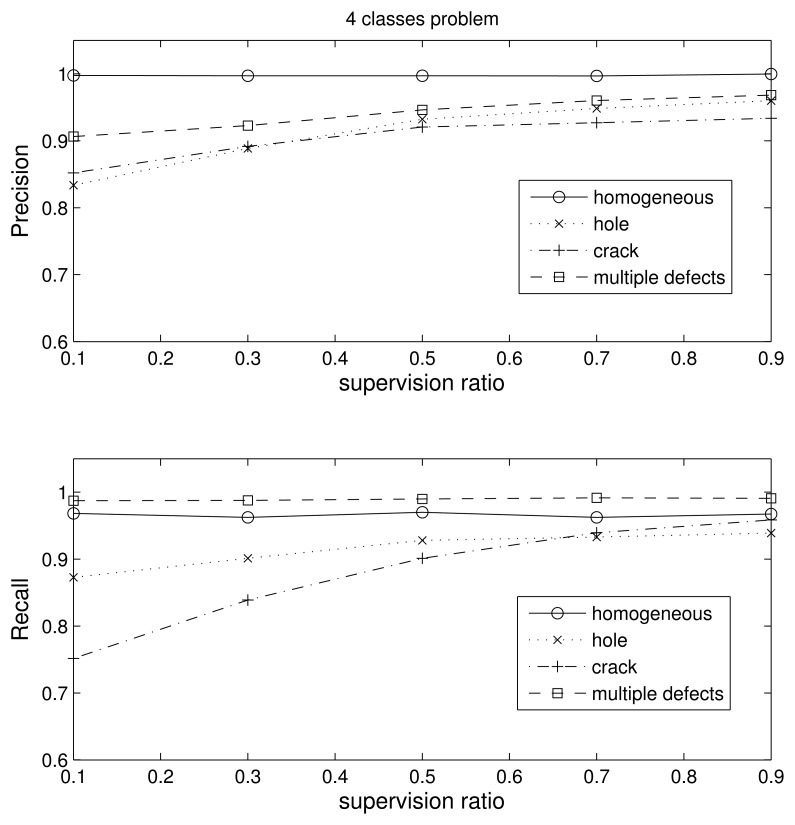
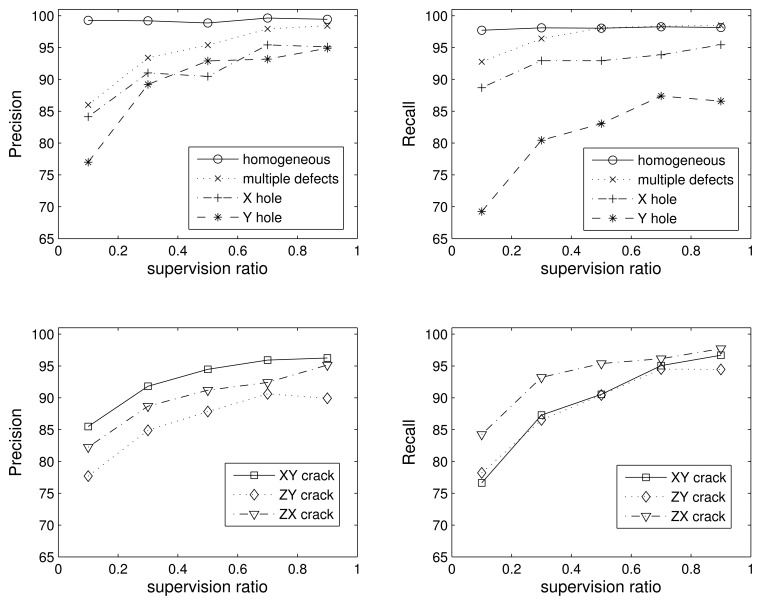
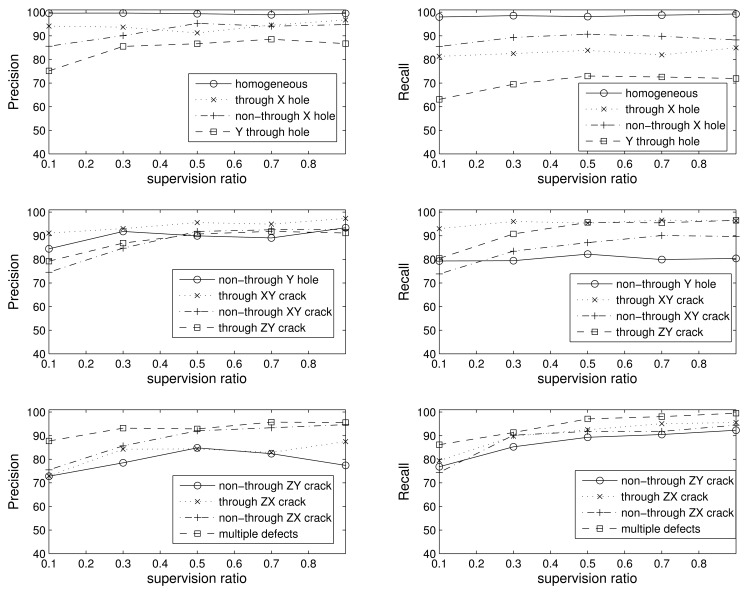
The detection and identification of internal defects in a material require the use of some technology that translates the hidden interior damages into observable signals with different signature-defect correspondences. We apply impact-echo techniques for this purpose. The materials are classified according to their defective status (homogeneous, one defect or multiple defects) and kind of defect (hole or crack, passing through or not). Every specimen is impacted by a hammer, and the spectrum of the propagated wave is recorded. This spectrum is the input data to a Bayesian classifier that is based on the modeling of the conditional probabilities with a mixture of Gaussians. The parameters of the Gaussian mixtures and the class probabilities are estimated using an extended expectation-maximization algorithm. The advantage of our proposal is that it is flexible, since it obtains good results for a wide range of models even under little supervision; e.g., it obtains a harmonic average of precision and recall value of 92.38% given only a 10% supervision ratio. We test the method with real specimens made of aluminum alloy. The results show that the algorithm works very well. This technique could be applied in many industrial problems, such as the optimization of the marble cutting process.
检测和识别材料内部缺陷需要使用某种技术,该技术能将隐藏的内部损伤转化为具有不同特征-缺陷对应关系的可观测信号。为此,我们应用冲击回波技术。材料根据其缺陷状态(均匀、一个缺陷或多个缺陷)和缺陷类型(孔洞或裂纹、是否贯穿)进行分类。每个试样用锤子敲击,并记录传播波的频谱。该频谱是基于高斯混合模型的条件概率建模的贝叶斯分类器的输入数据。使用扩展期望最大化算法估计高斯混合模型的参数和类别概率。我们提议的优点是灵活,因为即使在监督很少的情况下,它对于广泛的模型也能获得良好的结果;例如,在仅10%的监督率下,它获得的精度和召回值的调和平均值为92.38%。我们用铝合金制成的真实试样测试该方法。结果表明该算法效果很好。该技术可应用于许多工业问题,如大理石切割工艺的优化。