Chai Tingting, Zhou Jun, Liu Jian, Xing Da
MOE Key Laboratory of Laser Life Science and Institute of Laser Life Science, College of Biophotonics, South China Normal University Guangzhou, China.
Front Plant Sci. 2015 May 5;6:292. doi: 10.3389/fpls.2015.00292. eCollection 2015.
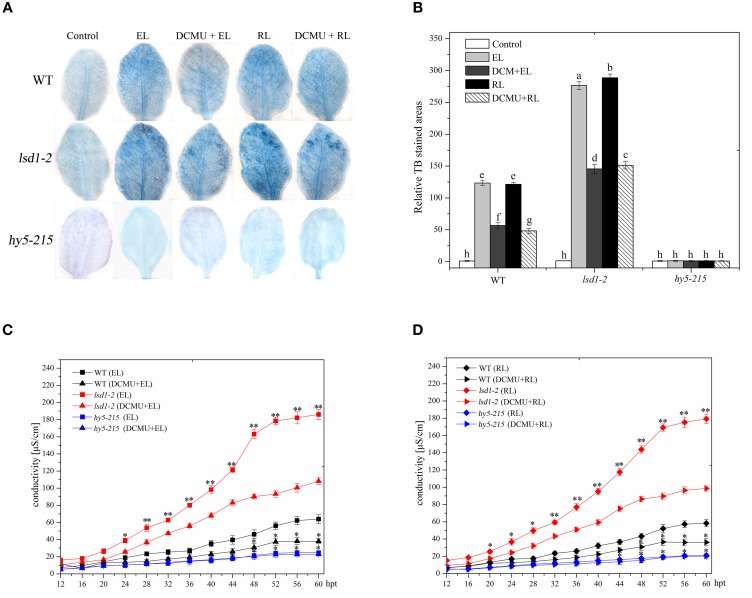
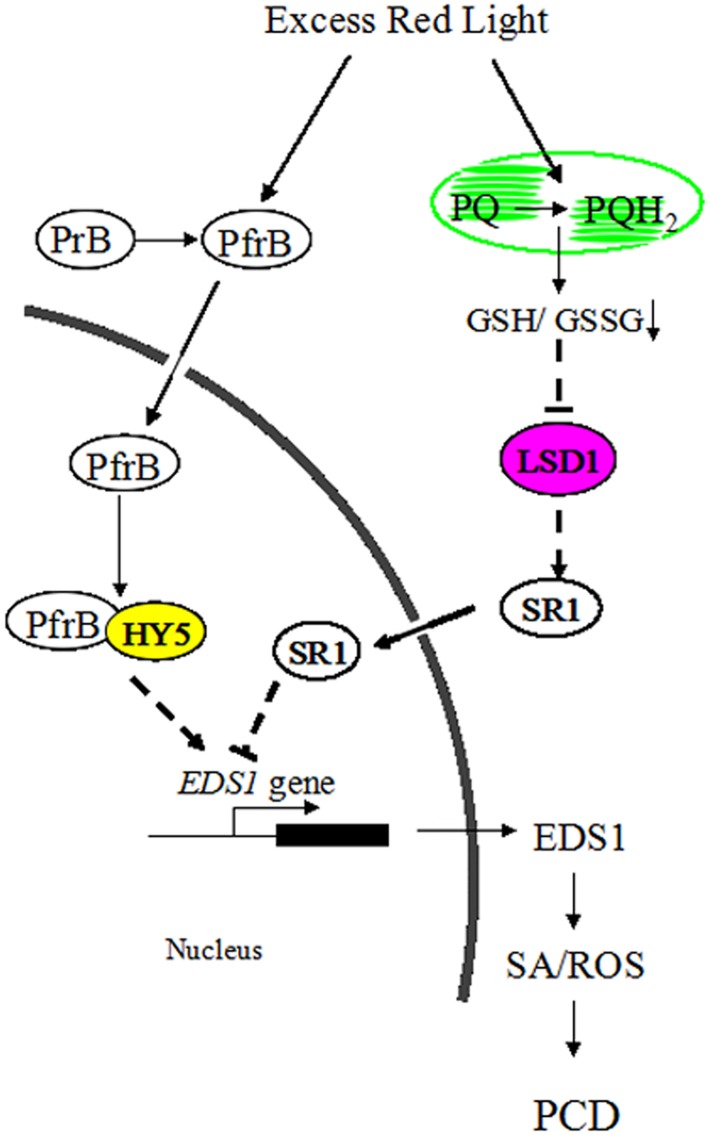
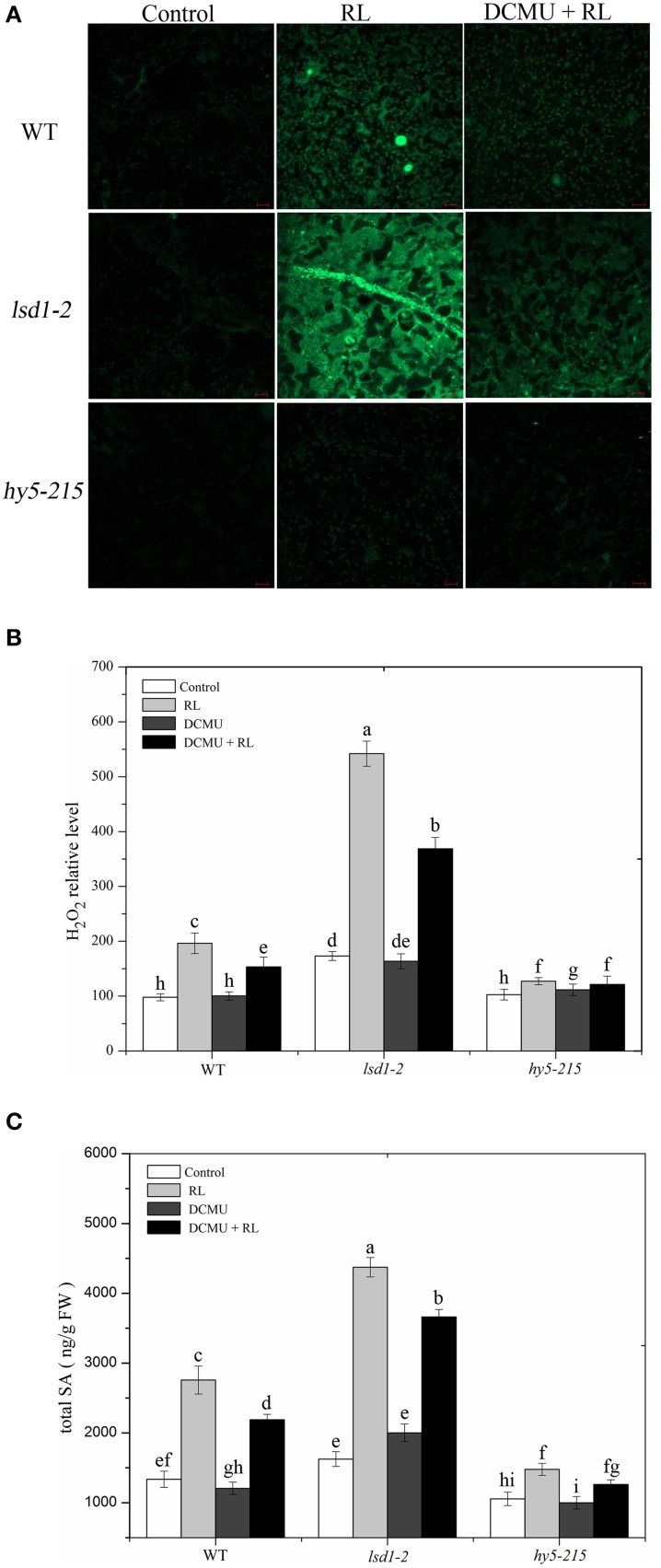
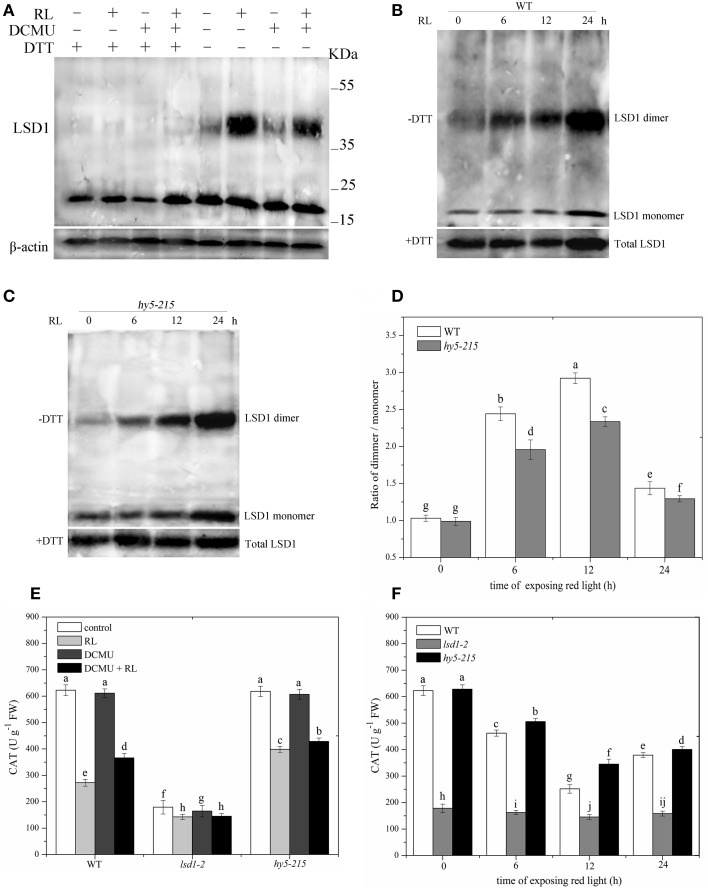
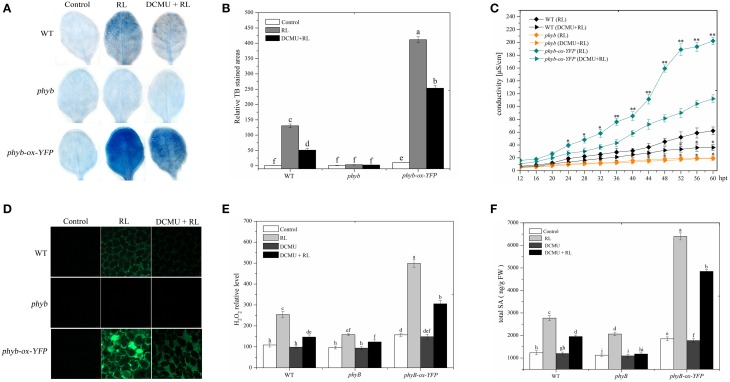
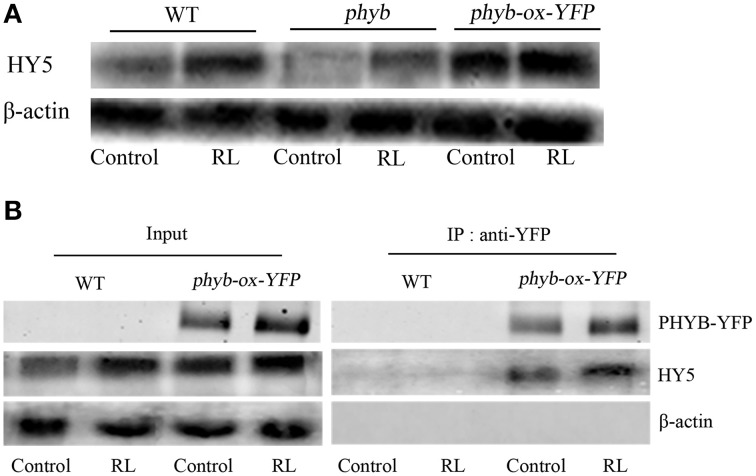
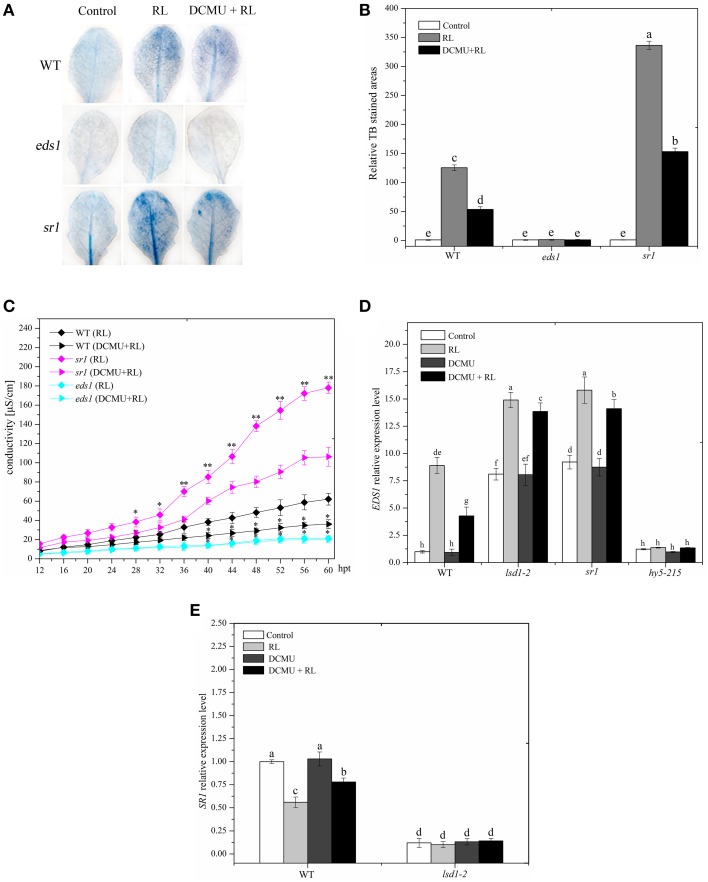
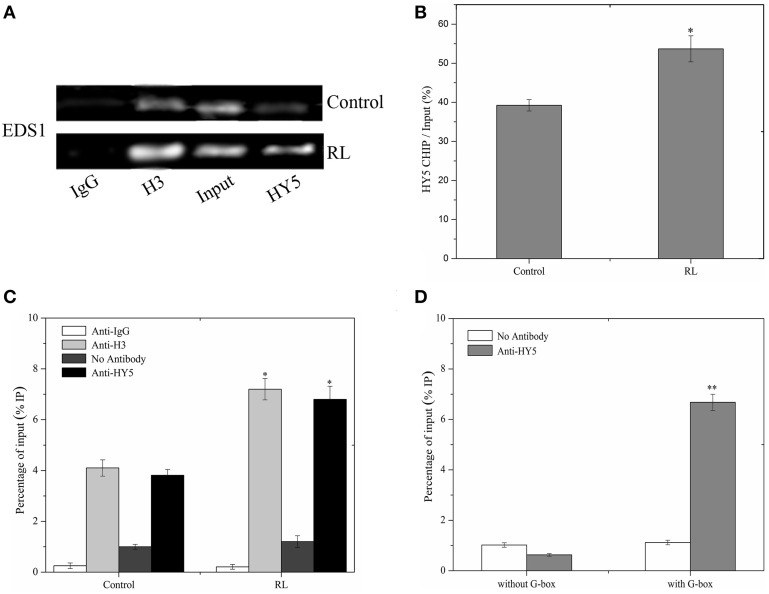
Programmed cell death (PCD) in plant is triggered by abiotic and biotic stress. Light-dependent PCD is unique to plants. Light-induced PCD also requires reactive oxygen species (ROS) and salicylic acid (SA). In this study, lesion simulating disease1 (LSD1) and elongated hypocotyl 5 (HY5) perform opposite roles to regulate excess red light (RL)-triggered PCD associated with ROS and SA production. Under RL, the lsd1 mutant released more ROS and SA and displayed a stronger cell death rate than the hy5 mutant. It was shown that active LSD1 converted into inactive form by changing the redox status of the plastoquinone pool, and HY5 interacted with phytochrome B (phyB) to promote PCD in response to RL. LSD1 inhibited the enhanced disease susceptibility 1 (EDS1) expression by upregulating SR1, whereas HY5 enhanced the enhanced EDS1 expression by binding to the G-box of the EDS1 promoter. This study suggested that LSD1 and HY5 antagonistically modulated EDS1-dependent ROS and SA signaling; thus, PCD was mediated in response to RL.
植物中的程序性细胞死亡(PCD)由非生物和生物胁迫触发。光依赖性PCD是植物所特有的。光诱导的PCD还需要活性氧(ROS)和水杨酸(SA)。在本研究中,类病变蛋白1(LSD1)和长下胚轴5(HY5)在调节与ROS和SA产生相关的过量红光(RL)触发的PCD中发挥相反作用。在红光下,lsd1突变体比hy5突变体释放更多的ROS和SA,并且细胞死亡率更高。结果表明,活性LSD1通过改变质体醌库的氧化还原状态转化为无活性形式,并且HY5与光敏色素B(phyB)相互作用以促进对红光的PCD响应。LSD1通过上调SR1抑制增强的疾病易感性1(EDS1)表达,而HY5通过与EDS1启动子的G盒结合增强EDS1表达。本研究表明,LSD1和HY5拮抗调节EDS1依赖性ROS和SA信号传导;因此,PCD是对红光的响应而介导的。