Mah Vei, Alavi Mohammad, Márquez-Garbán Diana C, Maresh Erin L, Kim Sara R, Horvath Steve, Bagryanova Lora, Huerta-Yepez Sara, Chia David, Pietras Richard, Goodglick Lee
Department of Pathology and Laboratory Medicine, UCLA, Los Angeles, California, 90095, United States of America.
Department of Medicine, Division of Hematology-Oncology, UCLA, Los Angeles, California, 90095, United States of America; Jonsson Comprehensive Cancer Center, David Geffen School of Medicine at UCLA, Los Angeles, California, 90095, United States of America.
PLoS One. 2015 May 22;10(5):e0127600. doi: 10.1371/journal.pone.0127600. eCollection 2015.
Ribonucleotide reductase catalyzes the conversion of ribonucleotide diphosphates to deoxyribonucleotide diphosphates. The functional enzyme consists of two subunits - one large (RRM1) and one small (RRM2 or RRM2b) subunit. Expression levels of each subunit have been implicated in prognostic outcomes in several different types of cancers.
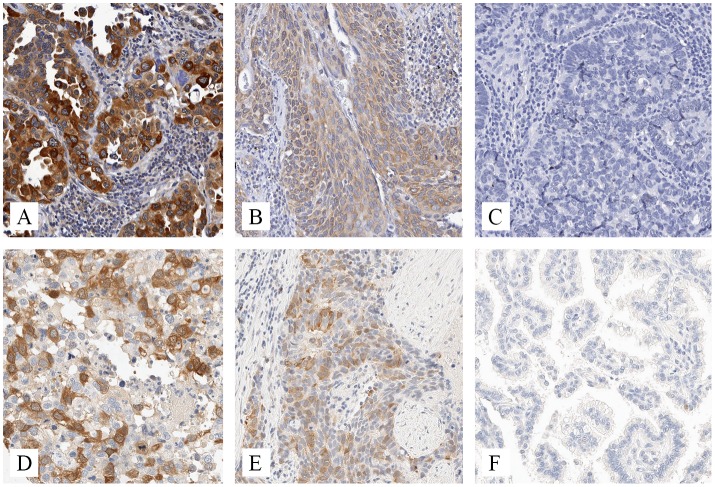
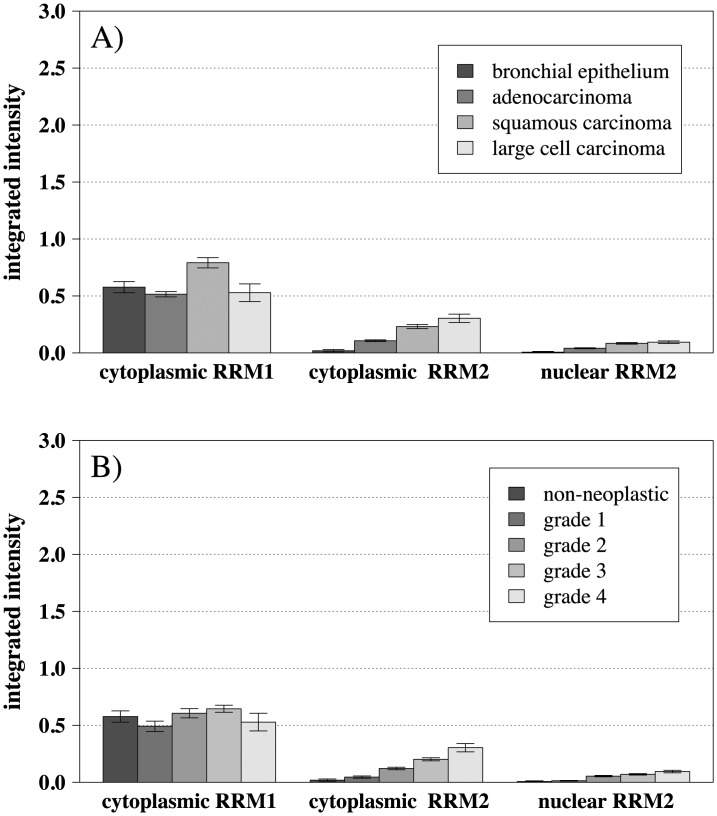
Immunohistochemistry for RRM1 and RRM2 was performed on a lung cancer tissue microarray (TMA) and analyzed. 326 patients from the microarray were included in this study.
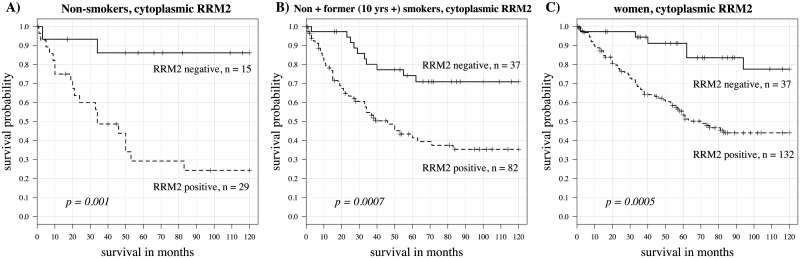
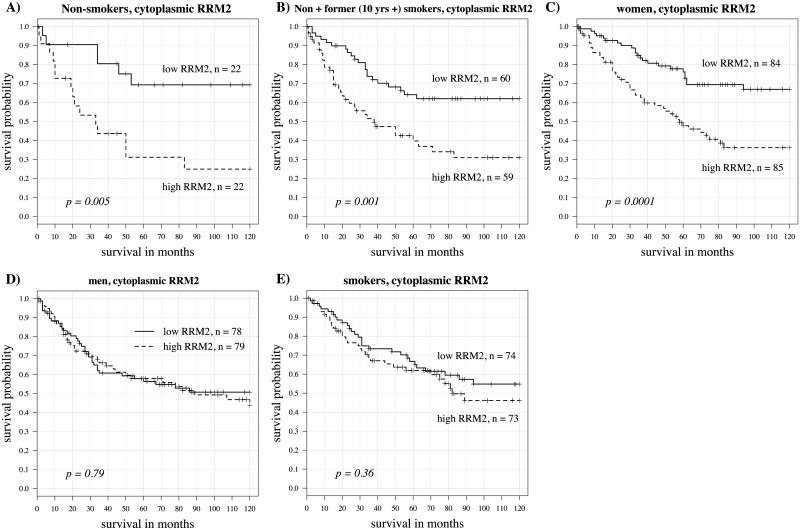
In non-small cell lung cancer (NSCLC), RRM2 expression was strongly predictive of disease-specific survival in women, non-smokers and former smokers who had quit at least 10 years prior to being diagnosed with lung cancer. Higher expression was associated with worse survival. This was not the case for men, current smokers and those who had stopped smoking for shorter periods of time. RRM1 was not predictive of survival outcomes in any subset of the patient group.
RRM2, but not RRM1, is a useful predictor of survival outcome in certain subsets of NSCLC patients.
核糖核苷酸还原酶催化核糖核苷酸二磷酸转化为脱氧核糖核苷酸二磷酸。功能性酶由两个亚基组成——一个大亚基(RRM1)和一个小亚基(RRM2或RRM2b)。每个亚基的表达水平与几种不同类型癌症的预后结果有关。
在肺癌组织微阵列(TMA)上进行RRM1和RRM2的免疫组织化学检测并分析。本研究纳入了微阵列中的326例患者。
在非小细胞肺癌(NSCLC)中,RRM2表达强烈预测女性、非吸烟者和在被诊断为肺癌前至少已戒烟10年的既往吸烟者的疾病特异性生存。较高表达与较差的生存相关。男性、当前吸烟者和戒烟时间较短者则并非如此。RRM1在患者组的任何亚组中均不能预测生存结果。
RRM2而非RRM1是NSCLC患者某些亚组生存结果的有用预测指标。