
面神经切断与神经缝合的最佳部位:一项随机前瞻性动物研究。
Optimal site for facial nerve transection and neurorrhaphy: a randomized prospective animal study.
作者信息
Mendez Adrian I, Seikaly Hadi, Biron Vincent, Zhu Lin-fu, Côté David W J
机构信息
Division of Otolaryngology, Head and Neck Surgery, University of Alberta, 8440-112 Street, Room 1E4, WMC, Edmonton, T6G 2B7, AB, Canada.
出版信息
J Otolaryngol Head Neck Surg. 2015 May 24;44(1):19. doi: 10.1186/s40463-015-0072-8.
BACKGROUND
Since the first facial allograft transplantation was performed, several institutions have performed the procedure with the main objectives being restoration of the aesthetic appearance and expressive function of the face. The optimal location to transect the facial nerve during flap harvest in transplantation to preserve facial movement function is currently unknown. There are currently two primary methods to perform facial nerve neurorrhaphy between the donor and recipient-one protocol involves transection and repair of the facial nerve at the main trunk while the another protocol advocates for the neurorrhaphy to be performed distally at the main branches. The purpose of this study is to establish the optimal location for transection and repair of the facial nerve to optimize functional recovery of facial movement.
METHODS
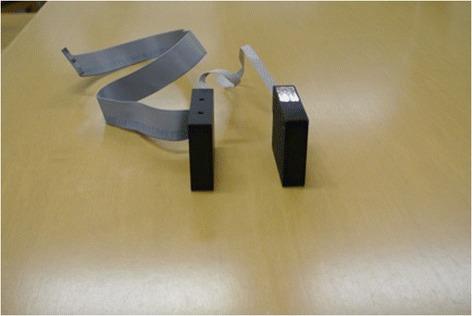
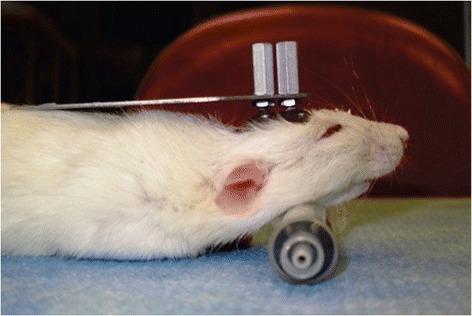
A prospective randomized controlled trial using a rat model was performed. Two groups of 12 rats underwent facial nerve transection and subsequent repair either at the main trunk of the nerve (group 1) or 2 cm distally, at the main bifurcation (group 2). Primary outcome of nerve functional recovery was measured using a previously validated laser curtain model, which measured amplitude of whisking at 2, 4, and 6 post-operatively. The deflection of the laser curtain sent a digital signal that was interpreted by central computer software.
RESULTS
At week 2 post-nerve surgery, the average amplitude observed for group 1 and 2 was 4.4 and 10.8 degrees, respectively. At week 4, group 1 showed improvement with an average amplitude of 9.7 degrees, while group 2 displayed an average of 10.2 degrees. The week 6 results showed the greatest improvement from baseline for group 1. Group 1 and 2 had average amplitudes of 17.2 and 6.9 degrees, respectively. There was no statistically significant difference between the two groups at 2, 4, and 6 weeks after facial nerve surgery (p > 0.05).
CONCLUSIONS
We found no statistical difference between these two locations of nerve repair using identical methods. Therefore, the authors recommend a single versus multiple nerve repair technique. This finding has potential implications for future facial allograft transplantations and at minimum necessitates further study with long-term follow-up data.
背景
自首例面部同种异体移植手术开展以来,多家机构已实施该手术,主要目标是恢复面部的美学外观和表情功能。目前尚不清楚在移植皮瓣切取过程中,为保留面部运动功能而横断面神经的最佳位置。目前在供体和受体之间进行面神经神经缝合有两种主要方法——一种方案是在面神经主干处横断并修复面神经,而另一种方案主张在主干分支的远端进行神经缝合。本研究的目的是确定面神经横断和修复的最佳位置,以优化面部运动的功能恢复。
方法
采用大鼠模型进行前瞻性随机对照试验。两组各12只大鼠分别在面神经主干(第1组)或在主干分叉处向远端2厘米处(第2组)进行面神经横断及后续修复。使用先前验证过的激光光幕模型测量神经功能恢复的主要指标,该模型在术后2周、4周和6周测量触须摆动幅度。激光光幕的偏转发送一个数字信号,由中央计算机软件进行解读。
结果
在神经手术后第2周,第1组和第2组观察到的平均幅度分别为4.4度和10.8度。在第4周时,第1组有所改善,平均幅度为9.7度,而第2组平均为10.2度。第6周的结果显示第1组相对于基线改善最大。第1组和第2组的平均幅度分别为17.2度和6.9度。面神经手术后2周、4周和6周时,两组之间无统计学显著差异(p>0.05)。
结论
我们发现使用相同方法在这两个神经修复位置之间没有统计学差异。因此,作者推荐采用单神经与多神经修复技术。这一发现对未来的面部同种异体移植可能具有潜在影响,至少需要通过长期随访数据进行进一步研究。




 Zotero 插件