Grimmel Mona, Backhaus Charlotte, Proikas-Cezanne Tassula
Autophagy Laboratory, Department of Molecular Biology, Interfaculty Institute of Cell Biology, Faculty of Science, Eberhard Karls University Tuebingen, Auf der Morgenstelle 15, 72076 Tuebingen, Germany.
Cells. 2015 May 22;4(2):202-17. doi: 10.3390/cells4020202.
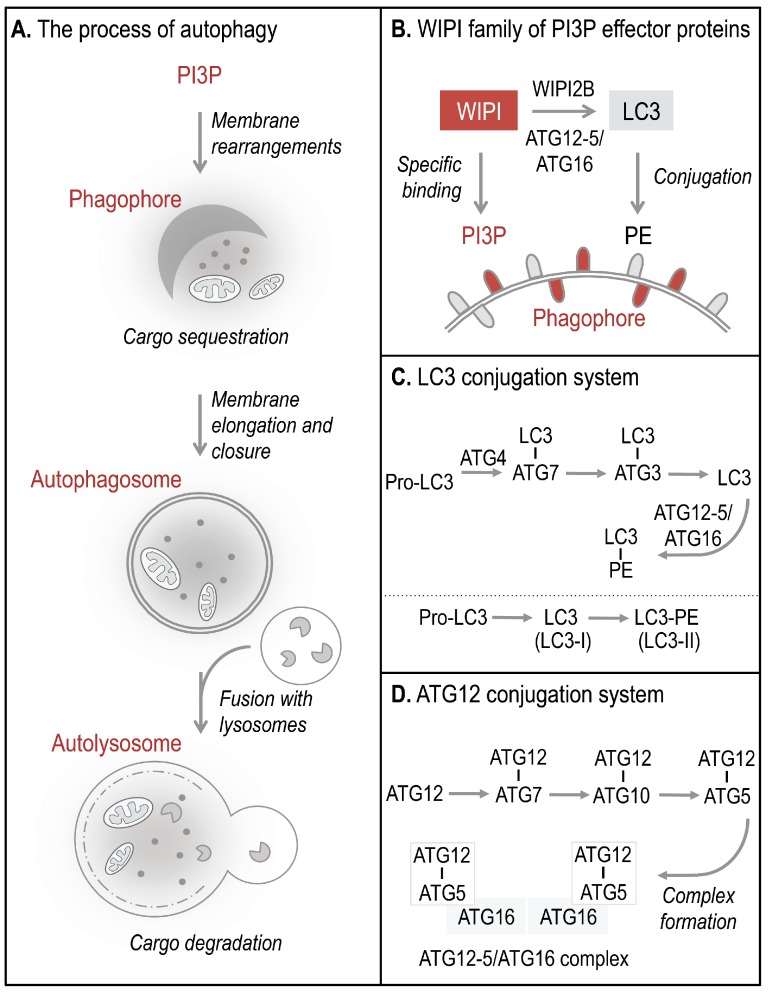
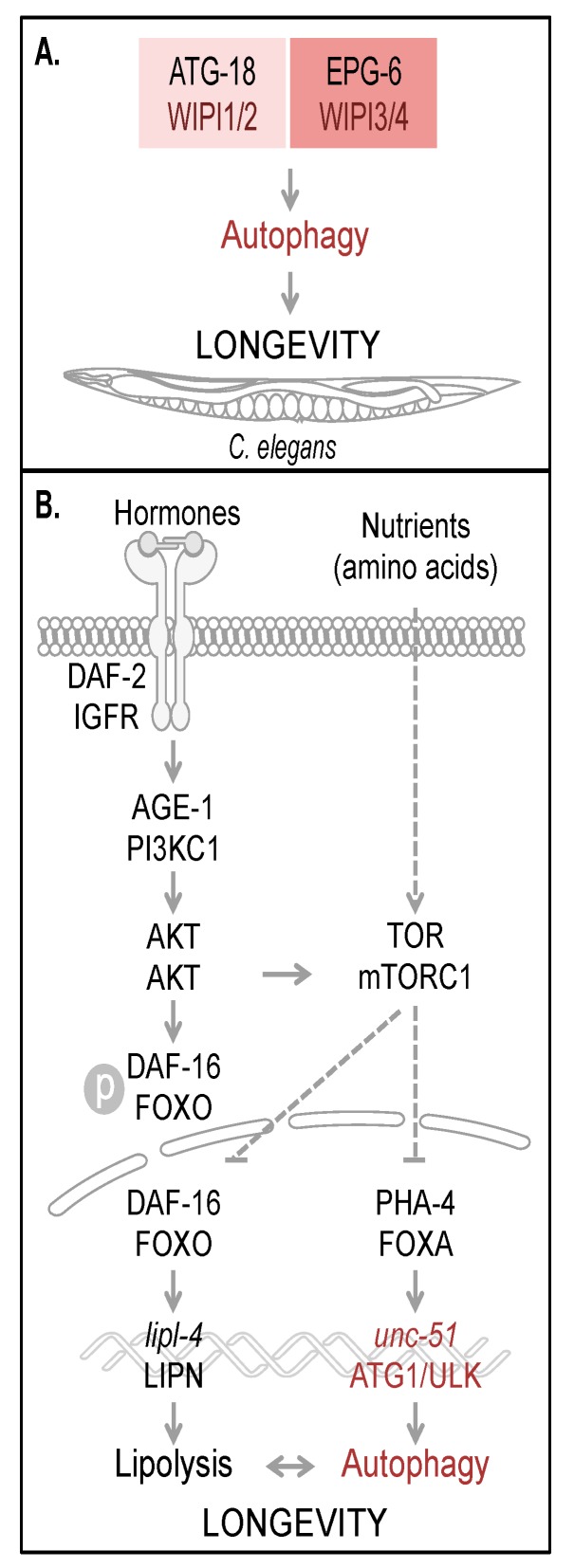
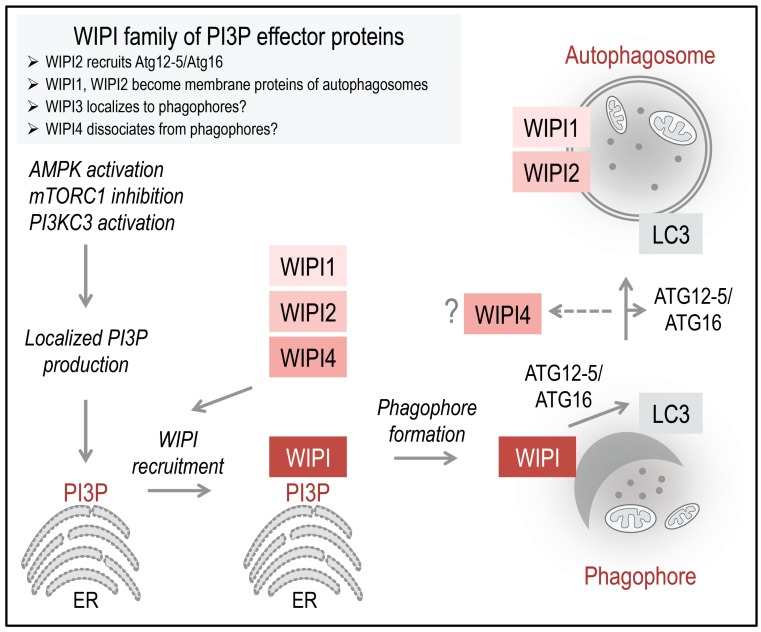
Autophagy is a lysosomal degradation process for cytoplasmic components, including organelles, membranes, and proteins, and critically secures eukaryotic cellular homeostasis and survival. Moreover, autophagy-related (ATG) genes are considered essential for longevity control in model organisms. Central to the regulatory relationship between autophagy and longevity is the control of insulin/insulin-like growth factor receptor-driven activation of mTOR (mechanistic target of rapamycin), which inhibits WIPI (WD repeat protein interacting with phosphoinositides)-mediated autophagosome formation. Release of the inhibitory mTOR action on autophagy permits the production of PI3P (phosphatidylinositol-3 phosphate), predominantly at the endoplasmic reticulum, to function as an initiation signal for the formation of autophagosomes. WIPI proteins detect this pool of newly produced PI3P and function as essential PI3P effector proteins that recruit downstream autophagy-related (ATG) proteins. The important role of WIPI proteins in autophagy is highlighted by functional knockout of the WIPI homologues ATG-18 and EPG-6 in Caenorhabditis elegans (C. elegans). Adult lifespan is significantly reduced in ATG-18 mutant animals, demonstrating that longevity as such is crucially determined by essential autophagy factors. In this review we summarize the role of WIPI proteins and their C. elegans homologues with regard to the molecular basis of aging. As the development of strategies on how to increase health span in humans is increasingly appreciated, we speculate that targeting WIPI protein function might represent a therapeutic opportunity to fight and delay the onset of age-related human diseases.
自噬是一种针对细胞质成分(包括细胞器、膜和蛋白质)的溶酶体降解过程,对真核细胞的稳态和存活至关重要。此外,自噬相关(ATG)基因被认为是模式生物中寿命控制的关键因素。自噬与寿命之间调控关系的核心是胰岛素/胰岛素样生长因子受体驱动的mTOR(雷帕霉素作用靶点)激活的控制,mTOR会抑制WIPI(与磷酸肌醇相互作用的WD重复蛋白)介导的自噬体形成。mTOR对自噬的抑制作用解除后,会在内质网主要产生磷脂酰肌醇-3-磷酸(PI3P),作为自噬体形成的起始信号。WIPI蛋白能检测到这一新产生的PI3P池,并作为重要的PI3P效应蛋白发挥作用,招募下游自噬相关(ATG)蛋白。秀丽隐杆线虫中WIPI同源物ATG-18和EPG-6的功能敲除突出了WIPI蛋白在自噬中的重要作用。在ATG-18突变动物中,成年寿命显著缩短,这表明寿命本身在很大程度上由关键的自噬因子决定。在这篇综述中,我们总结了WIPI蛋白及其秀丽隐杆线虫同源物在衰老分子基础方面的作用。随着人们越来越重视如何延长人类健康寿命策略的开发,我们推测靶向WIPI蛋白功能可能是对抗和延缓人类衰老相关疾病发病的一个治疗机会。