Rennekampff Hans-Oliver, Fimmers Rolf, Metelmann Hans-Robert, Schumann Hauke, Tenenhaus Mayer
Department of Plastic Surgery, Hand Surgery, Burn Center, University Hospital, RWTH University Aachen, Aachen, Germany.
Institute of Medical Biometry, Informatics and Epidemiology (IMBIE), University of Bonn, Bonn, Germany.
Trials. 2015 May 28;16:235. doi: 10.1186/s13063-015-0742-x.
In many clinical trials on cutaneous healing, wound closure is the primary endpoint and single most important outcome parameter, making precise assessment of this time point one of utmost importance. The assessment of wound closure can be performed either by subjective clinical inspection or with a variety of methodologies anticipated to provide more objective data. The aim of this study was to examine intra- and interrater variability of blinded photographic analysis of wound closure of human partial thickness wounds, as well as the reliability of remote photographic analysis of wounds with that of direct clinical assessment.
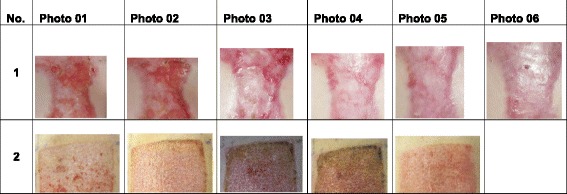
Two plastic surgeons, a dermatologist, and a maxillofacial surgeon constituted our rater panel. High-resolution images of patient wounds derived from two randomized controlled clinical trials (EU Clinical Trials Register numbers EudraCT 2009-017418-56 (registered 12 January 2010) and EudraCT 2010-019945-24 (registered 13 July 2010)) were individually assessed by the blinded, experienced study raters. The reliability of photographic image analysis was tested using intraclass and interclass correlation. The validity of photographic image analysis was correlated with clinical assessments of documented time to heal from the study centers' files.
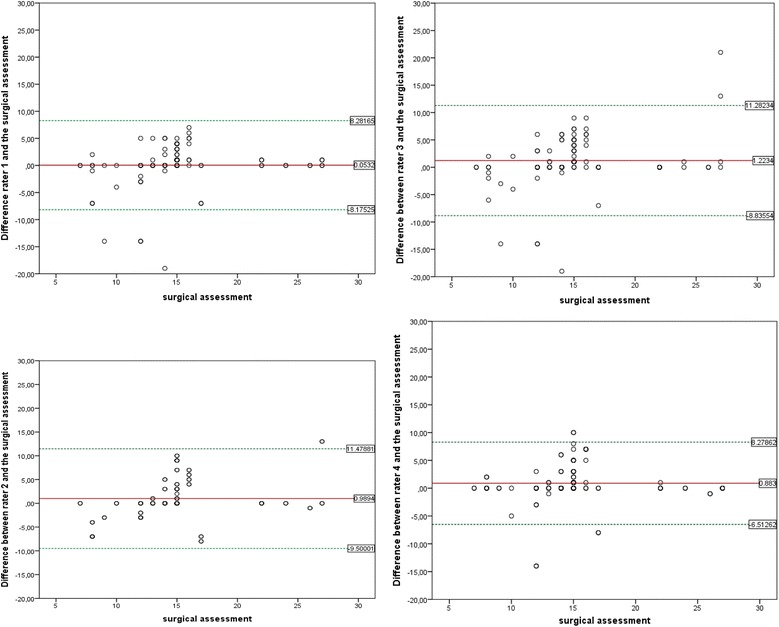
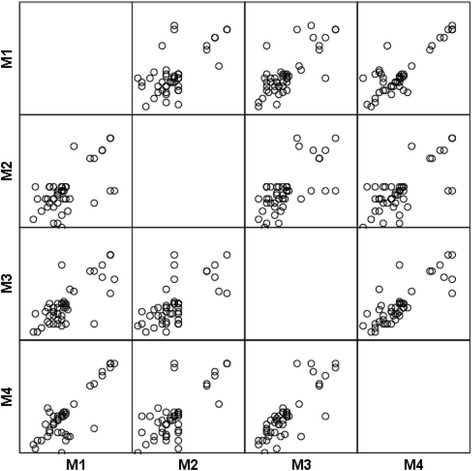
The results demonstrated that the mean intraclass correlation coefficient of all four examiners was excellent (r = 0.79; 95% confidence interval (CI), 0.61, 1.00)). The interrater correlation coefficient was good (r = 0.67; 95% CI, 0.57, 1.00)) and therefore acceptable. The agreement between remote visual assessment and clinical assessment at the time of healing was good (r = 0.64; 95% CI, 0.52, 0.76)) with an overall difference of about 1 day.
Remote photographic analysis of cutaneous wounds is a feasible instrument in clinical open-label studies to evaluate time to wound closure. We found that it was a reliable method of measuring wound closure that correlated satisfactorily with clinical judgment, bolstering the potential relevance in the current era of evolving application and dependency in the field of telemedicine.
EU Clinical Trials Register EudraCT numbers 2009-017418-56 (date of registration: 12 January 2010) and 2010-019945-24 (date of registration: 13 July 2010).
在许多关于皮肤愈合的临床试验中,伤口闭合是主要终点和最重要的单一结果参数,因此精确评估这一时间点至关重要。伤口闭合的评估可以通过主观临床检查或采用各种预期能提供更客观数据的方法来进行。本研究的目的是检验对人类部分厚度伤口闭合情况进行盲法摄影分析时评估者内部和评估者之间的变异性,以及伤口远程摄影分析与直接临床评估的可靠性。
我们的评估小组由两名整形外科医生、一名皮肤科医生和一名颌面外科医生组成。从两项随机对照临床试验(欧盟临床试验注册号EudraCT 2009 - 017418 - 56(2010年1月12日注册)和EudraCT 2010 - 019945 - 24(2010年7月13日注册))获取的患者伤口高分辨率图像由经验丰富的盲法研究评估者单独评估。使用组内和组间相关性检验摄影图像分析的可靠性。摄影图像分析的有效性与研究中心文件中记录的愈合时间的临床评估相关。
结果表明,所有四名检查者的平均组内相关系数极佳(r = 0.79;95%置信区间(CI),0.61,1.00))。评估者间相关系数良好(r = 0.67;95% CI,0.57,1.00)),因此可以接受。愈合时远程视觉评估与临床评估之间的一致性良好(r = 0.64;95% CI,0.52,0.76)),总体差异约为1天。
在临床开放标签研究中,皮肤伤口的远程摄影分析是评估伤口闭合时间的一种可行手段。我们发现它是一种可靠的测量伤口闭合的方法,与临床判断具有令人满意的相关性,支持了其在当前远程医疗不断发展的应用和依赖领域中的潜在相关性。
欧盟临床试验注册号EudraCT编号2009 - 017418 - 56(注册日期:2010年1月12日)和2010 - 019945 - 24(注册日期:2010年7月13日)。