Sawyer Kayle S, Poey Alan, Ruiz Susan Mosher, Marinkovic Ksenija, Oscar-Berman Marlene
Boston University School of Medicine , Boston, MA , USA ; VA Boston Healthcare System , Boston, MA , USA ; Athinoula A. Martinos Center for Biomedical Imaging, Massachusetts General Hospital , Boston, MA , USA.
University of California at San Diego, CA , USA ; Psychology Department, San Diego State University, CA , USA.
PeerJ. 2015 May 5;3:e941. doi: 10.7717/peerj.941. eCollection 2015.
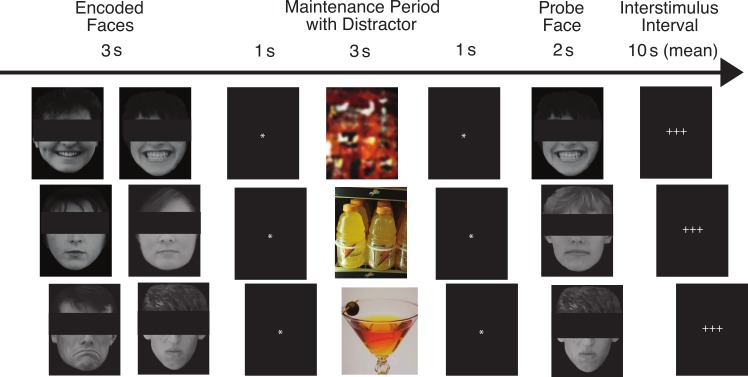
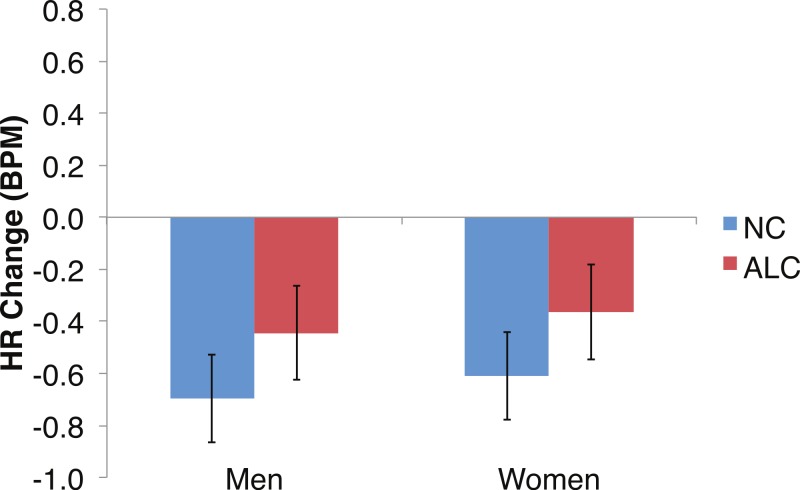
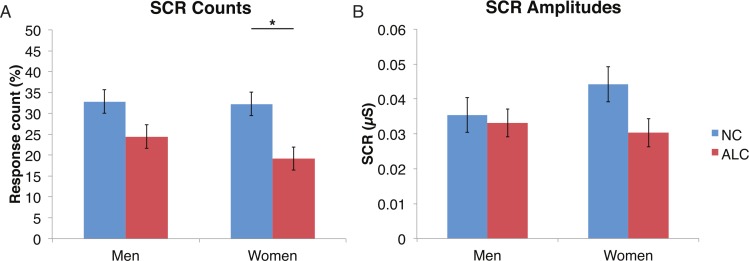
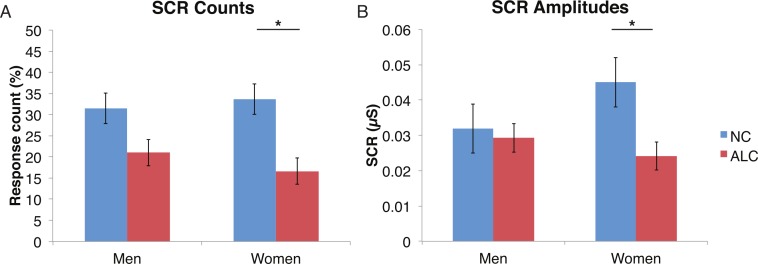
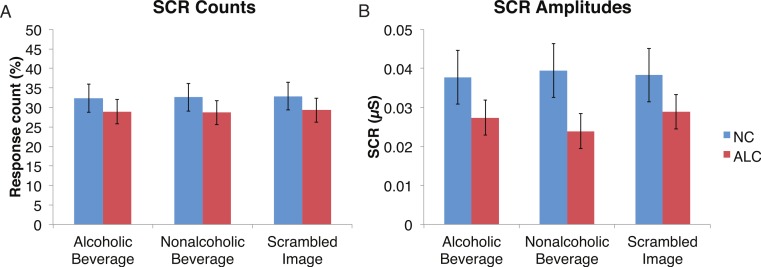
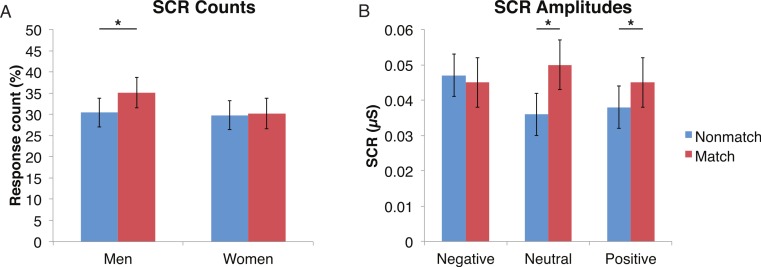
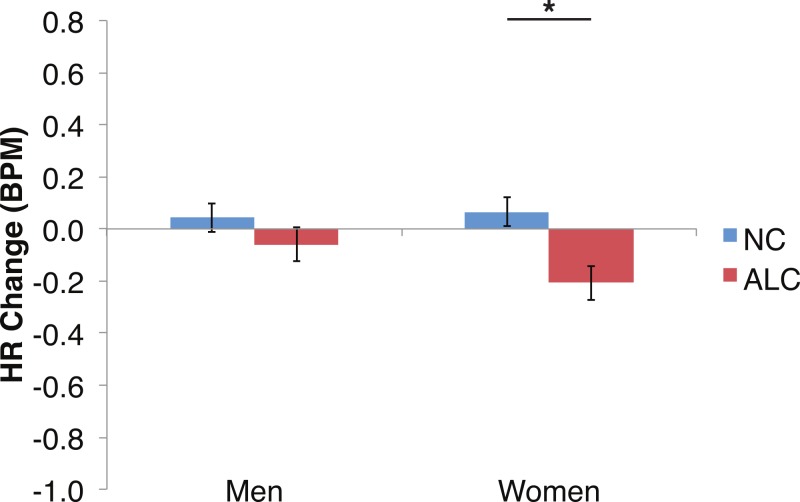
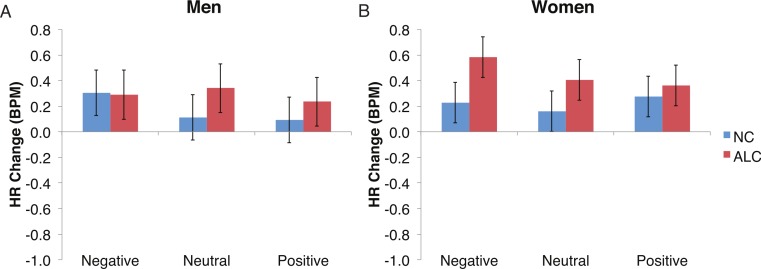
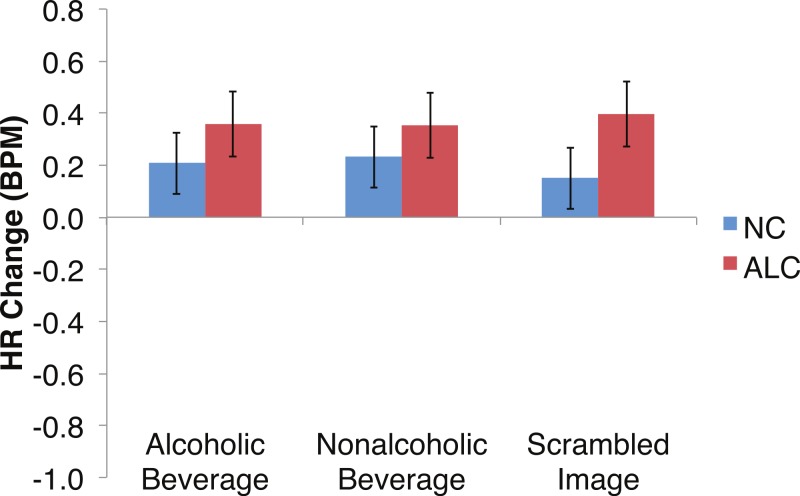
We examined abnormalities in physiological responses to emotional stimuli associated with long-term chronic alcoholism. Skin conductance responses (SCR) and heart rate (HR) responses were measured in 32 abstinent alcoholic (ALC) and 30 healthy nonalcoholic (NC) men and women undergoing an emotional memory task in an MRI scanner. The task required participants to remember the identity of two emotionally-valenced faces presented at the onset of each trial during functional magnetic resonance imaging (fMRI) scanning. After viewing the faces, participants saw a distractor image (an alcoholic beverage, nonalcoholic beverage, or scrambled image) followed by a single probe face. The task was to decide whether the probe face matched one of the two encoded faces. Skin conductance measurements (before and after the encoded faces, distractor, and probe) were obtained from electrodes on the index and middle fingers on the left hand. HR measurements (beats per minute before and after the encoded faces, distractor, and probe) were obtained by a pulse oximeter placed on the little finger on the left hand. We expected that, relative to NC participants, the ALC participants would show reduced SCR and HR responses to the face stimuli, and that we would identify greater reactivity to the alcoholic beverage stimuli than to the distractor stimuli unrelated to alcohol. While the beverage type did not differentiate the groups, the ALC group did have reduced skin conductance and HR responses to elements of the task, as compared to the NC group.
我们研究了与长期慢性酒精中毒相关的情绪刺激生理反应异常情况。对32名戒酒的酗酒者(ALC)和30名健康的非酗酒者(NC)进行了皮肤电传导反应(SCR)和心率(HR)反应测量,这些男女参与者在MRI扫描仪中进行情绪记忆任务。该任务要求参与者在功能磁共振成像(fMRI)扫描期间记住每次试验开始时呈现的两张带有情绪色彩的面孔的身份。在观看面孔后,参与者会看到一个干扰图像(酒精饮料、非酒精饮料或杂乱图像),然后是一张探测面孔。任务是判断探测面孔是否与两张编码面孔之一匹配。皮肤电传导测量(在编码面孔、干扰物和探测面孔之前和之后)从左手食指和中指上的电极获取。心率测量(编码面孔、干扰物和探测面孔之前和之后的每分钟心跳数)通过放置在左手小指上的脉搏血氧仪获取。我们预期,相对于NC参与者,ALC参与者对面孔刺激的SCR和HR反应会降低,并且我们会发现对酒精饮料刺激的反应比对与酒精无关的干扰物刺激的反应更大。虽然饮料类型没有区分两组,但与NC组相比,ALC组对任务元素的皮肤电传导和HR反应确实降低了。