Kuiper Joël, van den Heuvel Edwin R, Swertz Morris A
1Department of Epidemiology, University of Groningen, University Medical Center Groningen, Groningen, The Netherlands.
2Department of Genomics Coordination Center, University of Groningen, University Medical Center Groningen, Groningen, The Netherlands.
Biopreserv Biobank. 2015 Jun;13(3):178-82. doi: 10.1089/bio.2014.0069.
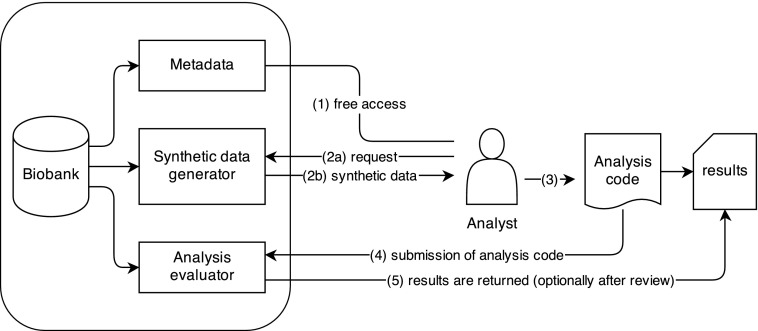
Owners of biobanks are in an unfortunate position: on the one hand, they need to protect the privacy of their participants, whereas on the other, their usefulness relies on the disclosure of the data they hold. Existing methods for Statistical Disclosure Control attempt to find a balance between utility and confidentiality, but come at a cost for the analysts of the data. We outline an alternative perspective to the balance between confidentiality and utility. By combining the generation of synthetic data with the automated execution of data analyses, biobank owners can guarantee the privacy of their participants, yet allow the analysts to work in an unrestricted manner.
一方面,他们需要保护参与者的隐私,而另一方面,其效用又依赖于所持有数据的披露。现有的统计披露控制方法试图在效用和保密性之间找到平衡,但这对数据分析师来说是有代价的。我们概述了一种关于保密性和效用之间平衡的不同观点。通过将合成数据的生成与数据分析的自动执行相结合,生物样本库所有者可以保证参与者的隐私,同时允许分析师不受限制地开展工作。