Xiao Haibing, Zeng Jin, Li Heng, Chen Ke, Yu Gan, Hu Junhui, Tang Kun, Zhou Hui, Huang Qihong, Li Anping, Li Yi, Ye Zhangqun, Wang Ji, Xu Hua
Department of Urology, Tongji Hospital, Tongji Medical College, Huazhong University of Science and Technology, Wuhan, China.
Institute of Urology, Tongji Hospital, Tongji Medical College, Huazhong University of Science and Technology, Wuhan, China.
Oncotarget. 2015 May 30;6(15):13201-15. doi: 10.18632/oncotarget.3915.
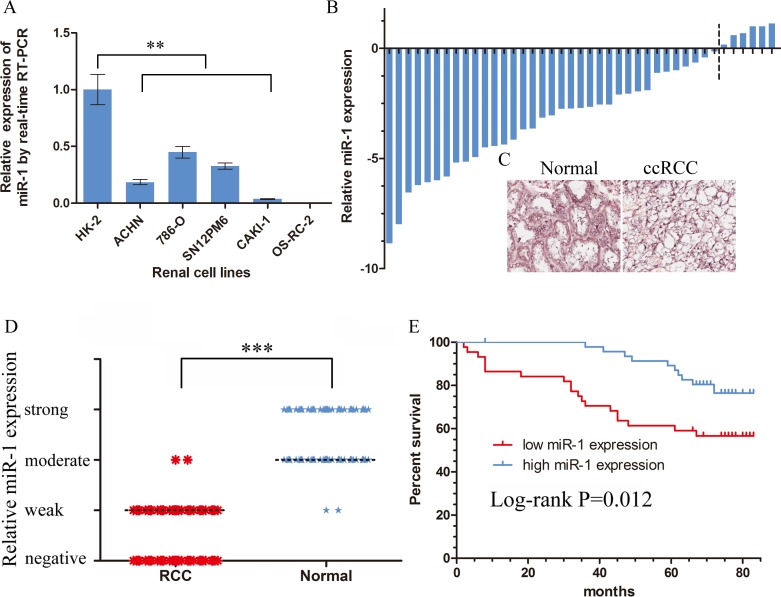
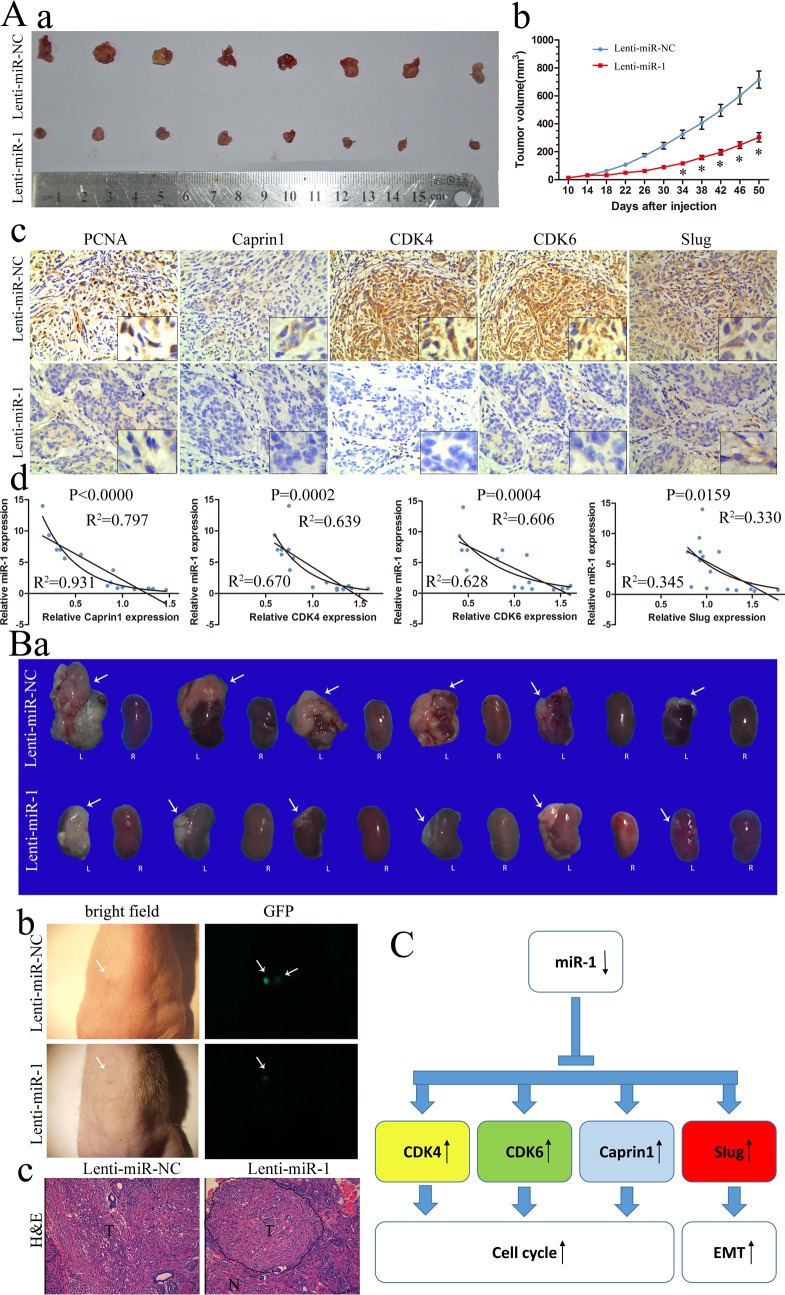
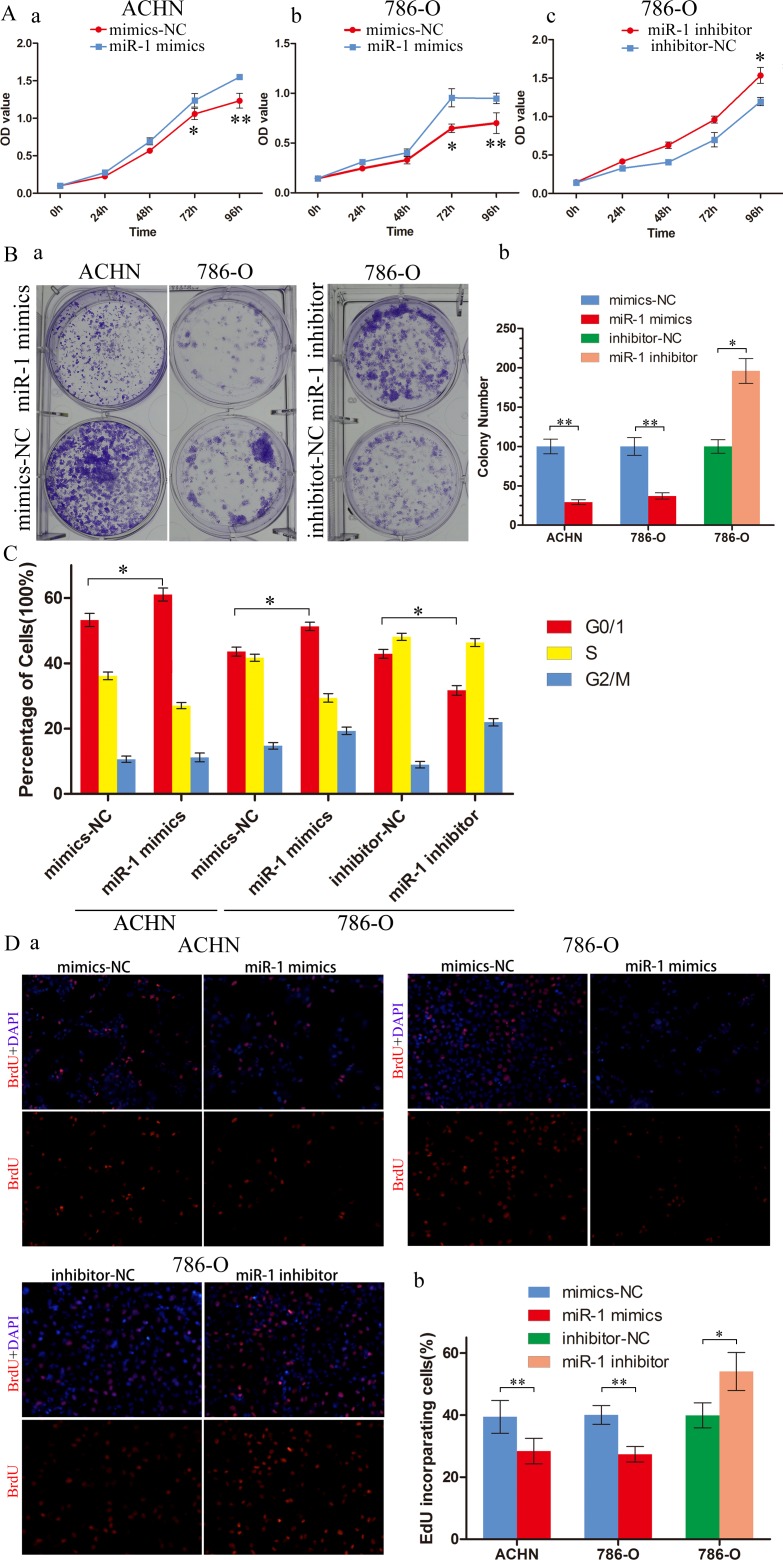
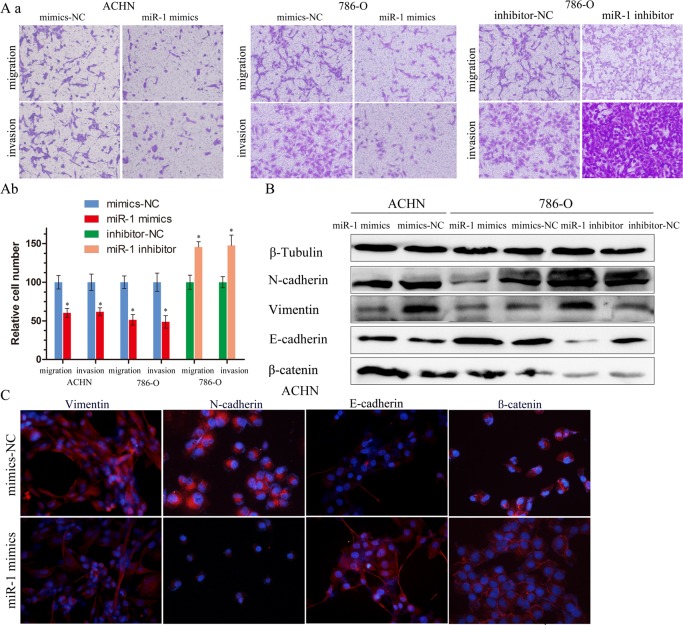
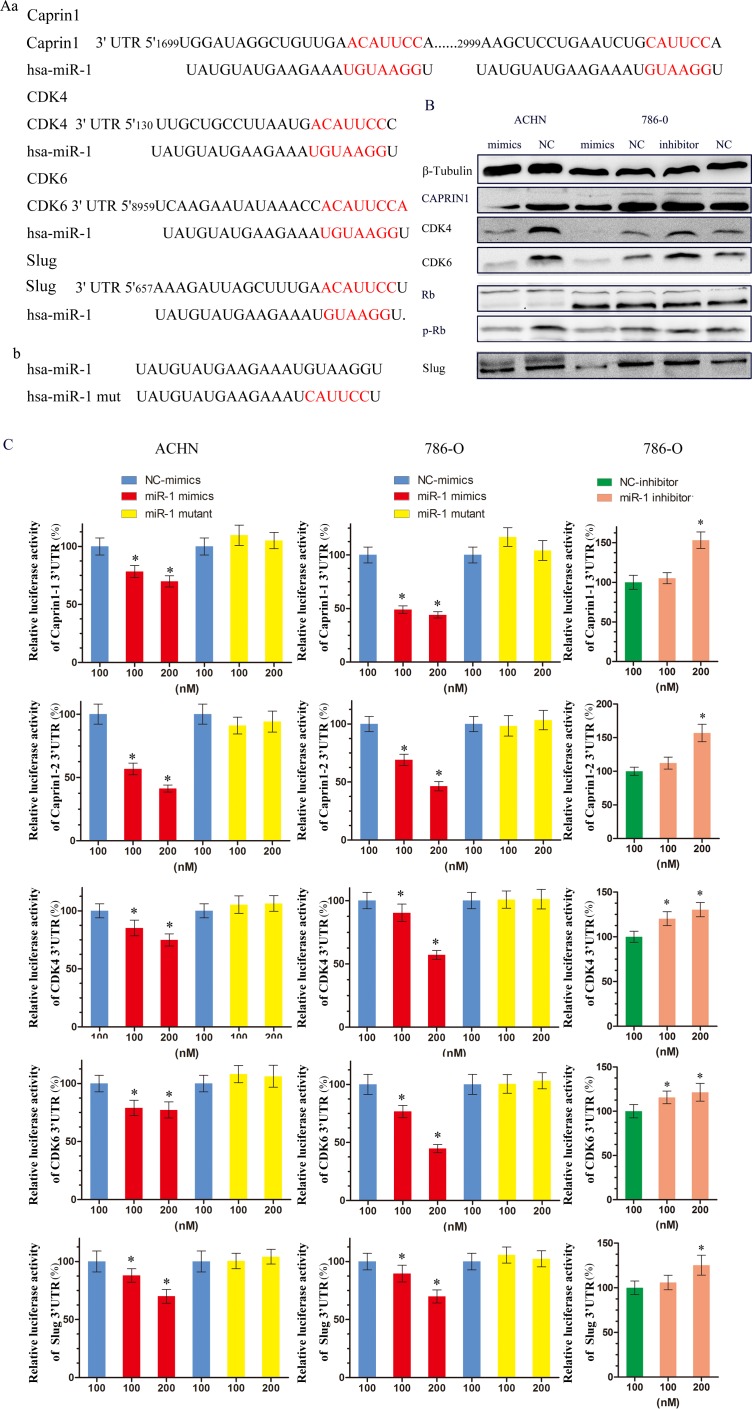
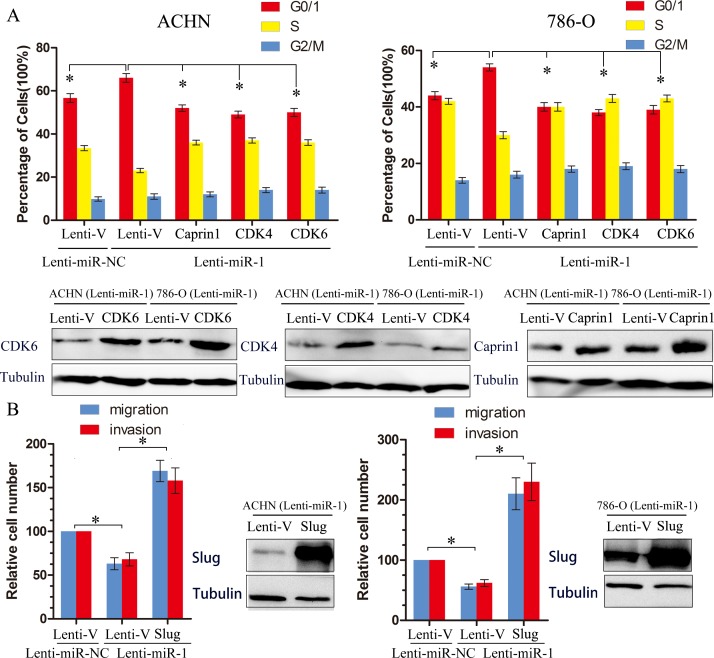
MicroRNAs (miRNA) that are strongly implicated in carcinogenesis have recently reshaped our understanding of the role of noncoding RNAs. Here, we focused on the function and molecular mechanism of miR-1 and its potential clinical application in clear cell renal cell carcinoma (ccRCC). First, miR-1 was significantly downregulated in 87.8% renal cancer samples compared with corresponding noncancerous tissues (NCT), which was significantly associated with clinical stage, T classification and poor overall survival. Functional study demonstrated that enforced overexpression of miR-1 in renal cancer cells inhibited proliferation and metastasis in vitro and in vivo. Conversely, miR-1 inhibitor silencing miR-1 expression promoted cell proliferation and metastasis in ccRCC. CDK4, CDK6, Caprin1 and Slug were each directly targeted for inhibition by miR-1 and restoring their expression reversed miR-1-mediated inhibition of cell cycle progression and metastasis. Taken together, our findings established a tumor suppressive role for miR-1 in the progression of ccRCC by targeting CDK4, CDK6, Caprin1 and Slug and suggested miR-1 can be served as a novel potential therapeutic target for ccRCC.
最近,与癌症发生密切相关的微小RNA(miRNA)重塑了我们对非编码RNA作用的理解。在此,我们聚焦于miR-1在透明细胞肾细胞癌(ccRCC)中的功能、分子机制及其潜在临床应用。首先,与相应的癌旁组织(NCT)相比,87.8%的肾癌样本中miR-1显著下调,这与临床分期、T分级及较差的总生存期显著相关。功能研究表明,在肾癌细胞中强制过表达miR-1可在体外和体内抑制细胞增殖和转移。相反,miR-1抑制剂沉默miR-1表达可促进ccRCC细胞增殖和转移。CDK4、CDK6、Caprin1和Slug均为miR-1直接靶向抑制的对象,恢复它们的表达可逆转miR-1介导的细胞周期进程和转移抑制。综上所述,我们的研究结果证实了miR-1通过靶向CDK4、CDK6、Caprin1和Slug在ccRCC进展中发挥肿瘤抑制作用,并提示miR-1可作为ccRCC一种新的潜在治疗靶点。