Rostoker Ran, Abelson Sagi, Genkin Inna, Ben-Shmuel Sarit, Sachidanandam Ravi, Scheinman Eyal J, Bitton-Worms Keren, Orr Zila Shen, Caspi Avishay, Tzukerman Maty, LeRoith Derek
Diabetes and Metabolism Clinical Research Center of Excellence, Clinical Research Institute at Rambam (CRIR) and the Faculty of Medicine, Technion, Rambam Medical Center, P.O.B 9602, Haifa, 31096, Israel.
Laboratory of Molecular Medicine, Rambam Health Care Campus and Rappaport Faculty of Medicine and Research Institute, Technion, Haifa, 31096, Israel.
Breast Cancer Res. 2015 Jun 4;17(1):78. doi: 10.1186/s13058-015-0589-9.
Breast tumors are comprised of distinct cancer cell populations which differ in their tumorigenic and metastatic capacity. Characterization of cell surface markers enables investigators to distinguish between cancer stem cells and their counterparts. CD24 is a well-known cell surface marker for mammary epithelial cells isolation, recently it was suggested as a potential prognostic marker in a wide variety of malignancies. Here, we demonstrate that CD24(+) cells create intra-tumor heterogeneity, and display highly metastatic properties.
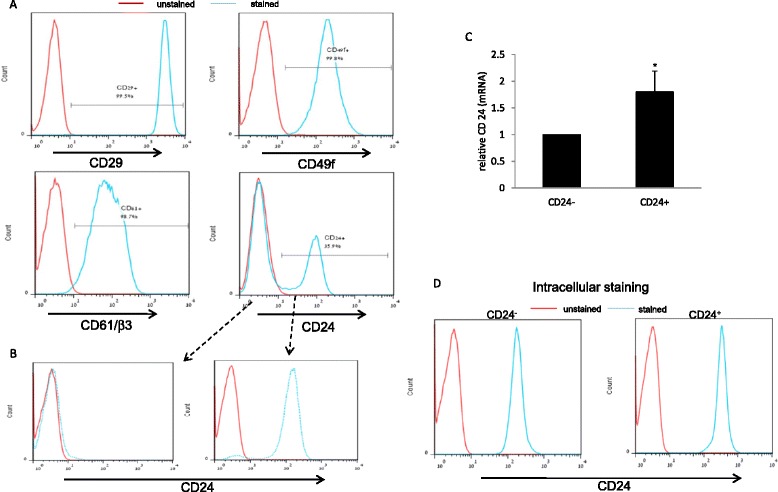
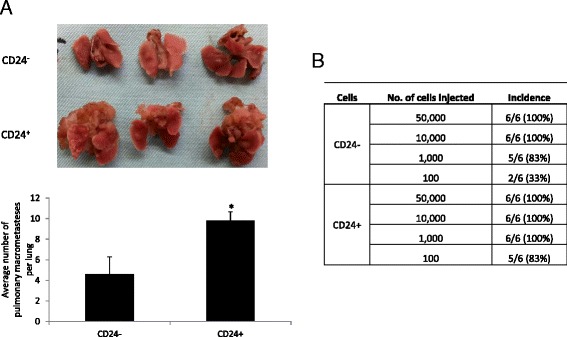
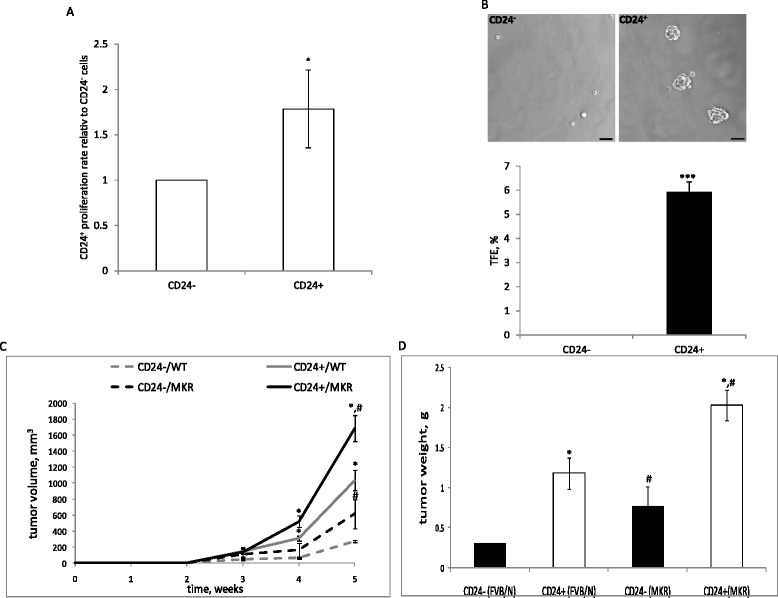
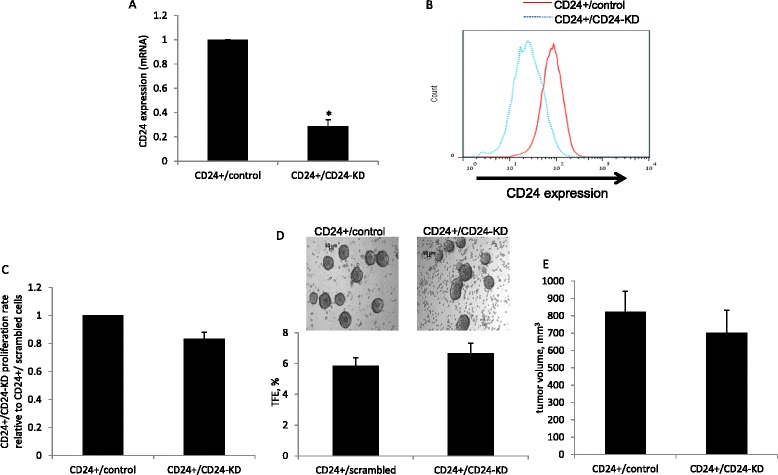
The mammary carcinoma Mvt1 cells were sorted into CD24(-) and CD24(+) cells. Both subsets were morphologically and phenotypically characterized, and tumorigenic capacity was assessed via orthotopic inoculation of each subset into the mammary fat pad of wild-type and MKR mice. The metastatic capacity of each subset was determined with the tail vein metastasis assay. The role of CD24 in tumorigenesis was further examined with shRNA technology. GFP-labeled cells were monitored in vivo for differentiation. The genetic profile of each subset was analyzed using RNA sequencing.
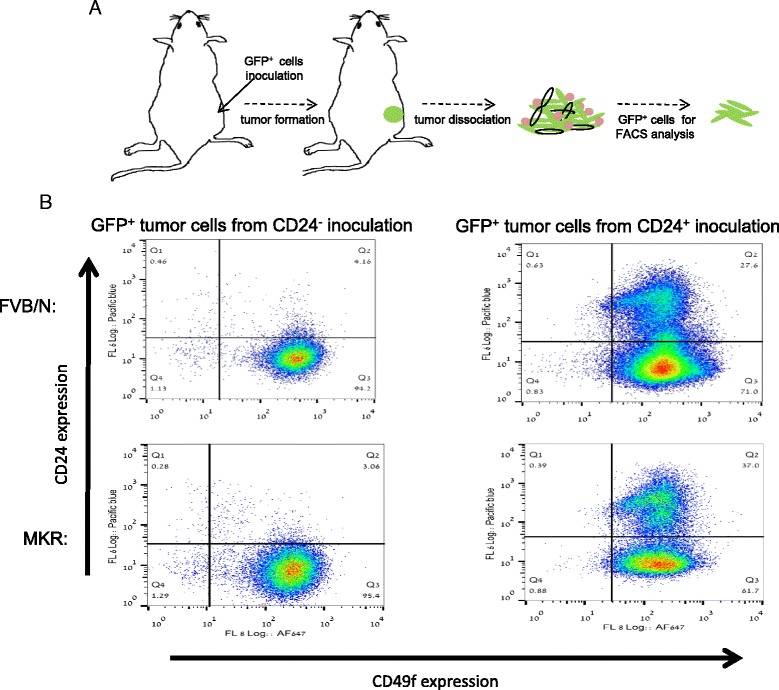
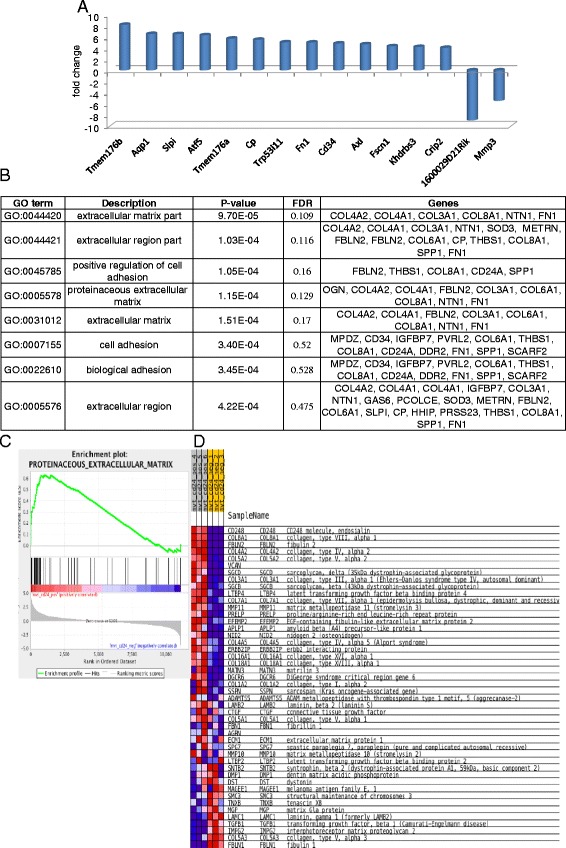
CD24(+) cells displayed a more spindle-like cytoplasm. The cells formed mammospheres in high efficiency and CD24(+) tumors displayed rapid growth in both WT and MKR mice, and were more metastatic than CD24- cells. Interestingly, CD24-KD in CD24+ cells had no effect both in vitro and in vivo on the various parameters studied. Moreover, CD24(+) cells gave rise in vivo to the CD24(-) that comprised the bulk of the tumor. RNA-seq analysis revealed enrichment of genes and pathways of the extracellular matrix in the CD24(+) cells.
CD24(+) cells account for heterogeneity in mammary tumors. CD24 expression at early stages of the cancer process is an indication of a highly invasive tumor. However, CD24 is not a suitable therapeutic target; instead we suggest here new potential targets accounting for early differentiated cancer cells tumorigenic capacity.
乳腺肿瘤由具有不同致瘤和转移能力的独特癌细胞群体组成。细胞表面标志物的特征分析使研究人员能够区分癌症干细胞及其对应细胞。CD24是用于乳腺上皮细胞分离的著名细胞表面标志物,最近它被认为是多种恶性肿瘤中的一种潜在预后标志物。在此,我们证明CD24(+)细胞产生肿瘤内异质性,并表现出高度转移特性。
将乳腺癌Mvt1细胞分选成CD24(-)和CD24(+)细胞。对两个亚群进行形态学和表型特征分析,并通过将每个亚群原位接种到野生型和MKR小鼠的乳腺脂肪垫中来评估致瘤能力。通过尾静脉转移试验确定每个亚群的转移能力。使用shRNA技术进一步研究CD24在肿瘤发生中的作用。在体内监测绿色荧光蛋白标记的细胞的分化情况。使用RNA测序分析每个亚群的基因谱。
CD24(+)细胞表现出更呈纺锤状的细胞质。这些细胞高效形成乳腺球,并且CD24(+)肿瘤在野生型和MKR小鼠中均显示快速生长,并且比CD24-细胞更具转移性。有趣的是,CD24+细胞中的CD24基因敲低在体外和体内对所研究的各种参数均无影响。此外,CD24(+)细胞在体内产生了构成肿瘤主体的CD24(-)细胞。RNA测序分析显示CD24(+)细胞中细胞外基质的基因和通路富集。
CD24(+)细胞导致乳腺肿瘤的异质性。癌症进程早期的CD24表达表明肿瘤具有高度侵袭性。然而,CD24不是合适的治疗靶点;相反,我们在此提出考虑早期分化癌细胞致瘤能力的新潜在靶点。