
使用珠心算的儿童数字处理效率提高:利用数字斯特鲁普任务的事件相关电位证据
Numerical processing efficiency improved in children using mental abacus: ERP evidence utilizing a numerical Stroop task.
作者信息
Yao Yuan, Du Fenglei, Wang Chunjie, Liu Yuqiu, Weng Jian, Chen Feiyan
机构信息
Department of Psychology and Behavioral Sciences, Zhejiang University Hangzhou, China ; Bio-X Laboratory, Department of Physics, Zhejiang University Hangzhou, China.
Bio-X Laboratory, Department of Physics, Zhejiang University Hangzhou, China.
出版信息
Front Hum Neurosci. 2015 May 19;9:245. doi: 10.3389/fnhum.2015.00245. eCollection 2015.
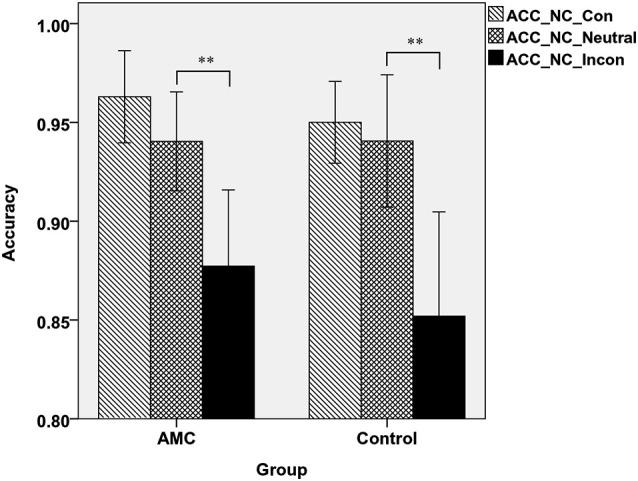
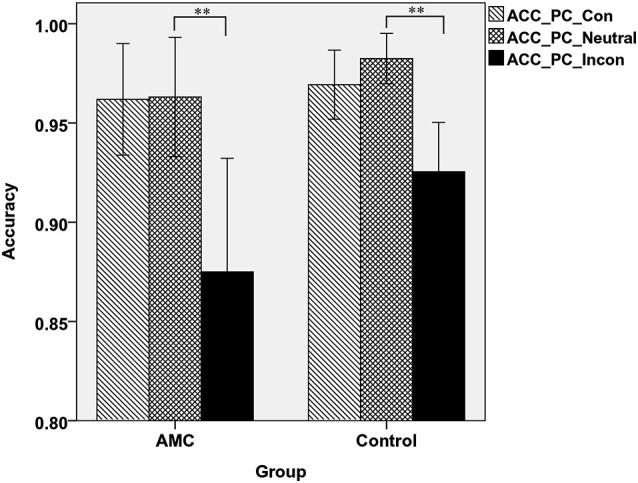
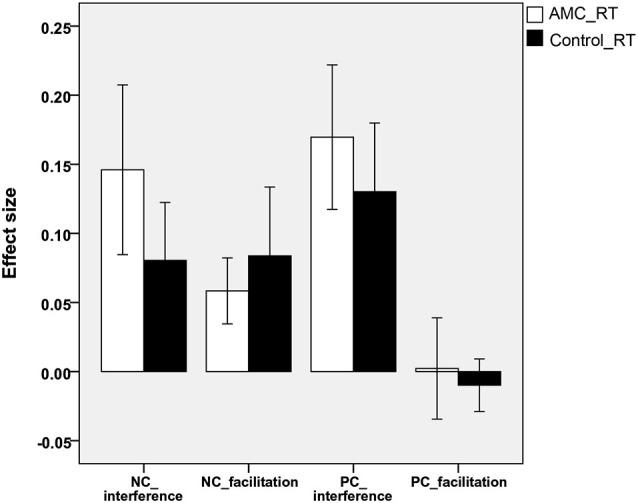
This study examined whether long-term abacus-based mental calculation (AMC) training improved numerical processing efficiency and at what stage of information processing the effect appeard. Thirty-three children participated in the study and were randomly assigned to two groups at primary school entry, matched for age, gender and IQ. All children went through the same curriculum except that the abacus group received a 2-h/per week AMC training, while the control group did traditional numerical practice for a similar amount of time. After a 2-year training, they were tested with a numerical Stroop task. Electroencephalographic (EEG) and event related potential (ERP) recording techniques were used to monitor the temporal dynamics during the task. Children were required to determine the numerical magnitude (NC) (NC task) or the physical size (PC task) of two numbers presented simultaneously. In the NC task, the AMC group showed faster response times but similar accuracy compared to the control group. In the PC task, the two groups exhibited the same speed and accuracy. The saliency of numerical information relative to physical information was greater in AMC group. With regards to ERP results, the AMC group displayed congruity effects both in the earlier (N1) and later (N2 and LPC (late positive component) time domain, while the control group only displayed congruity effects for LPC. In the left parietal region, LPC amplitudes were larger for the AMC than the control group. Individual differences for LPC amplitudes over left parietal area showed a positive correlation with RTs in the NC task in both congruent and neutral conditions. After controlling for the N2 amplitude, this correlation also became significant in the incongruent condition. Our results suggest that AMC training can strengthen the relationship between symbolic representation and numerical magnitude so that numerical information processing becomes quicker and automatic in AMC children.
本研究探讨了基于算盘的长期心算(AMC)训练是否能提高数字处理效率,以及该效果出现在信息处理的哪个阶段。33名儿童参与了本研究,他们在小学入学时被随机分为两组,在年龄、性别和智商方面相互匹配。所有儿童都学习相同的课程,只是算盘组每周接受2小时的AMC训练,而对照组进行类似时长的传统数字练习。经过2年的训练后,他们接受了数字斯特鲁普任务测试。采用脑电图(EEG)和事件相关电位(ERP)记录技术来监测任务过程中的时间动态变化。要求儿童判断同时呈现的两个数字的数值大小(NC)(NC任务)或物理大小(PC任务)。在NC任务中,与对照组相比,AMC组的反应时间更快,但准确率相似。在PC任务中,两组的速度和准确率相同。AMC组中数字信息相对于物理信息的显著性更高。关于ERP结果,AMC组在早期(N1)和后期(N2和LPC(晚期正成分))时域均显示出一致性效应,而对照组仅在LPC时显示出一致性效应。在左侧顶叶区域,AMC组的LPC波幅大于对照组。在一致性和中性条件下,左侧顶叶区域LPC波幅的个体差异与NC任务中的反应时间呈正相关。在控制了N2波幅后,这种相关性在不一致条件下也变得显著。我们的结果表明,AMC训练可以加强符号表征与数值大小之间的关系,从而使AMC儿童的数字信息处理变得更快且自动化。




 Zotero 插件