Rood Brian A, McConnell Elizabeth A, Pantalone David W
Suffolk University.
DePaul University.
Psychol Sex Orientat Gend Divers. 2015 Mar 1;2(1):96-105. doi: 10.1037/sgd0000091.
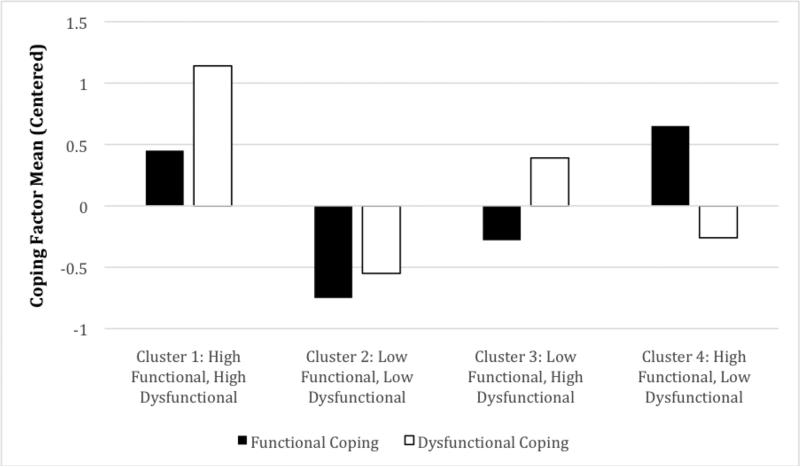
Stigma and stress may place HIV-positive men who have sex with men (HIV+ MSM) at risk for depression. Additionally, HIV+ MSM might utilize multiple HIV-related services as a way to gain support for, and more effectively manage, HIV-related stressors. Although prior research has demonstrated that depression severity and utilizing support services are associated with functional or dysfunctional coping strategies, researchers have not investigated the impact of different coping combinations-specifically, the concurrent use of functional and dysfunctional strategies-in this population. Thus, we explored (1) how items on one measure of coping, the Brief COPE, capture HIV-related coping of HIV+ MSM using Principal Components Analysis, (2) how HIV+ MSM's coping groups into unique combinations, and (3) how these coping combinations relate to depression and the scope of HIV-related support service utilization. Our sample consisted of 170 HIV+ MSM engaged with medical care. Results indicated the use of both functional and dysfunctional coping strategies. Unique combinations of functional and dysfunctional strategies showed differential associations with depression and the extent of HIV-related support service utilization. Specifically, individuals who engaged in low levels of both functional and dysfunctional coping, compared to individuals who more frequently engaged in functional coping strategies, were significantly less likely to utilize a range of critical HIV-related services. Individuals who reported frequent use of dysfunctional coping strategies, regardless of functional coping strategy use, reported higher levels of depression. Therefore, providers should continue to focus more closely on identifying functional coping strategies and reducing dysfunctional coping when working with HIV+ MSM.
耻辱感和压力可能使男男性行为的艾滋病毒阳性者(HIV+男男性行为者)面临抑郁风险。此外,HIV+男男性行为者可能会利用多种与艾滋病毒相关的服务,以此来获得对与艾滋病毒相关压力源的支持,并更有效地应对这些压力源。尽管先前的研究表明,抑郁严重程度和利用支持服务与功能性或功能失调性应对策略有关,但研究人员尚未调查不同应对方式组合的影响,特别是在这一人群中同时使用功能性和功能失调性策略的影响。因此,我们探讨了:(1)使用主成分分析,应对方式测量量表之一的简易应对方式问卷(Brief COPE)中的条目如何反映HIV+男男性行为者与艾滋病毒相关的应对方式;(2)HIV+男男性行为者的应对方式如何形成独特的组合;(3)这些应对方式组合与抑郁以及艾滋病毒相关支持服务利用范围之间的关系。我们的样本包括170名接受医疗护理的HIV+男男性行为者。结果表明,他们同时使用了功能性和功能失调性应对策略。功能性和功能失调性策略的独特组合与抑郁以及艾滋病毒相关支持服务利用程度呈现出不同的关联。具体而言,与更频繁采用功能性应对策略的个体相比,功能性和功能失调性应对水平都较低的个体使用一系列关键的艾滋病毒相关服务的可能性显著降低。无论功能性应对策略的使用情况如何,报告频繁使用功能失调性应对策略的个体抑郁水平更高。因此,在与HIV+男男性行为者合作时,服务提供者应继续更加密切地关注识别功能性应对策略并减少功能失调性应对。