Su Min, Hu Rong, Jin Jingjun, Yan Yuan, Song Yinhong, Sullivan Ryan, Lai Laijun
1] Department of Allied Health Sciences, University of Connecticut, Storrs, CT [2] Guiyang Medical College, Guizhou, China.
Department of Allied Health Sciences, University of Connecticut, Storrs, CT.
Sci Rep. 2015 Jun 5;5:9882. doi: 10.1038/srep09882.
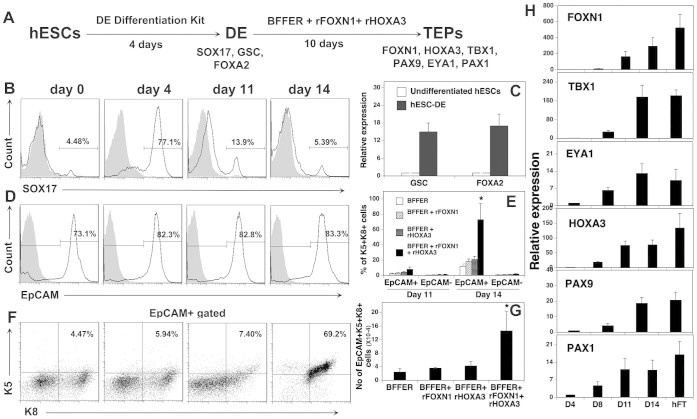
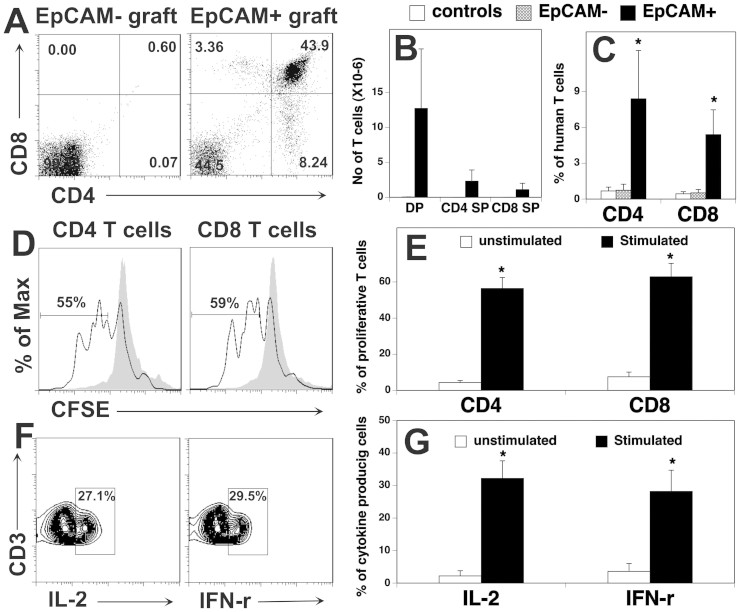
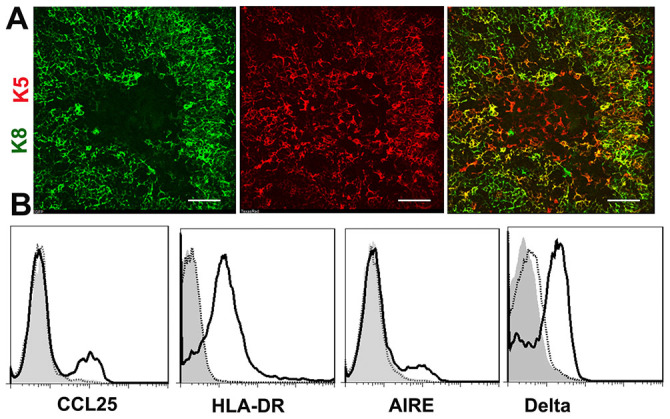
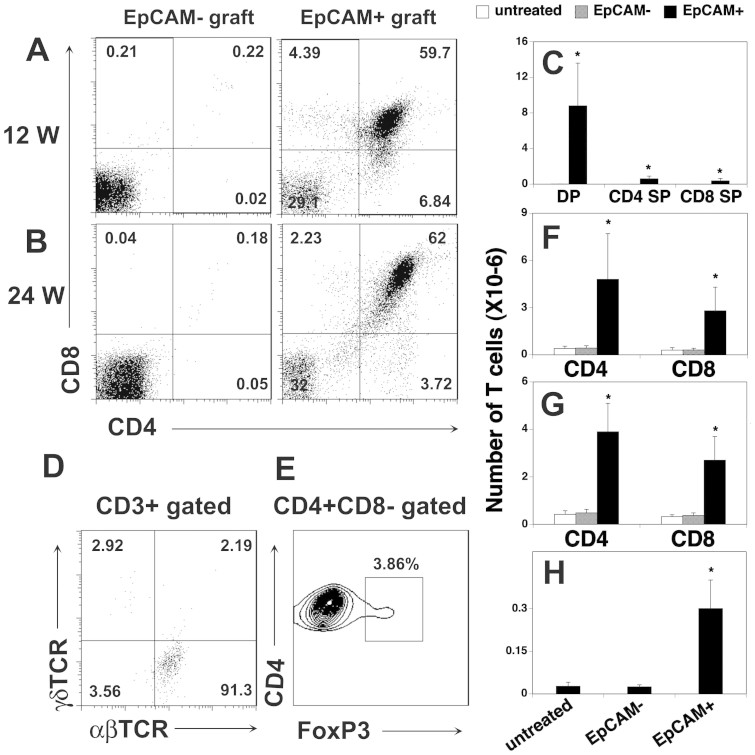
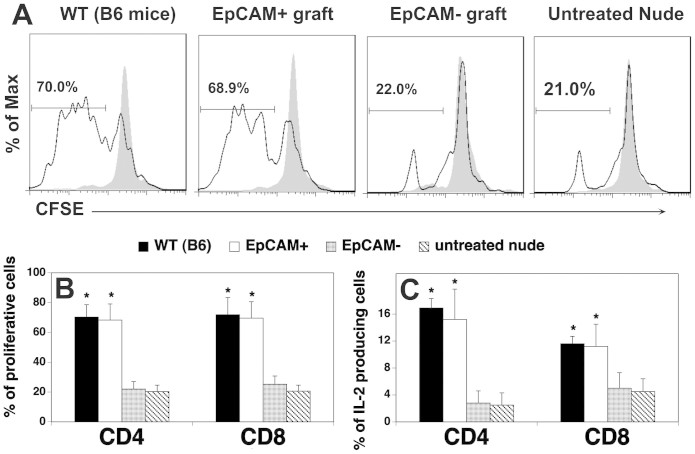
Thymic epithelial cells (TECs) are the major components of the thymic microenvironment for T cell development. TECs are derived from thymic epithelial progenitors (TEPs). It has been reported that human ESCs (hESCs) can be directed to differentiate into TEPs in vitro. However, the efficiency for the differentiation is low. Furthermore, transplantation of hESC-TEPs in mice only resulted in a very low level of human T cell development from co-transplanted human hematopoietic precursors. We show here that we have developed a novel protocol to efficiently induce the differentiation of hESCs into TEPs in vitro. When transplanted into mice, hESC-TEPs develop into TECs and form a thymic architecture. Most importantly, the hESC-TECs support the long-term development of functional mouse T cells or a higher level of human T cell development from co-transplanted human hematopoietic precursors. The hESC-TEPs may provide a new approach to prevent or treat patients with T cell immunodeficiency.
胸腺上皮细胞(TECs)是T细胞发育的胸腺微环境的主要组成部分。TECs来源于胸腺上皮祖细胞(TEPs)。据报道,人类胚胎干细胞(hESCs)可在体外被诱导分化为TEPs。然而,分化效率较低。此外,将hESC-TEPs移植到小鼠体内,与共移植的人类造血前体细胞共同培养时,仅导致非常低水平的人类T细胞发育。我们在此表明,我们已经开发出一种新方案,可在体外高效诱导hESCs分化为TEPs。当移植到小鼠体内时,hESC-TEPs可发育为TECs并形成胸腺结构。最重要的是,hESC-TECs支持功能性小鼠T细胞的长期发育,或支持共移植的人类造血前体细胞实现更高水平的人类T细胞发育。hESC-TEPs可能为预防或治疗T细胞免疫缺陷患者提供一种新方法。