Columbia Center for Translational Immunology, Department of Medicine, Columbia University Irving Medical Center, New York, NY, USA.
Department of Health Sciences, Histology laboratory, Università del Piemonte Orientale, Novara, Italy.
Mol Metab. 2022 Feb;56:101417. doi: 10.1016/j.molmet.2021.101417. Epub 2021 Dec 10.
Type 1 diabetes (T1D) is an autoimmune disease characterized by impaired immune tolerance to β-cell antigens and progressive destruction of insulin-producing β-cells. Animal models have provided valuable insights for understanding the etiology and pathogenesis of this disease, but they fall short of reflecting the extensive heterogeneity of the disease in humans, which is contributed by various combinations of risk gene alleles and unique environmental factors. Collectively, these factors have been used to define subgroups of patients, termed endotypes, with distinct predominating disease characteristics.
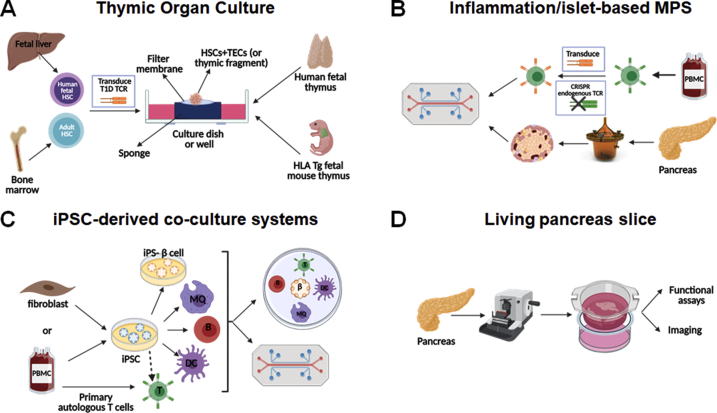
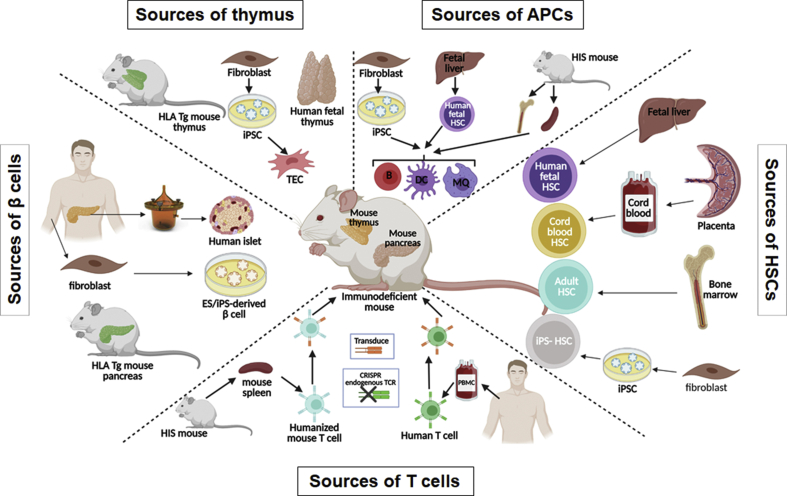
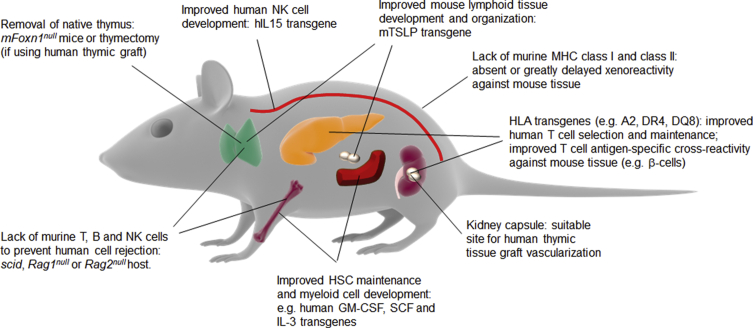
Here, we review the gaps filled by these models in understanding the intricate involvement and regulation of the immune system in human T1D pathogenesis. We describe the various models developed so far and the scientific questions that have been addressed using them. Finally, we discuss the limitations of these models, primarily ascribed to hosting a human immune system (HIS) in a xenogeneic recipient, and what remains to be done to improve their physiological relevance.
To understand the role of genetic and environmental factors or evaluate immune-modifying therapies in humans, it is critical to develop and apply models in which human cells can be manipulated and their functions studied under conditions that recapitulate as closely as possible the physiological conditions of the human body. While microphysiological systems and living tissue slices provide some of these conditions, HIS mice enable more extensive analyses using in vivo systems.
1 型糖尿病(T1D)是一种自身免疫性疾病,其特征是对β细胞抗原的免疫耐受受损以及产生胰岛素的β细胞进行性破坏。动物模型为理解该疾病的病因和发病机制提供了有价值的见解,但它们无法反映人类疾病的广泛异质性,这种异质性是由各种风险基因等位基因和独特环境因素的组合所导致的。这些因素共同用于定义具有不同主要疾病特征的患者亚组,称为表型。
在这里,我们回顾了这些模型在理解免疫系统在人类 T1D 发病机制中的复杂参与和调节方面的作用。我们描述了迄今为止开发的各种模型以及使用这些模型解决的科学问题。最后,我们讨论了这些模型的局限性,主要归因于在异基因受体中宿主人类免疫系统(HIS),以及为提高其生理相关性仍需要做哪些工作。
为了了解遗传和环境因素的作用或评估人类的免疫调节疗法,开发和应用模型以在尽可能接近人体生理条件的情况下操纵人类细胞并研究其功能至关重要。虽然微生理系统和活体组织切片提供了其中的一些条件,但 HIS 小鼠使我们能够在体内系统中进行更广泛的分析。