Reue Karen, Lee Jessica M, Vergnes Laurent
Department of Human Genetics, University of California, Los Angeles, Calif., USA.
Dig Dis. 2015;33(3):307-13. doi: 10.1159/000371649. Epub 2015 May 27.
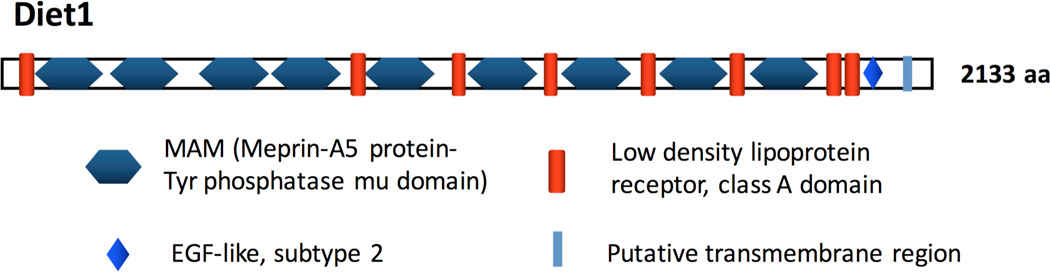
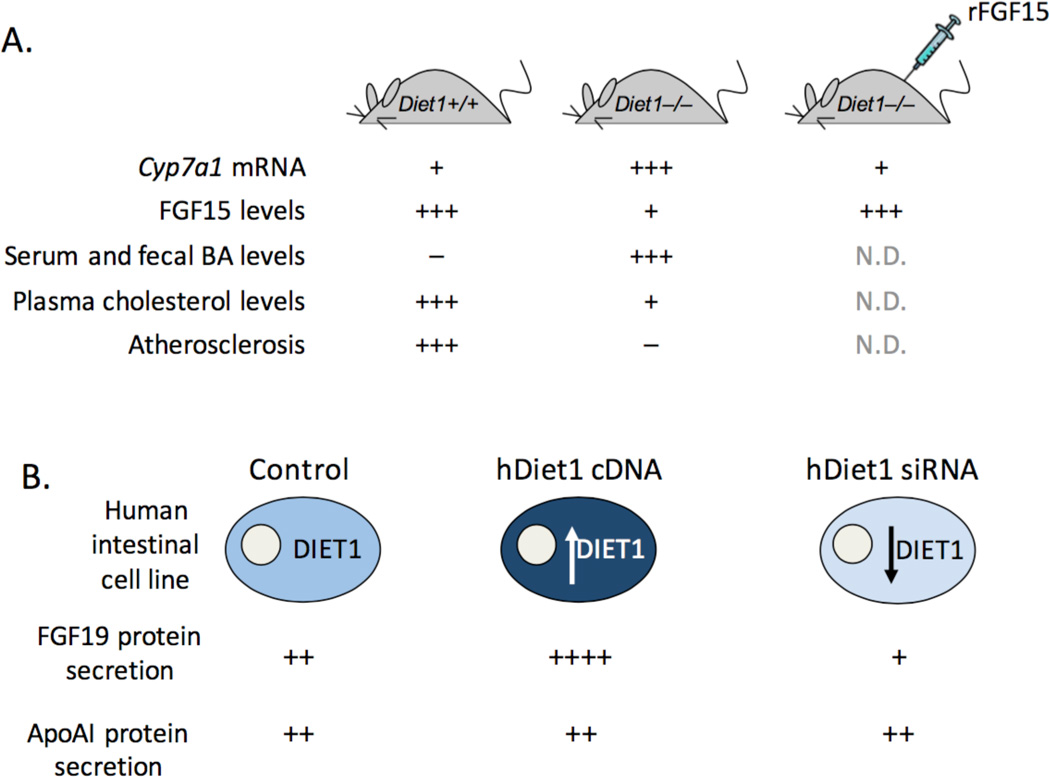
A fascinating aspect of bile acid homeostasis is the coordination between bile acid uptake in intestine and hepatic bile acid synthesis. In response to bile acid uptake in enterocytes, farnesoid X receptor is activated and induces transcription of fibroblast growth factor (FGF)15 in mice, or FGF19 in humans. FGF15/19 is secreted into the enterohepatic circulation, and through activation of hepatic receptors, leads to repression of Cyp7a1, a rate-limiting enzyme for bile acid synthesis. Using a genetic approach, we identified a novel protein, Diet1, as a control point for FGF15/19 production.
Mice with a Diet1-null mutation have reduced FGF15 secretion, causing impaired feedback repression of hepatic bile acid synthesis, and increased fecal bile acid excretion. As a result, Diet1-deficient mice constitutively convert cholesterol to bile acids and are resistant to diet-induced hypercholesterolemia and atherosclerosis. Diet1 affects FGF15/19 production at the posttranscriptional level, and the proteins appear to have overlapping subcellular localization in enterocytes. Diet1 appears to be a control point for the production of FGF15/19 in enterocytes, and thus a regulator of bile acid and lipid homeostasis. Studies to evaluate the role of common and rare DIET1 genetic variants in human health and disease are warranted.
Further elucidation of the Diet1-FGF15/19 interaction will provide new insights into the intricate regulatory mechanisms underlying bile acid metabolism.
胆汁酸稳态的一个有趣方面是肠道胆汁酸摄取与肝脏胆汁酸合成之间的协调。作为对肠细胞中胆汁酸摄取的反应,法尼酯X受体被激活,在小鼠中诱导成纤维细胞生长因子(FGF)15转录,在人类中诱导FGF19转录。FGF15/19分泌进入肠肝循环,并通过激活肝脏受体,导致胆汁酸合成的限速酶Cyp7a1的表达受到抑制。我们采用遗传学方法鉴定出一种新蛋白Diet1,它是FGF15/19产生的控制点。
Diet1基因敲除突变小鼠的FGF15分泌减少,导致肝脏胆汁酸合成的反馈抑制受损,粪便胆汁酸排泄增加。因此,缺乏Diet1的小鼠持续将胆固醇转化为胆汁酸,对饮食诱导的高胆固醇血症和动脉粥样硬化具有抗性。Diet1在转录后水平影响FGF15/19的产生,并且这些蛋白在肠细胞中似乎具有重叠的亚细胞定位。Diet1似乎是肠细胞中FGF15/19产生的控制点,因此是胆汁酸和脂质稳态的调节因子。有必要开展研究评估常见和罕见的DIET1基因变异在人类健康和疾病中的作用。
进一步阐明Diet1-FGF15/19相互作用将为胆汁酸代谢潜在的复杂调节机制提供新见解。