Laboratory of Metabolism, Center for Cancer Research, National Cancer Institute, National Institutes of Health, Bethesda, Maryland, USA.
Compr Physiol. 2012 Oct;2(4):2811-28. doi: 10.1002/cphy.c120007.
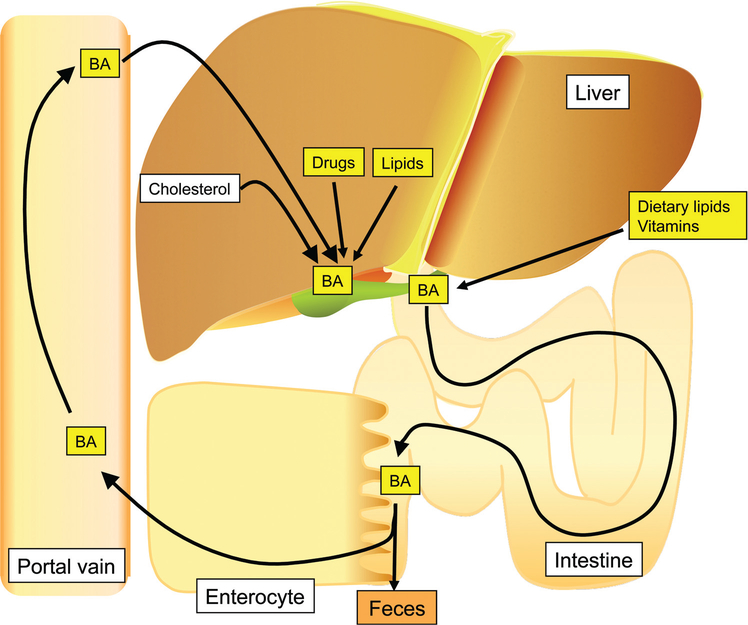
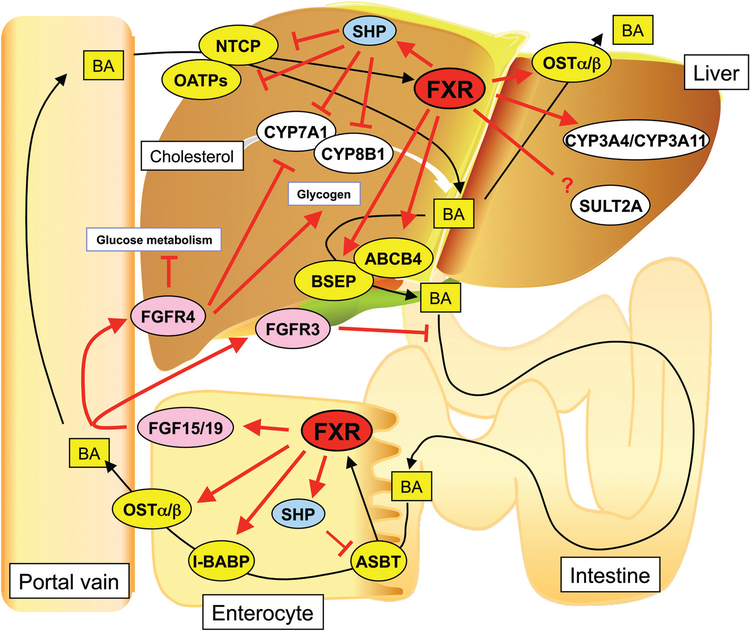
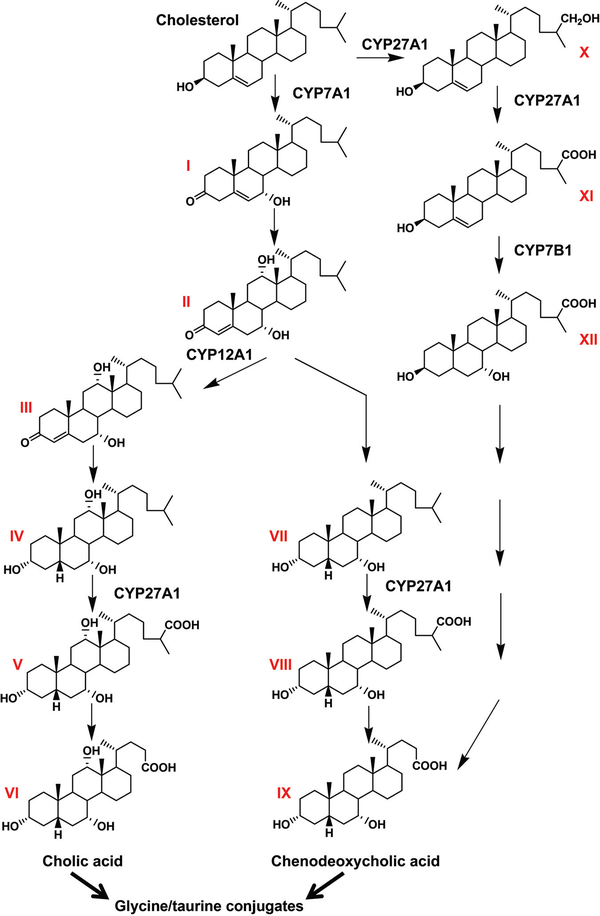
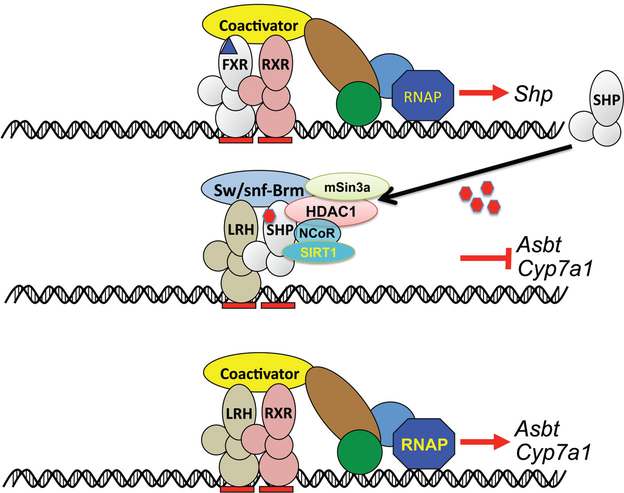
Enterohepatic circulation is responsible for the capture of bile acids and other steroids produced or metabolized in the liver and secreted to the intestine, for reabsorption back into the circulation and transport back to the liver. Bile acids are secreted from the liver in the form of mixed micelles that also contain phosphatidylcholines and cholesterol that facilitate the uptake of fats and vitamins from the diet due to the surfactant properties of bile acids and lipids. Bile acids are synthesized in the liver from cholesterol by a cascade of enzymes that carry out oxidation and conjugation reactions, and transported to the bile duct and gall bladder where they are stored before being released into the intestine. Bile flow from the gall bladder to the small intestine is triggered by food intake in accordance with its role in lipid and vitamin absorption from the diet. Bile acids are further metabolized by gut bacteria and are transported back to the circulation. Metabolites produced in the liver are termed primary bile acids or primary conjugated bile salts, while the metabolites generated by bacterial are called secondary bile acids. About 95% of bile acids are reabsorbed in the proximal and distal ileum into the hepatic portal vein and then into the liver sinusoids, where they are efficiently transported into the liver with little remaining in circulation. Each bile acid is reabsorbed about 20 times on average before being eliminated. Enterohepatic circulation is under tight regulation by nuclear receptor signaling, notably by the farnesoid X receptor (FXR).
肠肝循环负责捕获肝脏产生或代谢并分泌到肠道的胆汁酸和其他类固醇,以便重新吸收回循环并运输回肝脏。胆汁酸以混合胶束的形式从肝脏分泌出来,其中还包含磷脂酰胆碱和胆固醇,由于胆汁酸和脂质的表面活性剂特性,有助于从饮食中吸收脂肪和维生素。胆汁酸在肝脏中由胆固醇通过一系列酶的级联反应合成,这些酶进行氧化和共轭反应,然后被运送到胆管和胆囊储存,然后再释放到肠道中。根据其在从饮食中吸收脂质和维生素中的作用,胆汁从胆囊流入小肠是由食物摄入触发的。胆汁酸进一步被肠道细菌代谢,并被运回到循环中。肝脏中产生的代谢物称为初级胆汁酸或初级共轭胆汁盐,而细菌产生的代谢物称为次级胆汁酸。约 95%的胆汁酸在近端和远端回肠中被重新吸收到肝门静脉,然后进入肝窦,在那里它们被有效地运输到肝脏,循环中残留很少。每个胆汁酸在被消除之前平均被重新吸收约 20 次。肠肝循环受核受体信号的严格调节,特别是受法尼醇 X 受体 (FXR) 的调节。