Parajuli Prakash, Pandey Ramesh Prasad, Trang Nguyen Thi Huyen, Chaudhary Amit Kumar, Sohng Jae Kyung
Department of BT-Convergent Pharmaceutical Engineering, Institute of Biomolecule Reconstruction, Sun Moon University, 70 Sunmoon-ro 221, Tangjeong-myeon, Asan-Si, Chungnam, 336-708, Republic of Korea.
Microb Cell Fact. 2015 Jun 9;14:76. doi: 10.1186/s12934-015-0261-1.
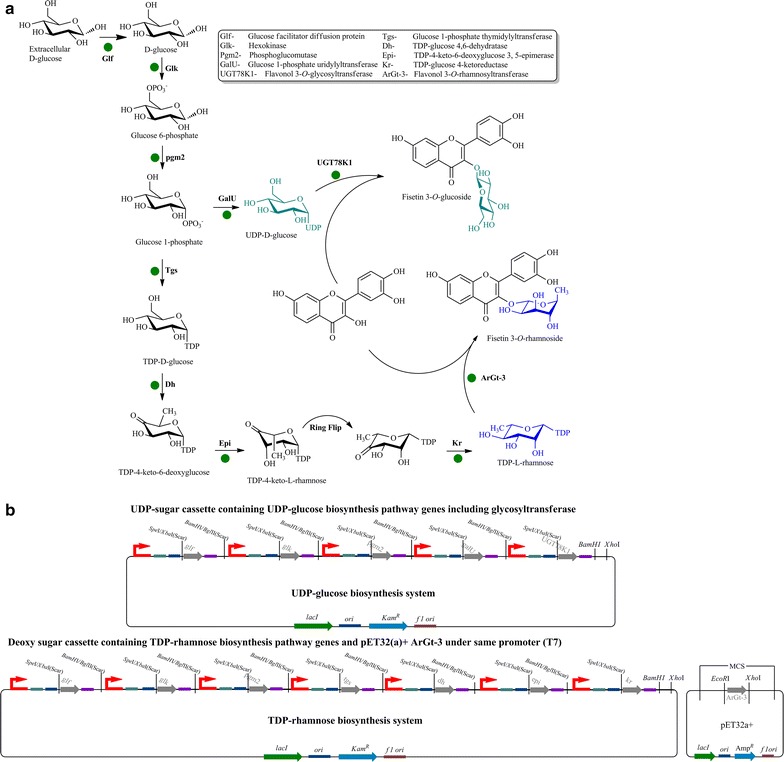
A multi-monocistronic synthetic vector was used to assemble multiple genes of a nucleotide diphosphate (NDP)-sugar biosynthetic pathway to construct robust genetic circuits for the production of valuable flavonoid glycosides in Escherichia coli. Characterized functional genes involved in the biosynthesis of uridine diphosphate (UDP)-glucose and thymidine diphosphate (TDP)-rhamnose from various microbial sources along with glucose facilitator diffusion protein (glf) and glucokinase (glk) from Zymomonas mobilis were assembled and overexpressed in a single synthetic multi-monocistronic operon.
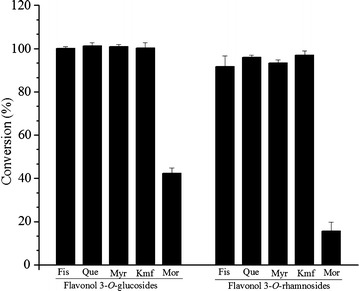
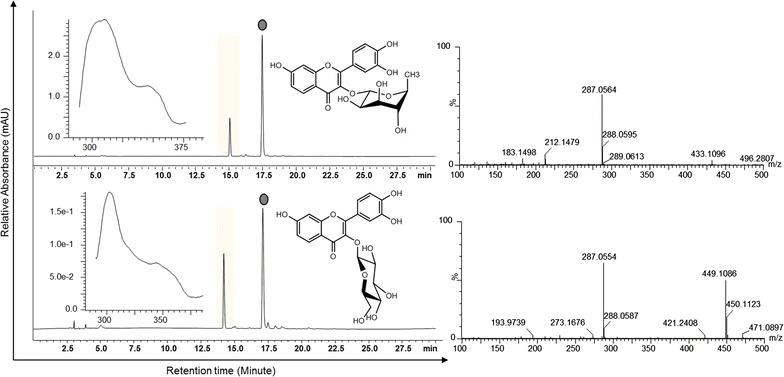
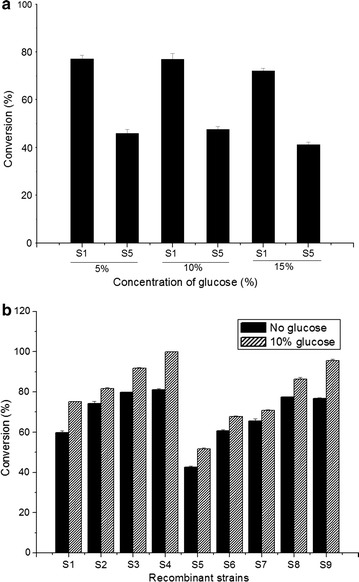
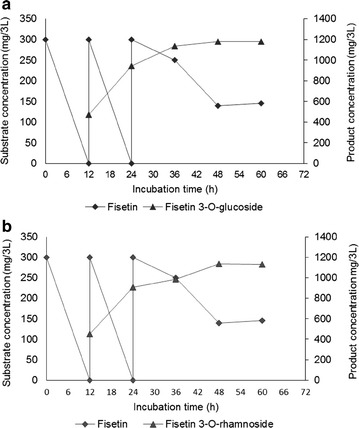
The newly generated NDP-sugars biosynthesis circuits along with regiospecific glycosyltransferases from plants were introduced in E. coli BL21 (DE3) to probe the bioconversion of fisetin, a medicinally important polyphenol produced by various plants. As a result, approximately 1.178 g of fisetin 3-O-glucoside and 1.026 g of fisetin 3-O-rhamnoside were produced in UDP-glucose and TDP-rhamnose biosynthesis systems respectively, after 48 h of incubation in 3 L fermentor while supplementing 0.9 g of fisetin. These yields of fisetin glycosides represent ~99% of bioconversion of exogenously supplemented fisetin. The systems were also found to be highly effective in bio-transforming other flavonols (quercetin, kaempferol, myricetin) into their respective glycosides, achieving over 95% substrate conversion.
The construction of a synthetic expression vector for bacterial cell factory followed by subsequent re-direction of metabolic flux towards desirable products have always been revolutionized the biotechnological processes and technologies. This multi-monocistronic synthetic vector in a microbial platform is customizable to defined task and would certainly be useful for applications in producing and modifying such therapeutically valued plant secondary metabolites.
使用多顺反子合成载体组装核苷酸二磷酸(NDP)-糖生物合成途径的多个基因,以构建强大的遗传电路,用于在大肠杆菌中生产有价值的黄酮糖苷。来自各种微生物来源的参与尿苷二磷酸(UDP)-葡萄糖和胸苷二磷酸(TDP)-鼠李糖生物合成的特征性功能基因,与来自运动发酵单胞菌的葡萄糖促进扩散蛋白(glf)和葡萄糖激酶(glk)一起组装并在单个合成多顺反子操纵子中过表达。
将新生成的NDP-糖生物合成电路以及来自植物的区域特异性糖基转移酶引入大肠杆菌BL21(DE3)中,以探究非瑟酮(一种由多种植物产生的具有药用价值的多酚)的生物转化。结果,在3 L发酵罐中培养48小时并补充了0.9 g非瑟酮后,UDP-葡萄糖和TDP-鼠李糖生物合成系统中分别产生了约1.178 g非瑟酮3-O-葡萄糖苷和1.026 g非瑟酮3-O-鼠李糖苷。这些非瑟酮糖苷的产量代表了外源补充非瑟酮约99%的生物转化率。还发现该系统在将其他黄酮醇(槲皮素、山奈酚、杨梅素)生物转化为其各自的糖苷方面非常有效,底物转化率超过95%。
构建用于细菌细胞工厂的合成表达载体,随后将代谢通量重新导向所需产物,一直在彻底改变生物技术过程和技术。这种微生物平台中的多顺反子合成载体可根据特定任务进行定制,对于生产和修饰此类具有治疗价值的植物次生代谢产物的应用肯定会很有用。