do Nascimento Filipe Valvassori, Piccoli Vanessa, Beer Mayara Abichequer, von Frankenberg Anize Delfino, Crispim Daisy, Gerchman Fernando
Postgraduate Program in Medical Sciences: Endocrinology, Faculdade de Medicina, Universidade Federal do Rio Grande do Sul, Rua Ramiro Barcelos 2400, 2° andar, PPG Endocrinologia, Bairro Santana, Porto Alegre, RS 90035-003 Brazil.
Division of Endocrinology, Hospital de Clínicas de Porto Alegre, Rua Ramiro Barcelos 2350, Prédio 12, 4° andar, Bairro Santana, Porto Alegre, RS 90035-003 Brazil ; Postgraduate Program in Medical Sciences: Endocrinology, Faculdade de Medicina, Universidade Federal do Rio Grande do Sul, Rua Ramiro Barcelos 2400, 2° andar, PPG Endocrinologia, Bairro Santana, Porto Alegre, RS 90035-003 Brazil.
Diabetol Metab Syndr. 2015 Apr 28;7:38. doi: 10.1186/s13098-015-0036-1. eCollection 2015.
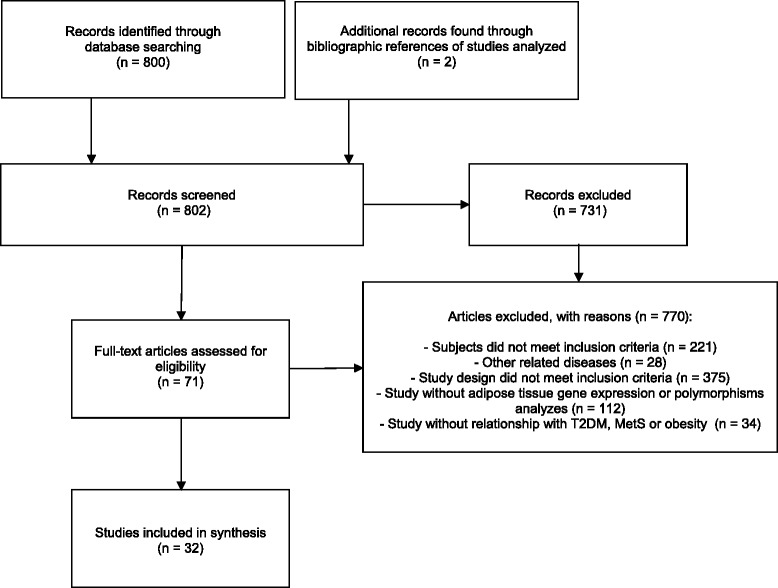
The HSD11B1 gene is highly expressed in abdominal adipose tissue, and the enzyme it encodes catalyzes the interconversion of inactive cortisone to hormonally active cortisol. Genetic abnormalities of HSD11B1 have been associated with the development of abnormal glucose metabolism and body fat distribution. To systematically review studies evaluating the association of HSD11B1 gene expression in abdominal adipose tissue and HSD11B1 polymorphisms with obesity, the metabolic syndrome (MetS), and type 2 diabetes (T2DM), we conducted a search in MEDLINE, SCOPUS, and Cochrane Library databases in April 2015. The inclusion criteria were observational studies (cross-sectional, cohort, or case-control), conducted in adults, which analyzed the relationship of HSD11B1 polymorphisms and/or HSD11B1 expression in abdominal adipose tissue with obesity, MetS, or T2DM. Of 802 studies retrieved, 32 met the inclusion criteria (23 gene expression and 9 polymorphism studies). Twenty one studies analyzed the relationship between abdominal subcutaneous and/or visceral HSD11B1 expression with central and/or generalized obesity. Most studies reported that abdominal adipose HSD11B1 expression increased with increasing body mass index (15 studies) and abnormalities of glucose metabolism (7 studies), and varied with the presence of MetS (3 studies). Nine studies analyzed the association of 26 different HSD11B1 polymorphic variants with obesity, MetS, and T2DM. Only an Indian study found an association between a polymorphic variant at the HSD11B1 gene with MetS whereas in Pima Indians another polymorphic variant was found to be associated with T2DM. While the literature suggests that HSD11B1 is hyperexpressed in abdominal adipose tissue in subjects with obesity and abnormal glucose metabolism, this seems to be not true for HSD11B1 gene expression and MetS. Although an association of polymorphic variants of HSD11B1 with MetS in Indians and in the T2DM population of Pima Indians were found, most studies did not find a relationship between genetic polymorphic variants of HSD11B1 and obesity, MetS, and T2DM. Their reported conflicting and inconclusive results, suggesting that polymorphic variants of HSD11B1 may have only a small role in the development of metabolic abnormalities of susceptible populations in the development of MetS and T2DM.
11β-羟基类固醇脱氢酶1(HSD11B1)基因在腹部脂肪组织中高度表达,其编码的酶催化无活性的可的松向具有激素活性的皮质醇的相互转化。HSD11B1的基因异常与葡萄糖代谢异常和体脂分布有关。为了系统评价评估腹部脂肪组织中HSD11B1基因表达及HSD11B1基因多态性与肥胖、代谢综合征(MetS)和2型糖尿病(T2DM)之间关联的研究,我们于2015年4月在医学文献数据库(MEDLINE)、科学网数据库(SCOPUS)和考克兰图书馆数据库进行了检索。纳入标准为在成年人中开展的观察性研究(横断面研究、队列研究或病例对照研究),分析腹部脂肪组织中HSD11B1基因多态性和/或HSD11B1表达与肥胖、MetS或T2DM之间的关系。在检索到的802项研究中,32项符合纳入标准(23项基因表达研究和9项基因多态性研究)。21项研究分析了腹部皮下和/或内脏HSD11B1表达与中心性肥胖和/或全身性肥胖之间的关系。大多数研究报告称,腹部脂肪组织中HSD11B1表达随体重指数增加而升高(15项研究),且与葡萄糖代谢异常有关(7项研究),并随MetS的存在而变化(3项研究)。9项研究分析了26种不同的HSD11B1多态性变体与肥胖、MetS和T2DM之间的关联。只有一项印度的研究发现HSD11B1基因的一个多态性变体与MetS有关,而在皮马印第安人中,另一个多态性变体与T2DM有关。虽然文献表明在肥胖和葡萄糖代谢异常的受试者中,腹部脂肪组织中HSD11B1表达过高,但对于HSD11B1基因表达与MetS而言似乎并非如此。尽管发现HSD11B1多态性变体在印度人和皮马印第安人T2DM人群中与MetS有关,但大多数研究未发现HSD11B1基因多态性变体与肥胖、MetS和T2DM之间存在关联。他们报告的结果相互矛盾且无定论,这表明HSD11B1多态性变体在MetS和T2DM易患人群代谢异常的发生中可能仅起很小的作用。