Chen Dongmei, Liu Shudan, Ma Huiming, Liang Xueyun, Ma Haibin, Yan Xiurui, Yang Bao, Wei Jun, Liu Xiaoming
Institute of Human Stem Cell Research, the General Hospital of Ningxia Medical University, Yinchuan, Ningxia, 750004 China.
Key Laboratory of Fertility Preservation and Maintenance of Ministry of Education, Ningxia Medical University, Yinchuan, Ningxia, 750004 China.
Cancer Cell Int. 2015 Apr 18;15:42. doi: 10.1186/s12935-015-0198-9. eCollection 2015.
Mesenchymal stem cells (MSCs) in tumors have emerged as progenitors involved in stroma formation and metastasis of cancers, partially owing to their abilities to differentially express paracrine factors related to the proliferation and invasion of cancer cells. In this regard, increasing evidence has shown that MSCs have impacts on the malignancy of colon cancer, however, the underpinning mechanisms by which MSCs promote cancer metastasis remain elusive.
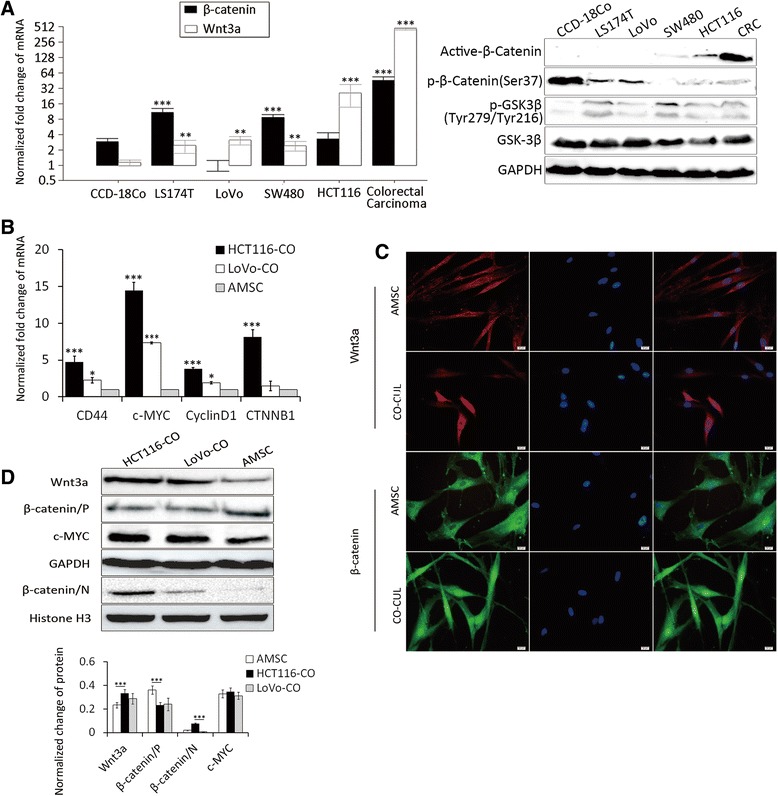
To investigate the crosstalk between adipose-derived MSCs (AMSCs) isolated from adipose tissues and colon cancer cells, a co-culture transwell model of AMSCs and colon cancer cells was employed, and the activation of Wnt signaling and paracrine factors in colon cancer cells and AMSCs were measured.
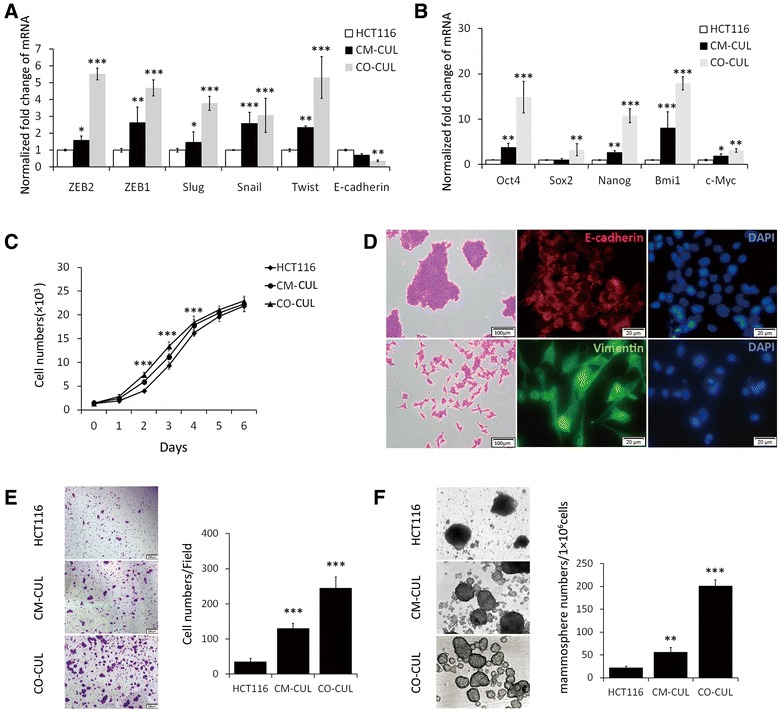
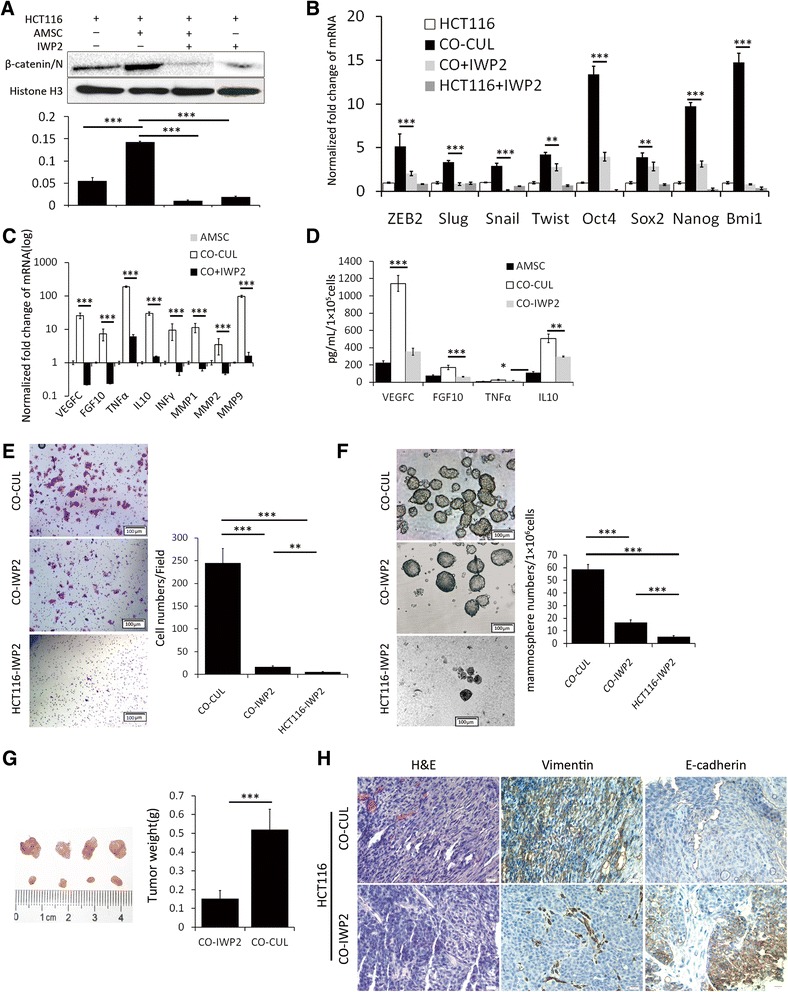
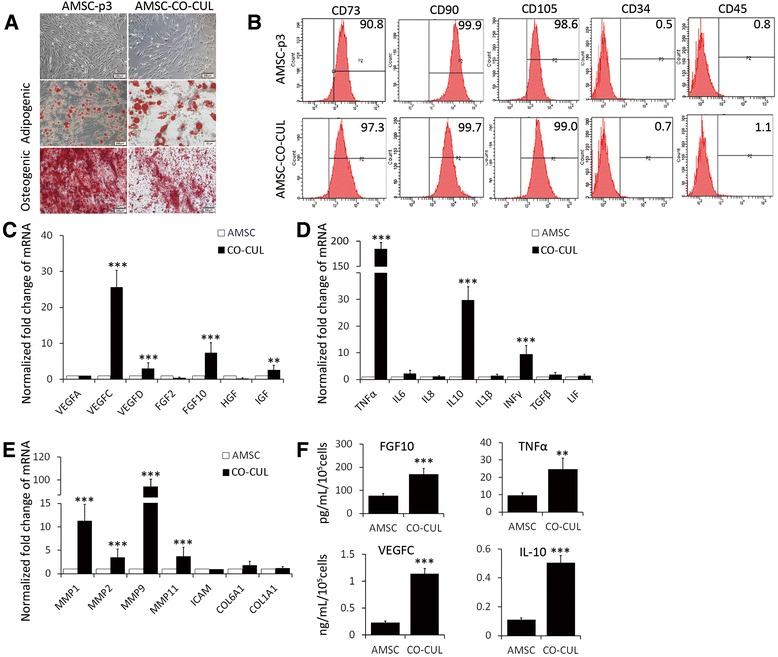
The results showed that AMSCs could enhance the metastatic capacity of colon cancer cells with an elevated expression of mesenchymal-epithelial transition (EMT)-associated genes in a contact-dependent manner. Reciprocally, colon cancer cells were able to induce AMSCs to produce metastasis-related factors and cytokines, such as FGF10, VEGFC and matrix metalloproteinases (MMPs) in part through a mechanism of an activation of Wnt signaling, by which these factors in turn activate Wnt signaling of colon cancer cells. Intriguingly, an inhibition of Wnt signaling leads a reduced capacity of invasion and colony formation of colon cancer cells in vitro, and the tumorigenicity of cancer cells in a murine model.
These findings thus suggest that the crosstalk between the Wnt signaling of cancer cells and paracrine factors of AMSCs has an implication in colon cancer malignancy. This study thus uncovers a novel Wnt-paracrine factors mediated-crosstalk between colon cancer cells and AMSCs in cancer malignancy.
肿瘤中的间充质干细胞(MSCs)已成为参与癌症基质形成和转移的祖细胞,部分原因是它们能够差异表达与癌细胞增殖和侵袭相关的旁分泌因子。在这方面,越来越多的证据表明MSCs对结肠癌的恶性程度有影响,然而,MSCs促进癌症转移的潜在机制仍不清楚。
为了研究从脂肪组织中分离的脂肪来源的间充质干细胞(AMSCs)与结肠癌细胞之间的相互作用,采用了AMSCs与结肠癌细胞的共培养Transwell模型,并检测了结肠癌细胞和AMSCs中Wnt信号通路的激活以及旁分泌因子。
结果表明,AMSCs可以以接触依赖的方式增强结肠癌细胞的转移能力,同时间充质-上皮转化(EMT)相关基因的表达升高。相反,结肠癌细胞能够诱导AMSCs产生转移相关因子和细胞因子,如FGF10、VEGFC和基质金属蛋白酶(MMPs),部分是通过激活Wnt信号通路的机制,这些因子反过来又激活结肠癌细胞的Wnt信号通路。有趣的是,抑制Wnt信号通路会导致体外结肠癌细胞的侵袭和集落形成能力降低,以及小鼠模型中癌细胞的致瘤性降低。
这些发现表明,癌细胞的Wnt信号通路与AMSCs的旁分泌因子之间的相互作用与结肠癌的恶性程度有关。因此,本研究揭示了一种新的Wnt-旁分泌因子介导的结肠癌细胞与AMSCs在癌症恶性过程中的相互作用。