Han Hui, Zhu Jinzhou, Zhu Zhengbin, Ni Jingwei, Du Run, Dai Yang, Chen Yanjia, Wu Zhijun, Lu Lin, Zhang Ruiyan
Department of Cardiology, Rui Jin Hospital, Shanghai Jiao Tong University School of Medicine, Shanghai, China (H.H., J.Z., Z.Z., J.N., R.D., Z.W., L.L., R.Z.) Institute of Cardiovascular Diseases, Shanghai Jiao Tong University School of Medicine, Shanghai, China (H.H., Y.D., Y.C., L.L., R.Z.).
Department of Cardiology, Rui Jin Hospital, Shanghai Jiao Tong University School of Medicine, Shanghai, China (H.H., J.Z., Z.Z., J.N., R.D., Z.W., L.L., R.Z.).
J Am Heart Assoc. 2015 Jun 11;4(6):e001852. doi: 10.1161/JAHA.115.001852.
Cardiovascular disease is the leading cause of death in patients with chronic kidney disease. A body of evidence suggests that p-cresyl sulfate (PCS), a uremic toxin, is associated with the cardiovascular mortality rate of patients with chronic kidney disease; however, the molecular mechanisms underlying this feature have not yet been fully elucidated.
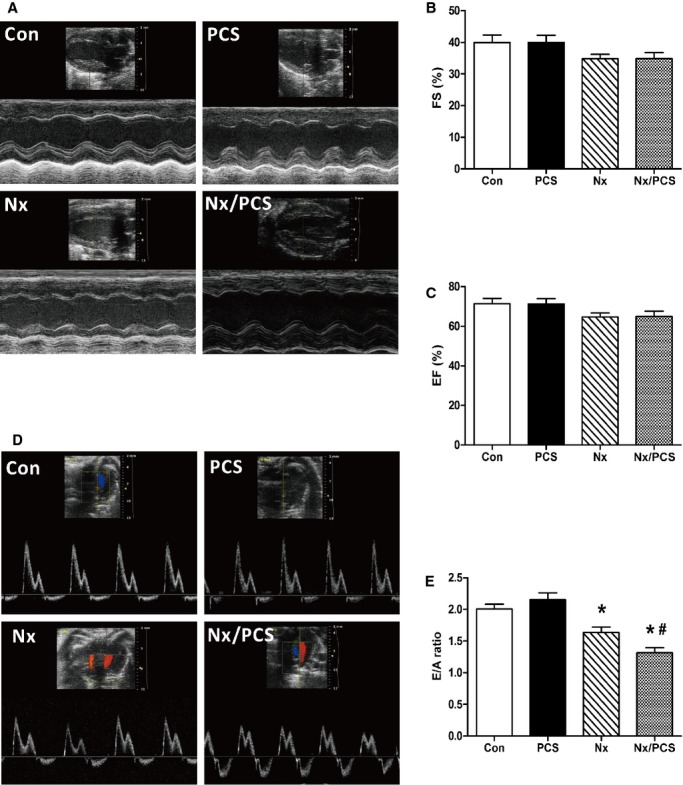
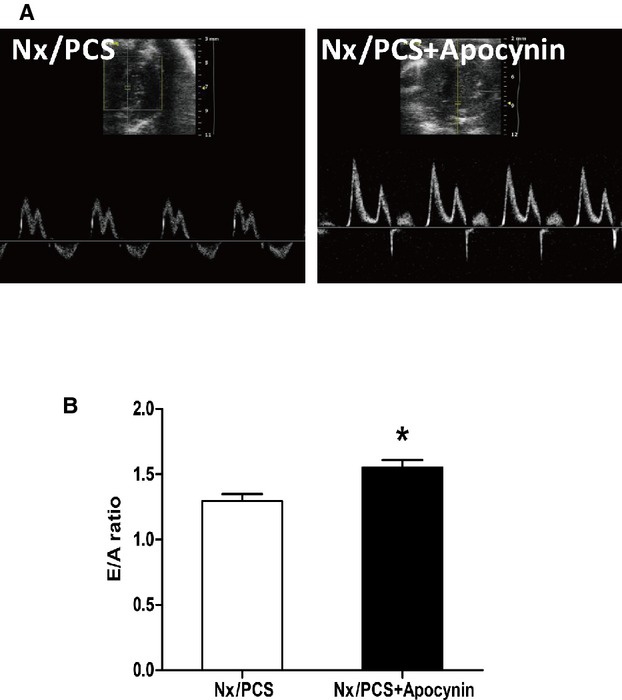
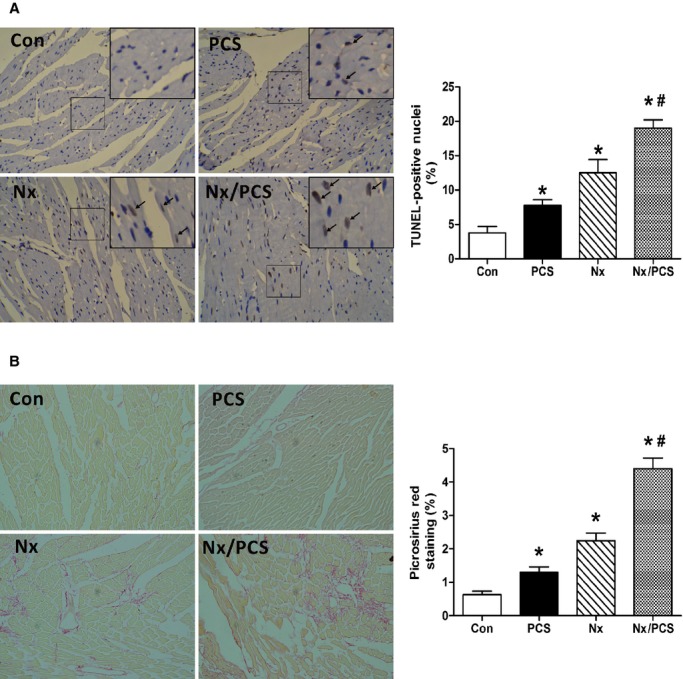
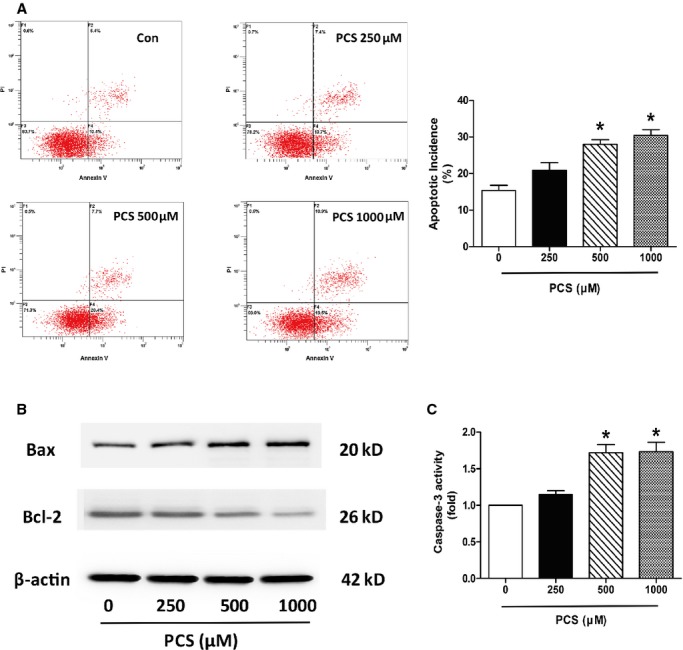
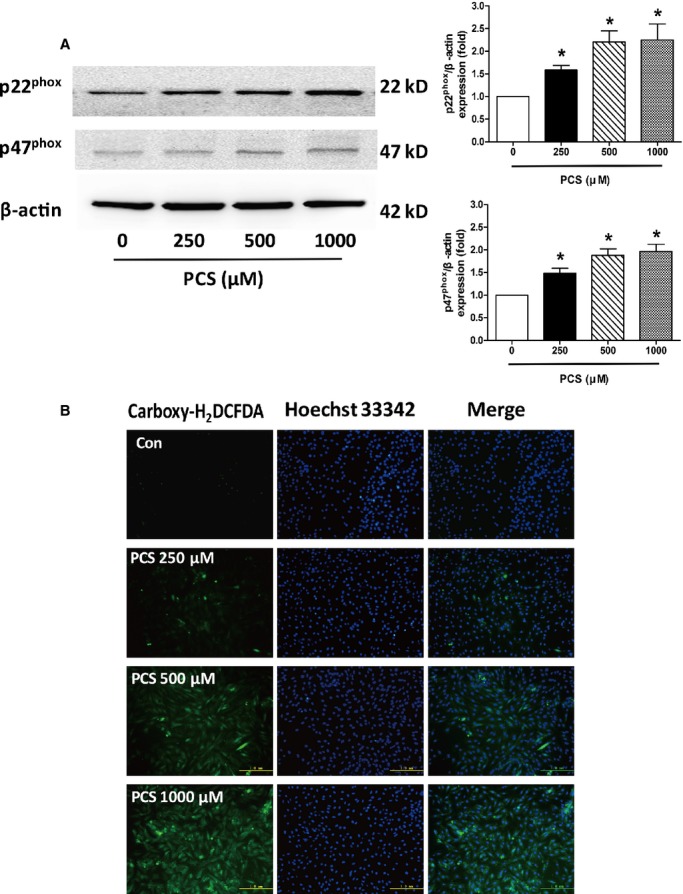
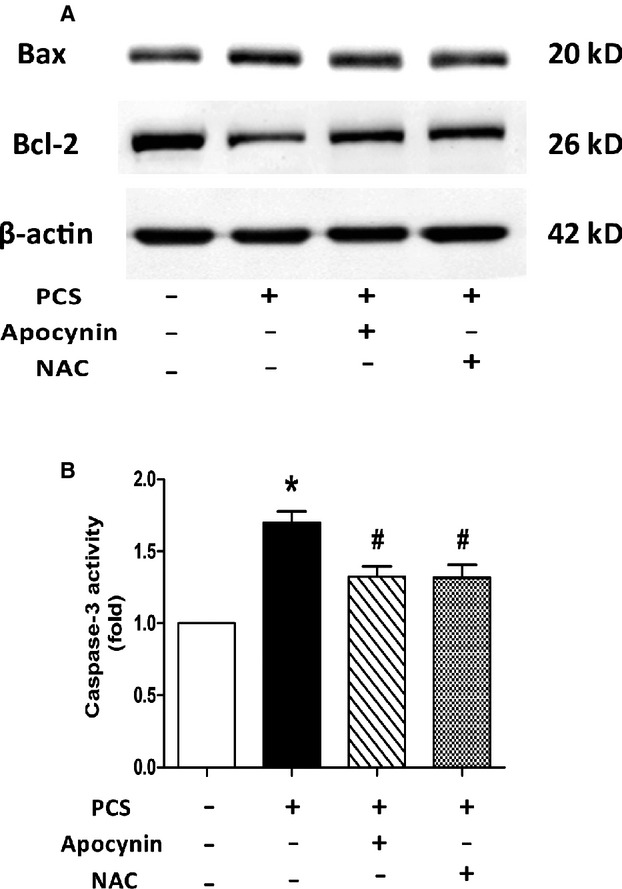
We aimed to determine whether PCS accumulation could adversely affect cardiac dysfunction via direct cytotoxicity to cardiomyocytes. In mice that underwent 5/6 nephrectomy, PCS promoted cardiac apoptosis and affected the ratio of left ventricular transmitral early peak flow velocity to left ventricular transmitral late peak flow velocity (the E/A ratio) observed by echocardiography (n=8 in each group). Apocynin, an inhibitor of NADPH oxidase activity, attenuates this alteration of the E/A ratio (n=6 in each group). PCS also exhibited proapoptotic properties in H9c2 cells by upregulating the expression of p22(phox) and p47(phox), NADPH oxidase subunits, and the production of reactive oxygen species. Apocynin and N-acetylcysteine were both able to suppress the effect of PCS, underscoring the importance of NADPH oxidase activation for the mechanism of action.
This study demonstrated that the cardiac toxicity of PCS is at least partially attributed to induced NADPH oxidase activity and reactive oxygen species production facilitating cardiac apoptosis and resulting in diastolic dysfunction.
心血管疾病是慢性肾脏病患者的主要死因。有证据表明,尿毒症毒素对甲酚硫酸盐(PCS)与慢性肾脏病患者的心血管死亡率相关;然而,这一特征背后的分子机制尚未完全阐明。
我们旨在确定PCS蓄积是否会通过对心肌细胞的直接细胞毒性对心脏功能障碍产生不利影响。在接受5/6肾切除术的小鼠中,PCS促进心脏细胞凋亡,并影响超声心动图观察到的左心室舒张早期峰值流速与左心室舒张晚期峰值流速之比(E/A比值)(每组n = 8)。NADPH氧化酶活性抑制剂阿朴吗啡减轻了E/A比值的这种改变(每组n = 6)。PCS还通过上调NADPH氧化酶亚基p22(phox)和p47(phox)的表达以及活性氧的产生,在H9c2细胞中表现出促凋亡特性。阿朴吗啡和N-乙酰半胱氨酸均能够抑制PCS的作用,强调了NADPH氧化酶激活对作用机制的重要性。
本研究表明,PCS的心脏毒性至少部分归因于诱导NADPH氧化酶活性和活性氧产生,促进心脏细胞凋亡并导致舒张功能障碍。