Jozefczak Marijke, Bohler Sacha, Schat Henk, Horemans Nele, Guisez Yves, Remans Tony, Vangronsveld Jaco, Cuypers Ann
Hasselt University, Centre for Environmental Sciences, Agoralaan Building D, B-3590 Diepenbeek, Belgium.
Free University of Amsterdam, Institute of Molecular and Cellular Biology, De Boelelaan 1085, NL-1081 HV Amsterdam, The Netherlands.
Ann Bot. 2015 Sep;116(4):601-12. doi: 10.1093/aob/mcv075. Epub 2015 Jun 12.
Cadmium (Cd) is a non-essential trace element that elicits oxidative stress. Plants respond to Cd toxicity via increasing their Cd-chelating and antioxidative capacities. They predominantly chelate Cd via glutathione (GSH) and phytochelatins (PCs), while antioxidative defence is mainly based on the use and recycling of both GSH and ascorbate (AsA), complemented by superoxide dismutase (SOD) and catalase (CAT). In addition, both metabolites act as a substrate for the regeneration of other essential antioxidants, which neutralize and regulate reactive oxygen species (ROS). Together, these functions influence the concentration and cellular redox state of GSH and AsA. In this study, these two parameters were examined in plants of Arabidopsis thaliana exposed to sub-lethal Cd concentrations.
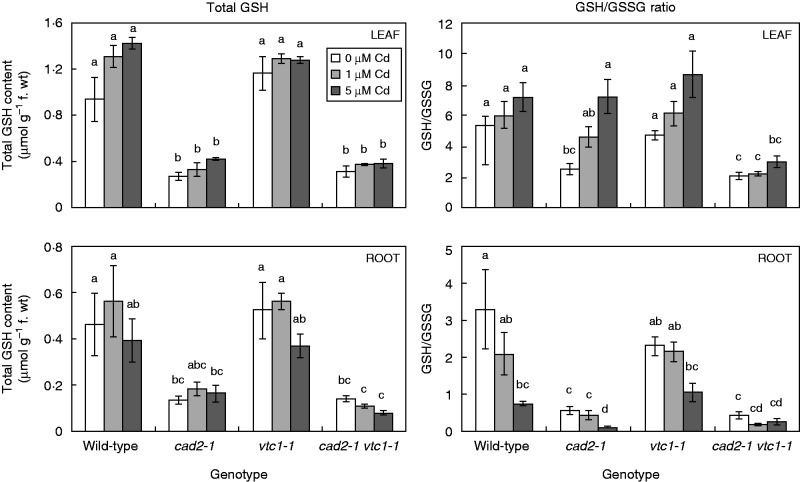
Wild-type plants and mutant arabidopsis plants containing 30-45 % of wild-type levels of GSH (cad2-1) or 40-50 % of AsA (vtc1-1), together with the double-mutant (cad2-1 vtc1-1) were cultivated in a hydroponic system and exposed to sub-lethal Cd concentrations. Cadmium detoxification was investigated at different levels including gene expression and metabolite concentrations.
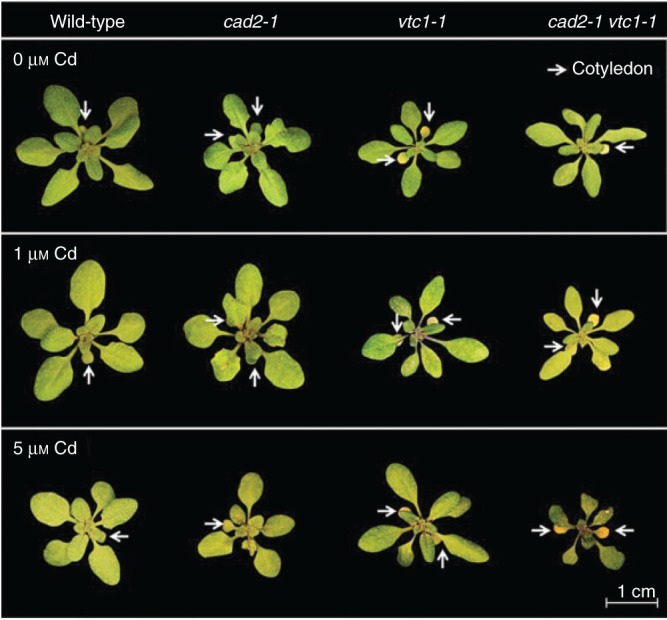
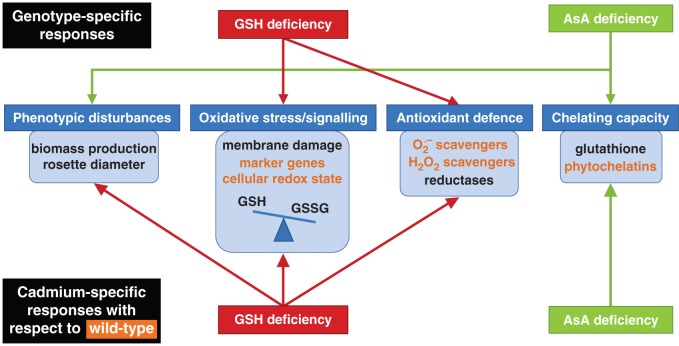
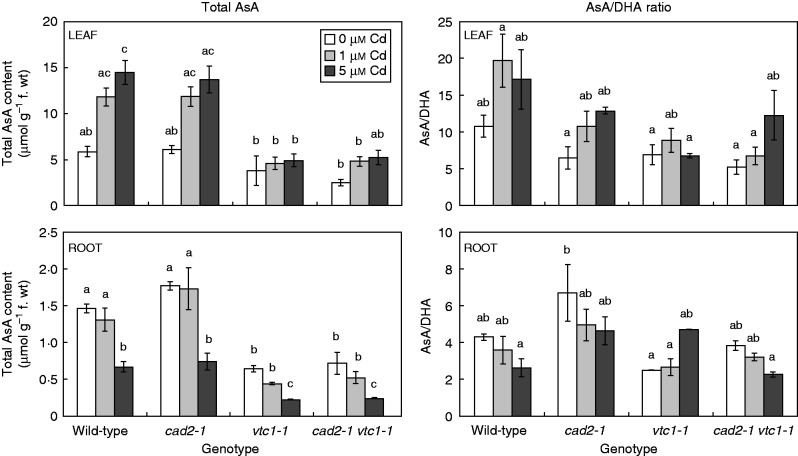
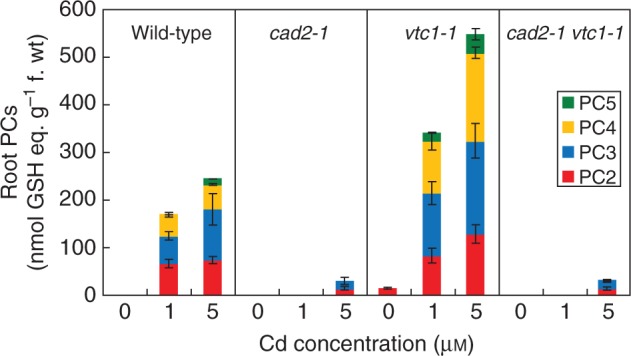
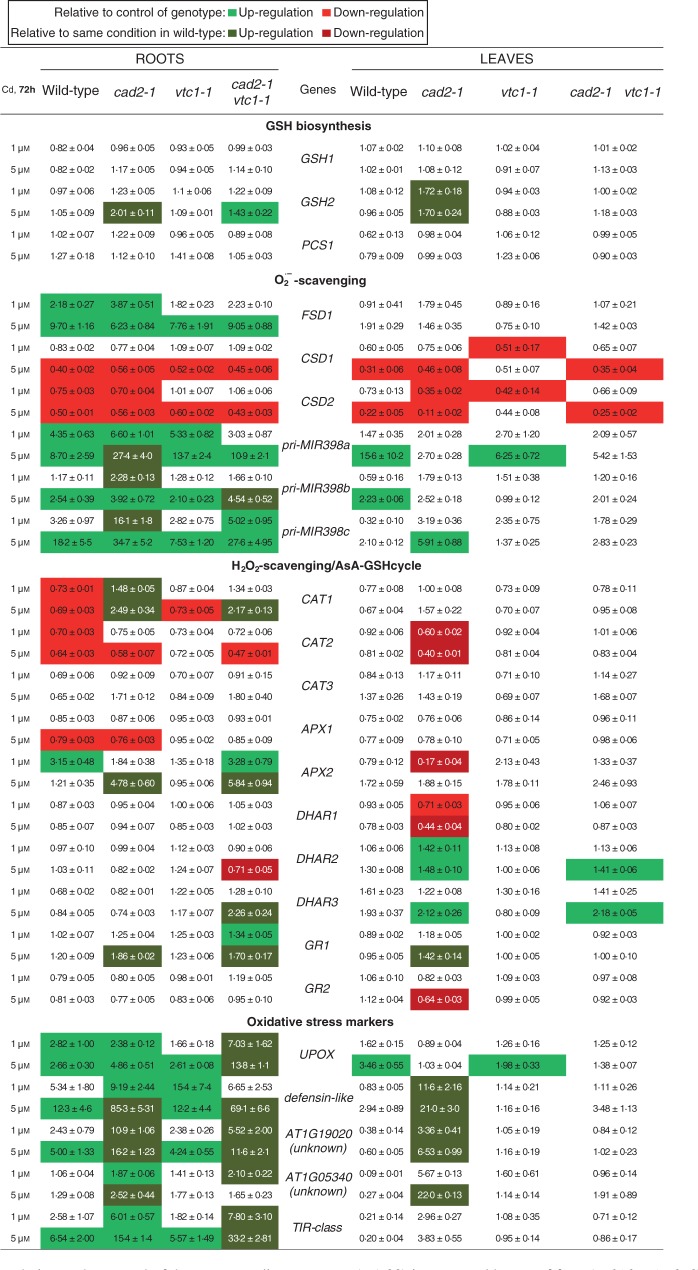
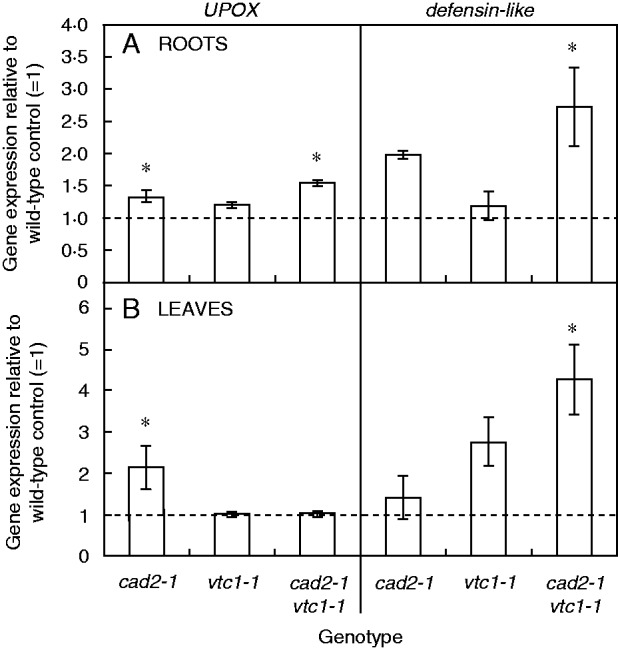
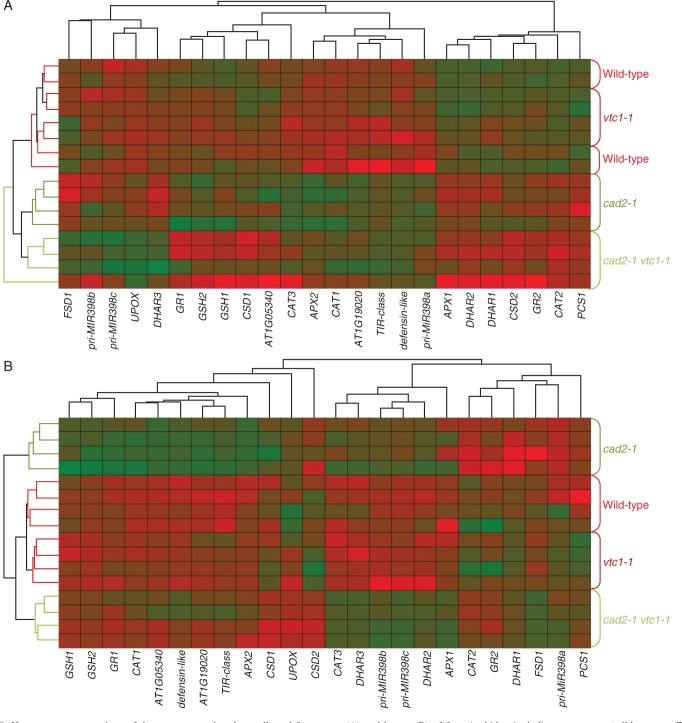
In comparison with wild-type plants, elevated basal thiol levels and enhanced PC synthesis upon exposure to Cd efficiently compensated AsA deficiency in vtc1-1 plants and contributed to decreased sensitivity towards Cd. Glutathione-deficient (cad2-1 and cad2-1 vtc1-1) mutants, however, showed a more oxidized GSH redox state, resulting in initial oxidative stress and a higher sensitivity to Cd. In order to cope with the Cd stress to which they were exposed, GSH-deficient mutants activated multiple alternative pathways.
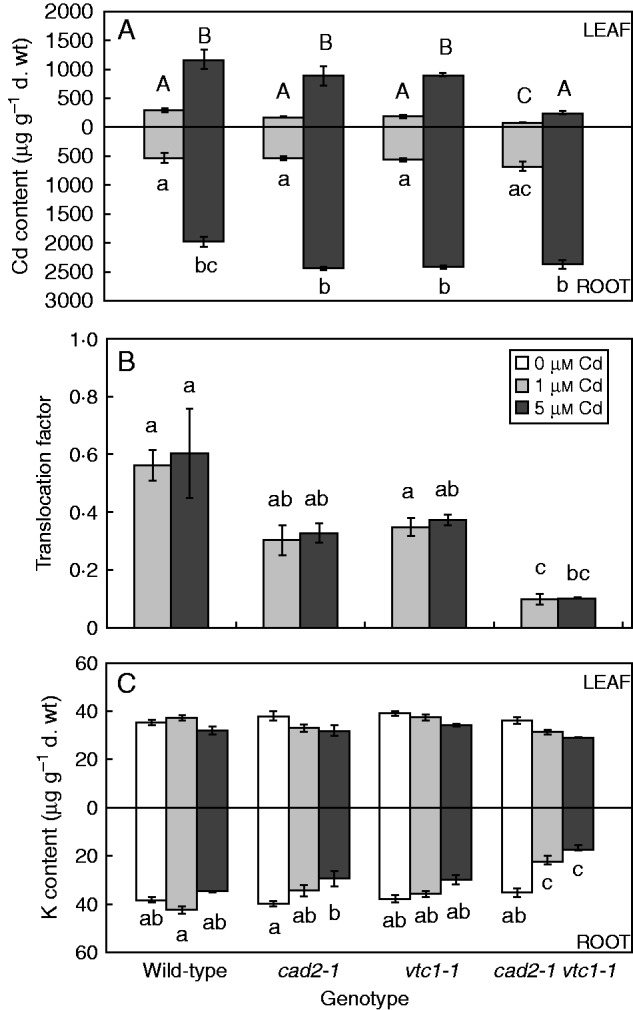
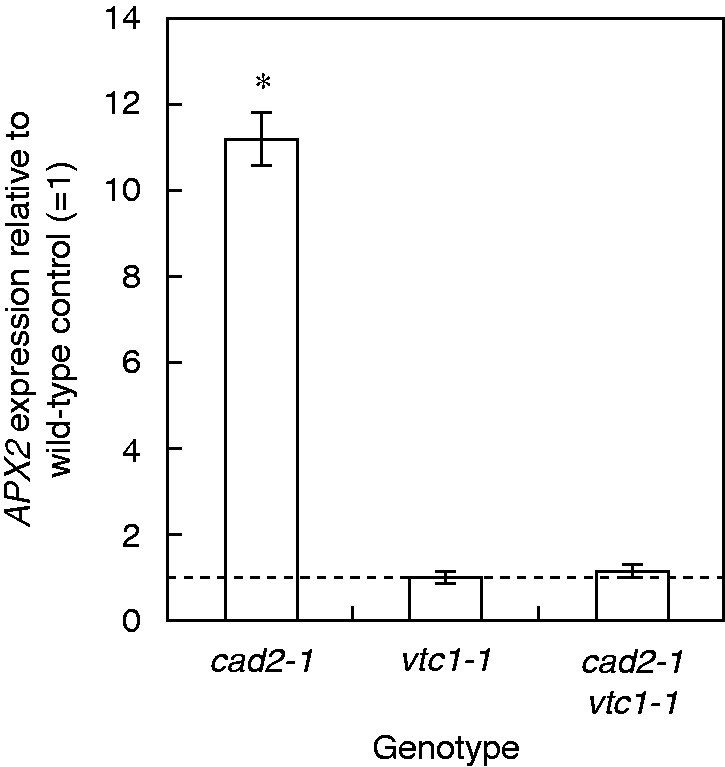
Our observations indicate that GSH and AsA deficiency differentially alter plant GSH homeostasis, resulting in opposite Cd sensitivities relative to wild-type plants. Upon Cd exposure, GSH-deficient mutants were hampered in chelation. They experienced phenotypic disturbances and even more oxidative stress, and therefore activated multiple alternative pathways such as SOD, CAT and ascorbate peroxidase, indicating a higher Cd sensitivity. Ascorbate deficiency, however, was associated with enhanced PC synthesis in comparison with wild-type plants after Cd exposure, which contributed to decreased sensitivity towards Cd.
镉(Cd)是一种非必需微量元素,可引发氧化应激。植物通过提高其镉螯合和抗氧化能力来应对镉毒性。它们主要通过谷胱甘肽(GSH)和植物螯合肽(PCs)螯合镉,而抗氧化防御主要基于GSH和抗坏血酸(AsA)的利用和循环,并由超氧化物歧化酶(SOD)和过氧化氢酶(CAT)补充。此外,这两种代谢物都作为其他必需抗氧化剂再生的底物,这些抗氧化剂中和并调节活性氧(ROS)。这些功能共同影响GSH和AsA的浓度以及细胞氧化还原状态。在本研究中,对暴露于亚致死镉浓度的拟南芥植物中的这两个参数进行了检测。
将野生型植物以及含有野生型水平30 - 45%的GSH(cad2 - 1)或40 - 50%的AsA(vtc1 - 1)的突变拟南芥植物,连同双突变体(cad2 - 1 vtc1 - 1)一起在水培系统中培养,并暴露于亚致死镉浓度下。在不同水平上研究了镉解毒,包括基因表达和代谢物浓度。
与野生型植物相比,vtc1 - 1植物中基础硫醇水平升高以及暴露于镉时PC合成增强,有效补偿了AsA缺乏,并导致对镉的敏感性降低。然而,谷胱甘肽缺陷型(cad2 - 1和cad2 - 1 vtc1 - 1)突变体表现出更氧化的GSH氧化还原状态,导致初始氧化应激和对镉更高的敏感性。为了应对所暴露的镉胁迫,谷胱甘肽缺陷型突变体激活了多种替代途径。
我们的观察结果表明,GSH和AsA缺乏以不同方式改变植物GSH稳态,导致相对于野生型植物具有相反的镉敏感性。暴露于镉时,谷胱甘肽缺陷型突变体在螯合方面受到阻碍。它们经历了表型紊乱甚至更多的氧化应激,因此激活了多种替代途径,如SOD、CAT和抗坏血酸过氧化物酶,表明对镉的敏感性更高。然而,与暴露于镉后的野生型植物相比,抗坏血酸缺乏与PC合成增强有关,这有助于降低对镉的敏感性。