Liu Michael B, de Lange Enno, Garfinkel Alan, Weiss James N, Qu Zhilin
UCLA Cardiovascular Research Laboratory; Department of Medicine (Cardiology), David Geffen School of Medicine, University of California, Los Angeles, California.
UCLA Cardiovascular Research Laboratory; Department of Knowledge Engineering, Maastricht University, Maastricht, The Netherlands.
Heart Rhythm. 2015 Oct;12(10):2115-24. doi: 10.1016/j.hrthm.2015.06.019. Epub 2015 Jun 10.
Delayed afterdepolarizations (DADs) have been well characterized as arrhythmia triggers, but their role in generating a tissue substrate vulnerable to reentry is not well understood.
The purpose of this study was to test the hypothesis that random DADs can self-organize to generate both an arrhythmia trigger and a vulnerable substrate simultaneously in cardiac tissue as a result of gap junction coupling.
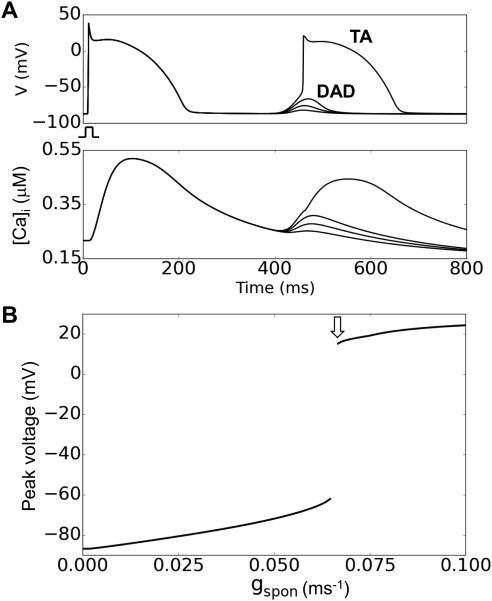
Computer simulations in 1-dimensional cable and 2-dimensional tissue models were performed. The cellular DAD amplitude was varied by changing the strength of sarcoplasmic reticulum calcium release. Random DAD latency and amplitude in different cells were simulated using gaussian distributions.
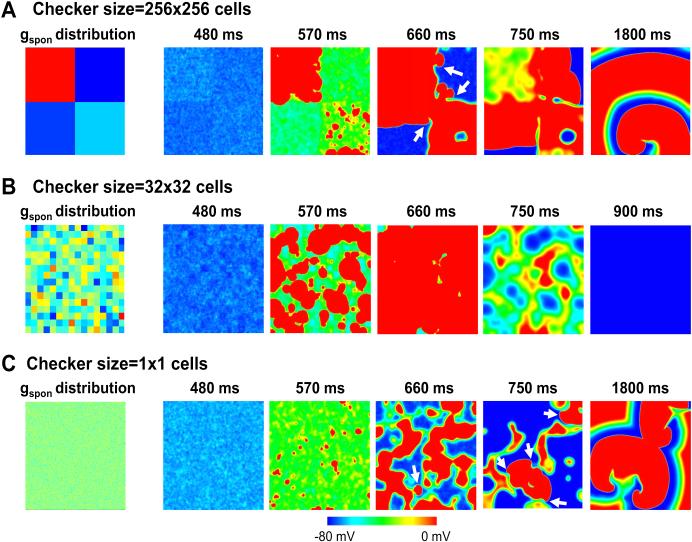
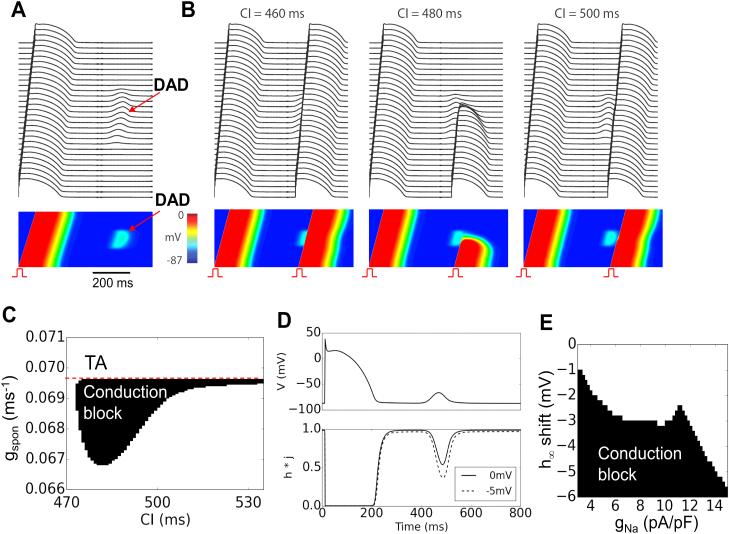
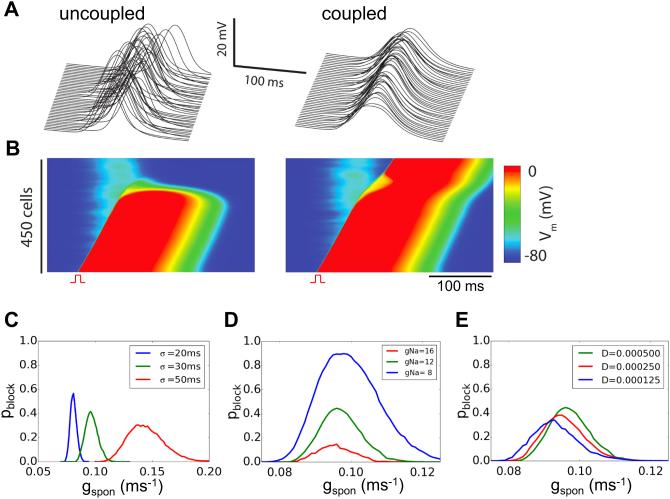
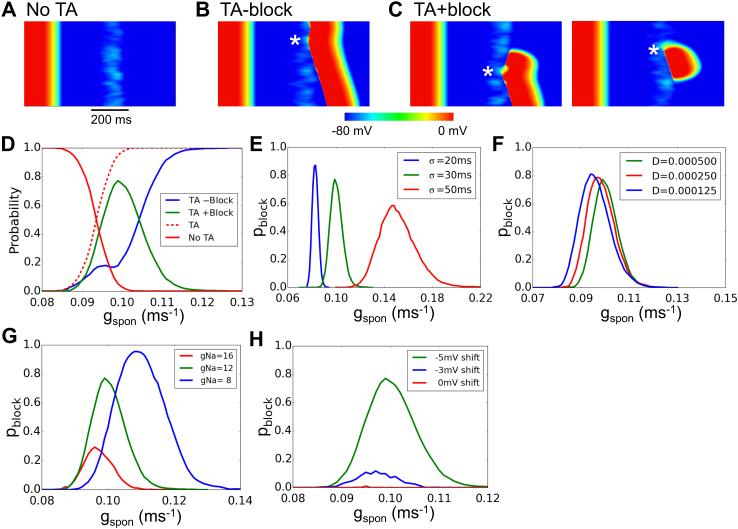
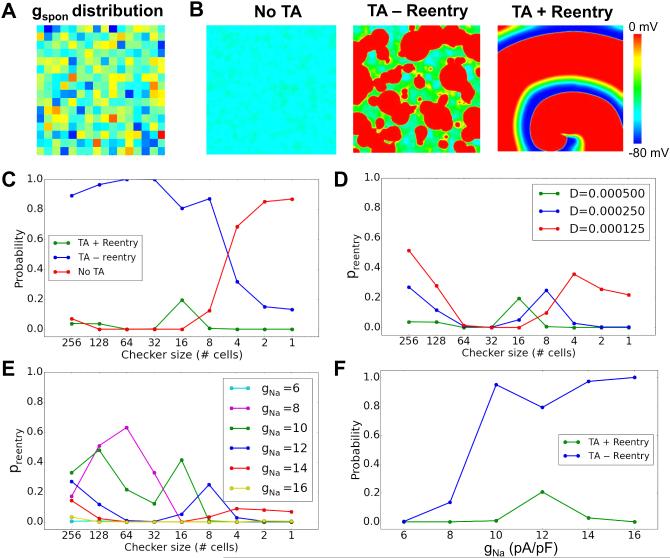
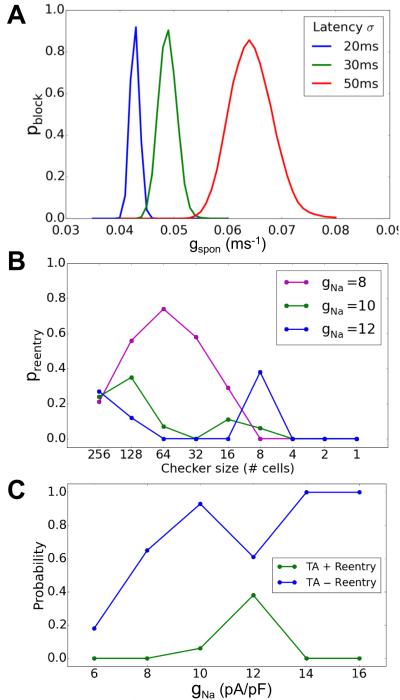
Depending on the strength of spontaneous sarcoplasmic reticulum calcium release and other conditions, random DADs in cardiac tissue resulted in the following behaviors: (1) triggered activity (TA); (2) a vulnerable tissue substrate causing unidirectional conduction block and reentry by inactivating sodium channels; (3) both triggers and a vulnerable substrate simultaneously by generating TA in regions next to regions with subthreshold DADs susceptible to unidirectional conduction block and reentry. The probability of the latter 2 behaviors was enhanced by reduced sodium channel availability, reduced gap junction coupling, increased tissue heterogeneity, and less synchronous DAD latency.
DADs can self-organize in tissue to generate arrhythmia triggers, a vulnerable tissue substrate, and both simultaneously. Reduced sodium channel availability and gap junction coupling potentiate this mechanism of arrhythmias, which are relevant to a variety of heart disease conditions.
延迟后除极(DADs)作为心律失常的触发因素已得到充分表征,但其在产生易发生折返的组织基质中的作用尚不清楚。
本研究旨在验证以下假设,即随机DADs可通过缝隙连接耦合在心脏组织中自组织,同时产生心律失常触发因素和易损基质。
在一维电缆模型和二维组织模型中进行计算机模拟。通过改变肌浆网钙释放强度来改变细胞DAD幅度。利用高斯分布模拟不同细胞中的随机DAD潜伏期和幅度。
根据自发性肌浆网钙释放强度和其他条件,心脏组织中的随机DADs会导致以下行为:(1)触发活动(TA);(2)通过使钠通道失活导致单向传导阻滞和折返的易损组织基质;(3)通过在紧邻易发生单向传导阻滞和折返的阈下DAD区域产生TA,同时产生触发因素和易损基质。钠通道可用性降低、缝隙连接耦合减少、组织异质性增加以及DAD潜伏期同步性降低会增加后两种行为的发生概率。
DADs可在组织中自组织,产生心律失常触发因素、易损组织基质或两者同时产生。钠通道可用性降低和缝隙连接耦合增强了这种心律失常机制,这与多种心脏病情况相关。