Turreira-García Nerea, Theilade Ida, Meilby Henrik, Sørensen Marten
Department of Food and Resource Economics, Faculty of Science, University of Copenhagen, Rolighedsvej 25, Frederiksberg, C 1958, Denmark.
Department of Plant and Environmental Sciences, Faculty of Science, University of Copenhagen, Thorvaldsensvej 40, Frederiksberg, C 1871, Denmark.
J Ethnobiol Ethnomed. 2015 Jun 16;11:52. doi: 10.1186/s13002-015-0024-4.
Knowledge about wild edible plants (WEPs) has a high direct-use value. Yet, little is known about factors shaping the distribution and transfer of knowledge of WEPs at global level and there is concern that use of and knowledge about WEPs is decreasing. This study aimed to investigate the distribution, transmission and loss of traditional ecological knowledge (TEK) concerning WEPs used by a Mayan community of Guatemala and to enumerate such plants.
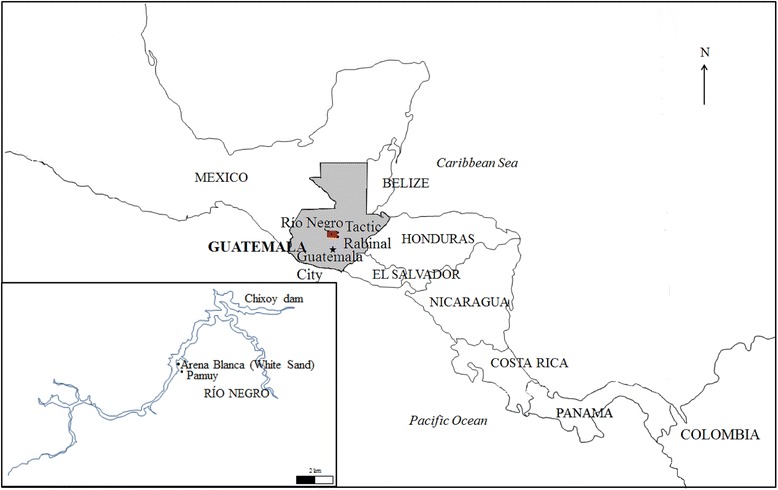
The case study was carried out in a semi-isolated community where part of the population took refuge in the mountains in 1982-1985 with WEPs as the main source of food. Major variables possibly determining knowledge and therefore investigated were socio-demographic characteristics, distance to and abundance of natural resources and main source of knowledge transmission. A reference list of species was prepared with the help of three key informants. Information about the theoretical dimension of knowledge was gathered through free listing and a questionnaire survey, while practical skills were assessed using a plant identification test with photographs. All villagers older than 7 years participated in the research (n = 62 including key informants).
A total of 44 WEPs were recorded. Theoretical knowledge was unevenly distributed among the population, and a small group including very few informants (n = 3) mentioned, on average, three times more plants than the rest of the population during the free listing. Practical knowledge was more homogeneously distributed, key informants recognising 23 plants on average and the rest of the population 17. Theoretical and practical knowledge increased with age, the latter decreasing in the late phases of life. Knowledge about WEPs was transmitted through relatives in 76% of the cases, which led to increased knowledge of plants and ability to recognise them.
The WEP survey may serve as a reference point and as a useful compilation of knowledge for the community for their current and future generations. This study shows that the elder and the refugees living in the area for longer time know more than others about WEPs. It also shows the important role of knowledge transmission through relatives to preserve TEK.
关于野生可食用植物(WEP)的知识具有很高的直接使用价值。然而,对于在全球范围内影响WEP知识分布和传承的因素,人们了解甚少,并且有人担心对WEP的使用和相关知识正在减少。本研究旨在调查危地马拉一个玛雅社区使用的WEP的传统生态知识(TEK)的分布、传承和流失情况,并列举这些植物。
该案例研究在一个半隔离社区开展,1982 - 1985年期间部分居民以WEP作为主要食物来源,避难至山区。可能决定知识水平且因此进行调查的主要变量包括社会人口统计学特征、与自然资源的距离和丰富程度以及知识传播的主要来源。在三位关键信息提供者的帮助下编制了一份物种参考清单。通过自由列举和问卷调查收集有关知识理论维度的信息,同时使用照片植物识别测试评估实践技能。所有7岁以上的村民参与了研究(n = 62,包括关键信息提供者)。
共记录了44种WEP。理论知识在人群中分布不均,在自由列举过程中,一小群包括极少数信息提供者(n = 3)平均提及的植物数量是其他人的三倍多。实践知识分布更为均匀,关键信息提供者平均识别23种植物,其余人群识别17种。理论和实践知识都随年龄增长,后者在生命后期有所下降。76%的情况下,关于WEP的知识是通过亲属传承的,这导致对植物的了解增加以及识别能力增强。
WEP调查可为该社区的当前和后代提供一个参考点以及一份有用的知识汇编。本研究表明,年长者和在该地区居住时间较长的难民对WEP的了解比其他人更多。它还表明了亲属间知识传承在保护TEK方面的重要作用。