Department of Botany, University of Jammu, Jammu, J&K, 180001, India.
Department of Botany, Govt. Degree College, Kathua, J&K, 184104, India.
J Ethnobiol Ethnomed. 2018 Nov 29;14(1):73. doi: 10.1186/s13002-018-0272-1.
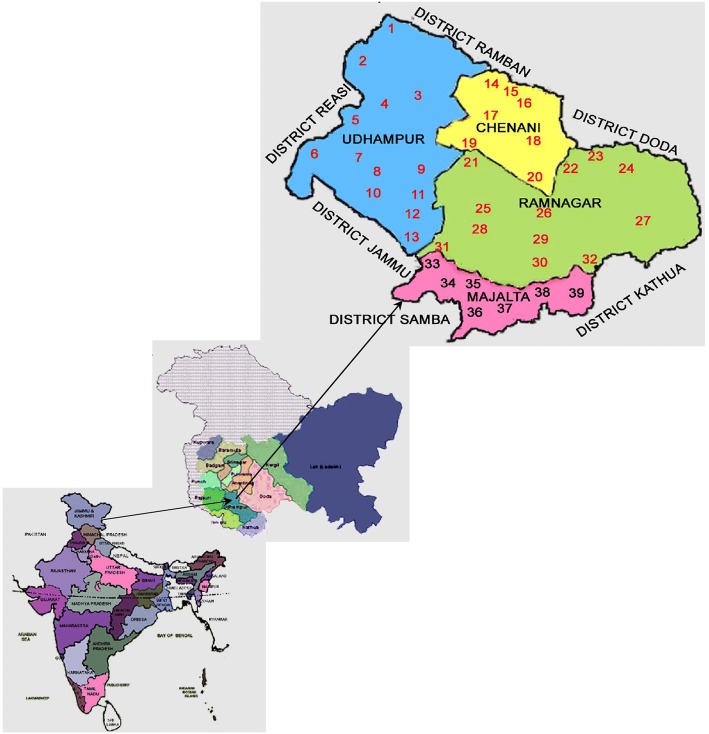
Wild edible plants (WEPs) refer to edible species that are not cultivated or domesticated. WEPs have an important role to play in poverty eradication, security of food availability, diversification of agriculture, generation of income resources, and alleviating malnutrition. In the present study, an inventory of traditionally used WEPs from Udhampur district of J&K, India, has been prepared.
A systematic and extensive ethnobotanical survey was carried out in different villages of the district for the collection of information on WEPs. The data collected through questionnaire and interviews was then analyzed for cultural importance index (CI) and factor informant consensus (F) to know the cultural significance of WEPs and consensus for the knowledge of WEPs among the informants.
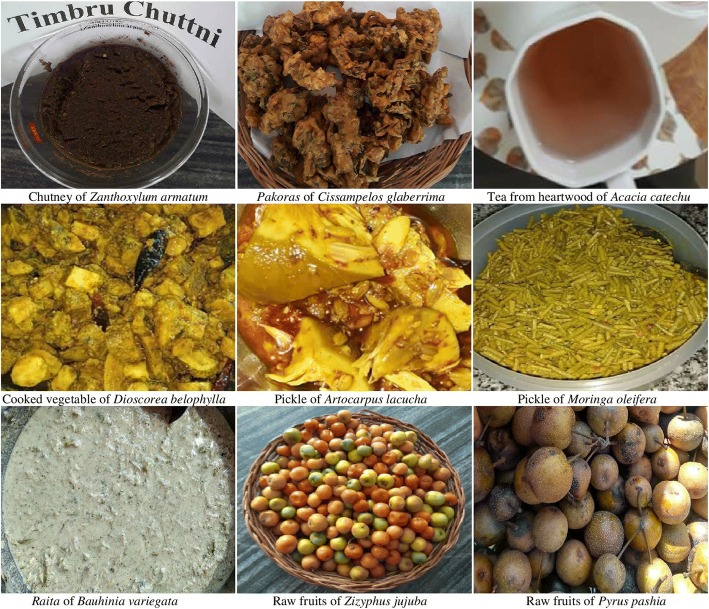
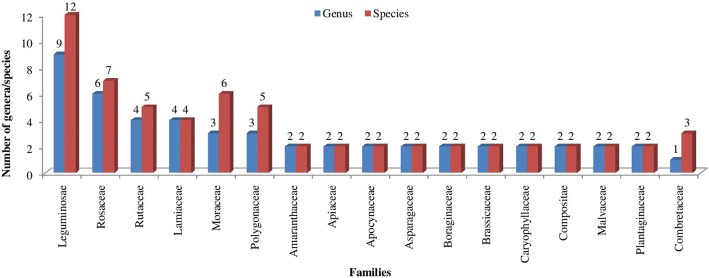
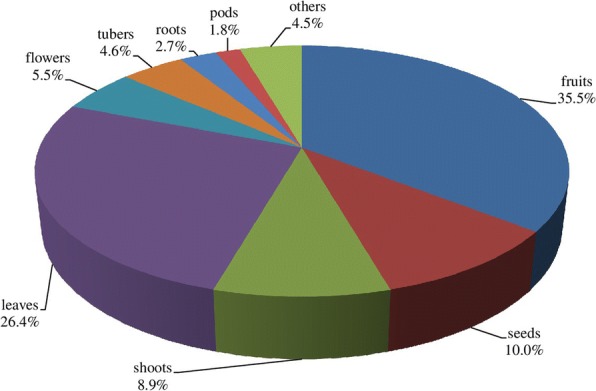
A total of 90 plant species belonging to 45 families and 78 genera were edible and serve as wild phytofoods in the present study. Species richness of wild edible species was the maximum for vegetables (46 species) followed by fruits (37 species) and medicinal plants (36 species). Culturally (on the basis of CI), the most important vegetable and fruit species were Diplazium esculentum, Fumaria indica, Taraxacum campylodes, Urtica dioica, Phyllanthus emblica, Punica granatum, Cordia dichotoma, Syzygium cumini, Ficus palmata, etc. The highest use-report (626) was recorded for vegetables whereas the maximum mean use-report (14.8) was recorded for fruits. On an average, 20.7 wild edible species were used per informant. Informant consensus index (F) varied between 0.83 and 0.94 for raw vegetables and preserved vegetables, respectively.
One of the most important issues of this era is hunger for which one of the possible solutions is the usage of WEPs. The local populace of Udhampur has good knowledge of WEPs, and this legacy of traditional culture must be conserved.
野生食用植物(WEPs)是指未经栽培或驯化的可食用物种。WEPs 在消除贫困、保障粮食供应安全、农业多样化、创造收入资源以及缓解营养不良方面发挥着重要作用。在本研究中,对印度查谟和克什米尔邦乌达姆普尔地区传统使用的野生食用植物进行了编目。
在该地区的不同村庄进行了系统而广泛的民族植物学调查,以收集有关野生食用植物的信息。通过问卷和访谈收集的数据随后进行了文化重要性指数(CI)和因素信息共识(F)分析,以了解野生食用植物的文化意义以及信息提供者对野生食用植物知识的共识。
本研究共发现 90 种植物,分属于 45 科 78 属,可作为野生植物食用。野生食用植物种类最多的是蔬菜(46 种),其次是水果(37 种)和药用植物(36 种)。从文化角度(基于 CI)来看,最重要的蔬菜和水果物种有:山蕨菜、菘蓝、蒲公英、荨麻、余甘子、石榴、构树、蒲桃、番石榴等。蔬菜的使用报告最多(626 种),水果的平均使用报告最高(14.8)。平均每位信息提供者使用 20.7 种野生食用植物。生蔬菜和腌制蔬菜的信息共识指数(F)分别在 0.83 和 0.94 之间。
当今时代最重要的问题之一是饥饿,解决这一问题的一个可能方法是使用野生食用植物。乌达姆普尔的当地居民对野生食用植物有很好的了解,这种传统文化遗产必须得到保护。