Guest Julian F, Panca Monica, Ovcinnikova Olga, Nocerino Rita
CATALYST Health Economics Consultants, Northwood, Middlesex, UK ; Faculty of Life Sciences and Medicine, King's College, London, UK.
CATALYST Health Economics Consultants, Northwood, Middlesex, UK.
Clinicoecon Outcomes Res. 2015 Jun 8;7:325-36. doi: 10.2147/CEOR.S80130. eCollection 2015.
To estimate the cost-effectiveness of using an extensively hydrolyzed casein formula (eHCF) containing the probiotic Lactobacillus rhamnosus GG, (eHCF + LGG; Nutramigen LGG) as first-line management for cow's milk allergy (CMA) compared with eHCF alone, soy-based formulae (SBF), hydrolyzed rice formulae (HRF), and amino acid formulae (AAF) in Italy, from the perspective of the Italian National Health Service (INHS) and parents.
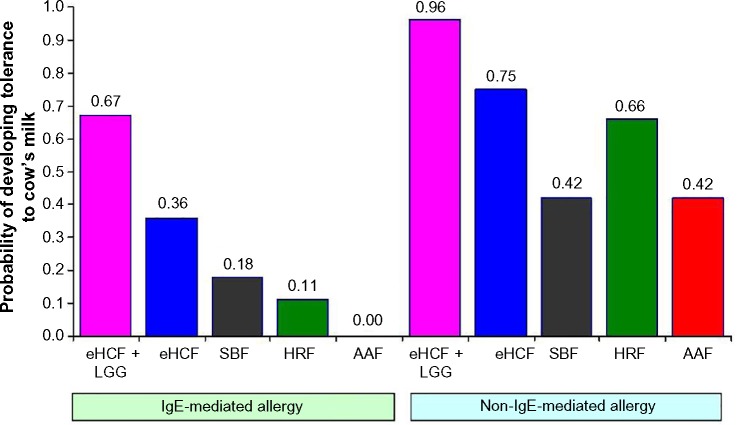
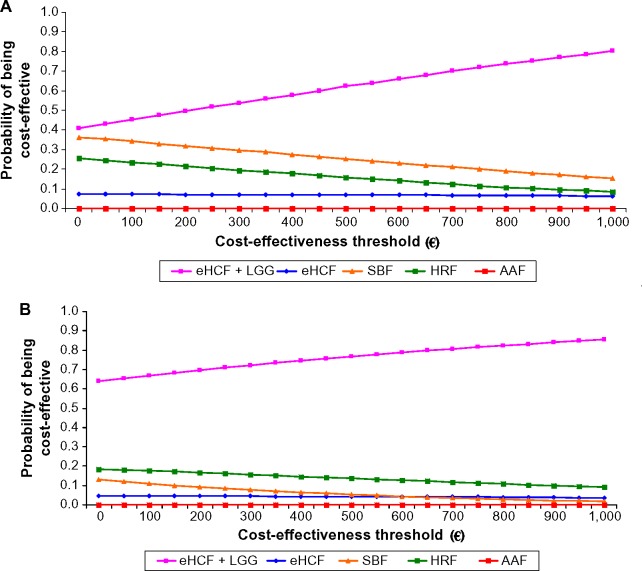
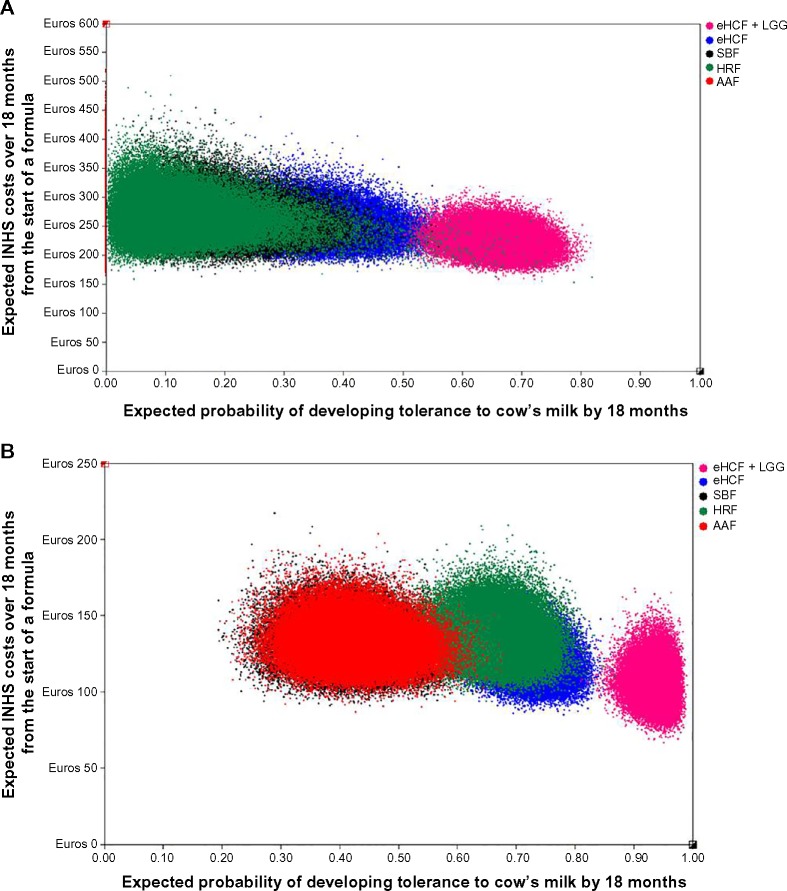
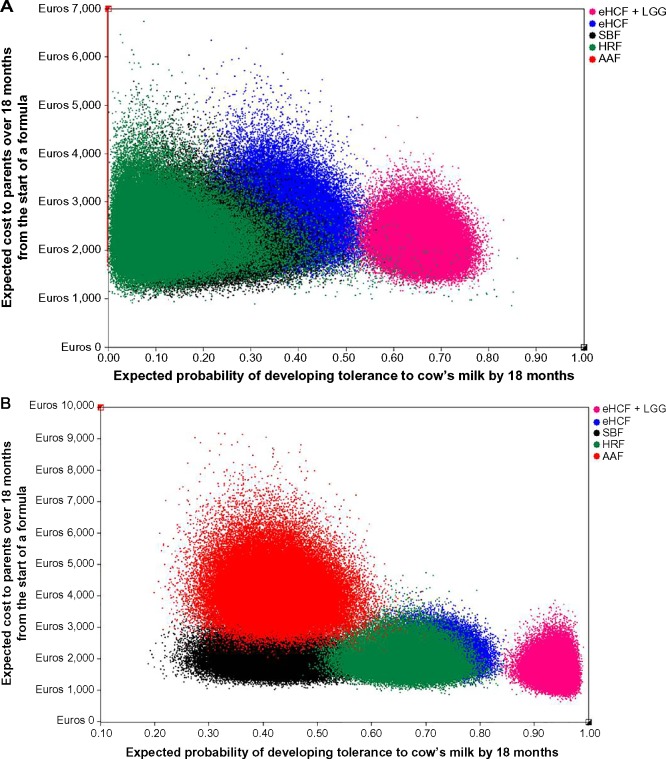
Decision modeling was used to estimate the probability of infants developing tolerance to cow's milk by 18 months, based on an observational study dataset. The model also estimated the cost (at 2012/2013 prices) of health care resource use funded by the INHS and formulae paid for by parents over 18 months after starting a formula, as well as the relative cost-effectiveness of each of the formulae.
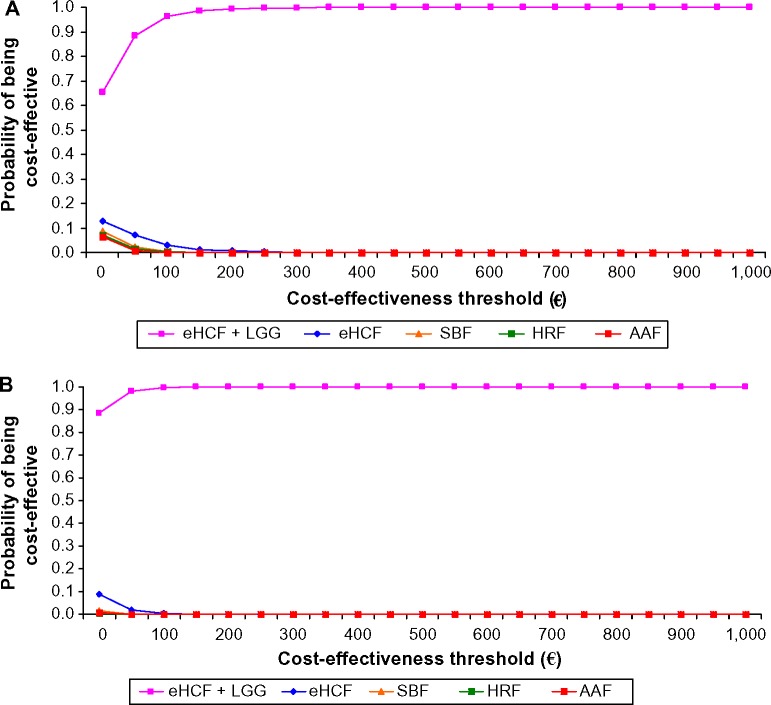
The probability of developing tolerance to cow's milk by 18 months was higher among infants with either IgE-mediated or non-IgE-mediated allergy who were fed eHCF + LGG compared to those fed one of the other formulae. The total health care cost of initially feeding infants with eHCF + LGG was less than that of feeding infants with one of the other formulae. Hence, eHCF + LGG affords the greatest value for money to both the INHS and parents of infants with either IgE-mediated or non-IgE-mediated CMA.
Using eHCF + LGG instead of eHCF, SBF, HRF, or an AAF for first-line management of newly diagnosed infants with CMA in Italy affords a cost-effective use of publicly funded resources, and is cost-effective from the parents' perspective, since it improves outcome for less cost. A randomized controlled study showing faster tolerance development in children receiving a probiotic-containing formula is required before this conclusion can be confirmed.
从意大利国家卫生服务局(INHS)和家长的角度,评估使用含益生菌鼠李糖乳杆菌GG的深度水解酪蛋白配方奶粉(eHCF + LGG;纽迪希亚LGG)作为牛奶过敏(CMA)一线治疗方案,相较于单独使用eHCF、大豆基配方奶粉(SBF)、水解大米配方奶粉(HRF)和氨基酸配方奶粉(AAF)在意大利的成本效益。
基于一项观察性研究数据集,采用决策模型来估计婴儿在18个月时对牛奶产生耐受性的概率。该模型还估计了在开始使用某种配方奶粉后的18个月内,由INHS资助的医疗保健资源使用成本(按2012/2013年价格计算)以及家长购买配方奶粉的费用,以及每种配方奶粉的相对成本效益。
与喂养其他配方奶粉之一的婴儿相比,喂养eHCF + LGG的IgE介导或非IgE介导过敏婴儿在18个月时对牛奶产生耐受性的概率更高。最初喂养婴儿eHCF + LGG的总医疗保健成本低于喂养其他配方奶粉之一的成本。因此,对于IgE介导或非IgE介导CMA的婴儿,eHCF + LGG对INHS和家长来说性价比最高。
在意大利,对于新诊断的CMA婴儿,使用eHCF + LGG而非eHCF、SBF、HRF或AAF进行一线治疗,能有效利用公共资金资源,从家长角度来看也具有成本效益,因为它能以更低成本改善治疗效果。在证实这一结论之前,需要进行一项随机对照研究,以表明接受含益生菌配方奶粉的儿童耐受性发展更快。