Malek Natalia, Popiolek-Barczyk Katarzyna, Mika Joanna, Przewlocka Barbara, Starowicz Katarzyna
Laboratory of Pain Pathophysiology, Institute of Pharmacology, Polish Academy of Sciences, Smetna 12 Street, 31-343 Krakow, Poland ; Department of Pain Pharmacology, Institute of Pharmacology, Polish Academy of Sciences, Smetna 12 Street, 31-343 Krakow, Poland.
Department of Pain Pharmacology, Institute of Pharmacology, Polish Academy of Sciences, Smetna 12 Street, 31-343 Krakow, Poland.
Neural Plast. 2015;2015:130639. doi: 10.1155/2015/130639. Epub 2015 May 18.
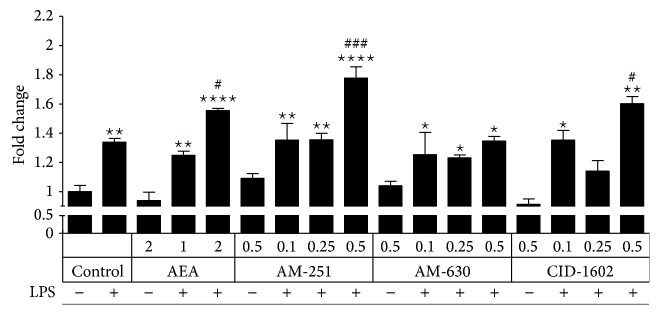
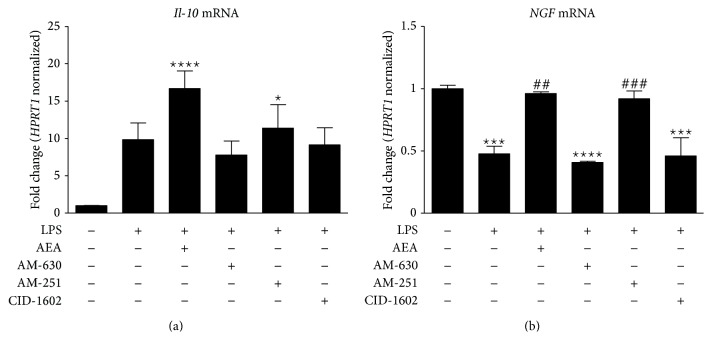
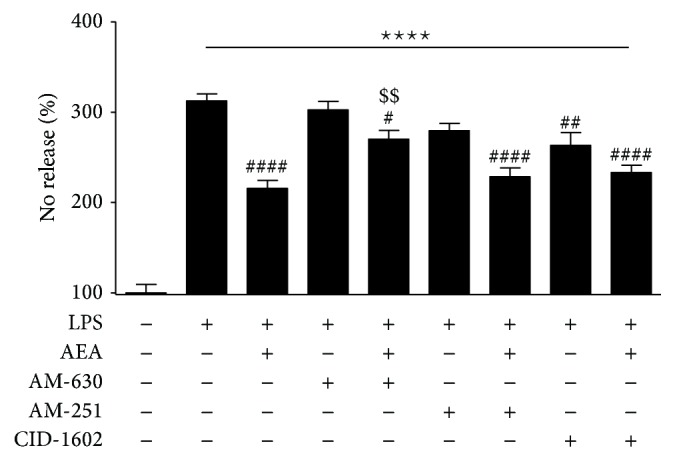
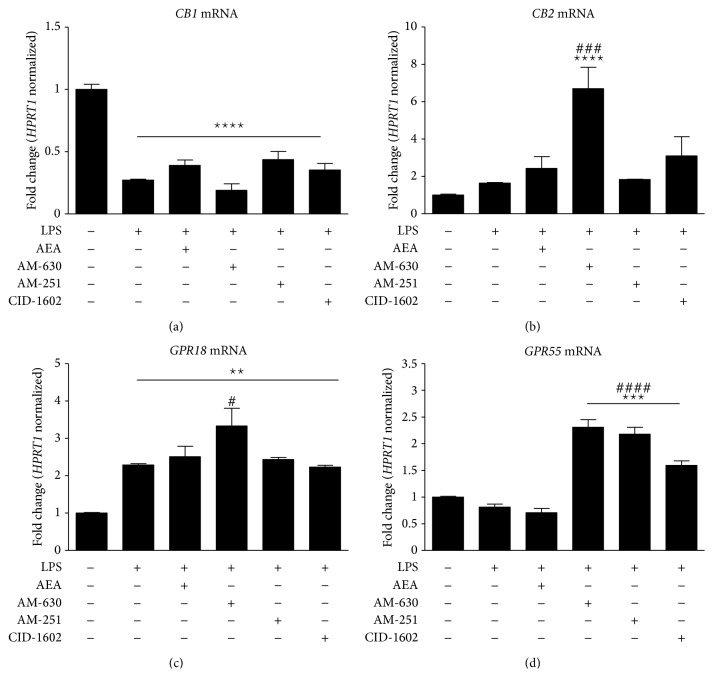
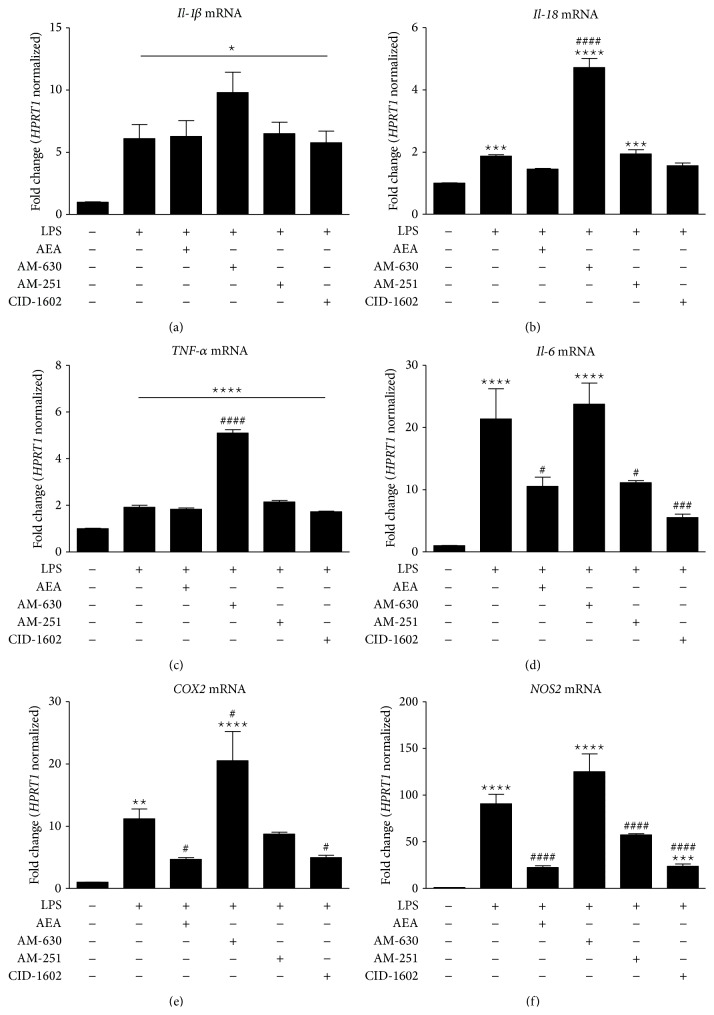
Microglial activation is a polarized process divided into potentially neuroprotective phenotype M2 and neurotoxic phenotype M1, predominant during chronic neuroinflammation. Endocannabinoid system provides an attractive target to control the balance between microglial phenotypes. Anandamide as an immune modulator in the central nervous system acts via not only cannabinoid receptors (CB1 and CB2) but also other targets (e.g., GPR18/GPR55). We studied the effect of anandamide on lipopolysaccharide-induced changes in rat primary microglial cultures. Microglial activation was assessed based on nitric oxide (NO) production. Analysis of mRNA was conducted for M1 and M2 phenotype markers possibly affected by the treatment. Our results showed that lipopolysaccharide-induced NO release in microglia was significantly attenuated, with concomitant downregulation of M1 phenotypic markers, after pretreatment with anandamide. This effect was not sensitive to CB1 or GPR18/GPR55 antagonism. Administration of CB2 antagonist partially abolished the effects of anandamide on microglia. Interestingly, administration of a GPR18/GPR55 antagonist by itself suppressed NO release. In summary, we showed that the endocannabinoid system plays a crucial role in the management of neuroinflammation by dampening the activation of an M1 phenotype. This effect was primarily controlled by the CB2 receptor, although functional cross talk with GPR18/GPR55 may occur.
小胶质细胞激活是一个极化过程,分为潜在的神经保护表型M2和神经毒性表型M1,在慢性神经炎症期间占主导地位。内源性大麻素系统是控制小胶质细胞表型平衡的一个有吸引力的靶点。花生四烯乙醇胺作为中枢神经系统中的一种免疫调节剂,不仅通过大麻素受体(CB1和CB2)起作用,还通过其他靶点(如GPR18/GPR55)起作用。我们研究了花生四烯乙醇胺对脂多糖诱导的大鼠原代小胶质细胞培养物变化的影响。基于一氧化氮(NO)的产生评估小胶质细胞激活。对可能受该处理影响的M1和M2表型标志物进行mRNA分析。我们的结果表明,用花生四烯乙醇胺预处理后,脂多糖诱导的小胶质细胞中NO释放显著减弱,同时M1表型标志物下调。这种作用对CB1或GPR18/GPR55拮抗不敏感。给予CB2拮抗剂部分消除了花生四烯乙醇胺对小胶质细胞的作用。有趣的是,单独给予GPR18/GPR55拮抗剂可抑制NO释放。总之,我们表明内源性大麻素系统通过抑制M1表型的激活在神经炎症管理中起关键作用。这种作用主要由CB2受体控制,尽管可能与GPR18/GPR55发生功能性相互作用。